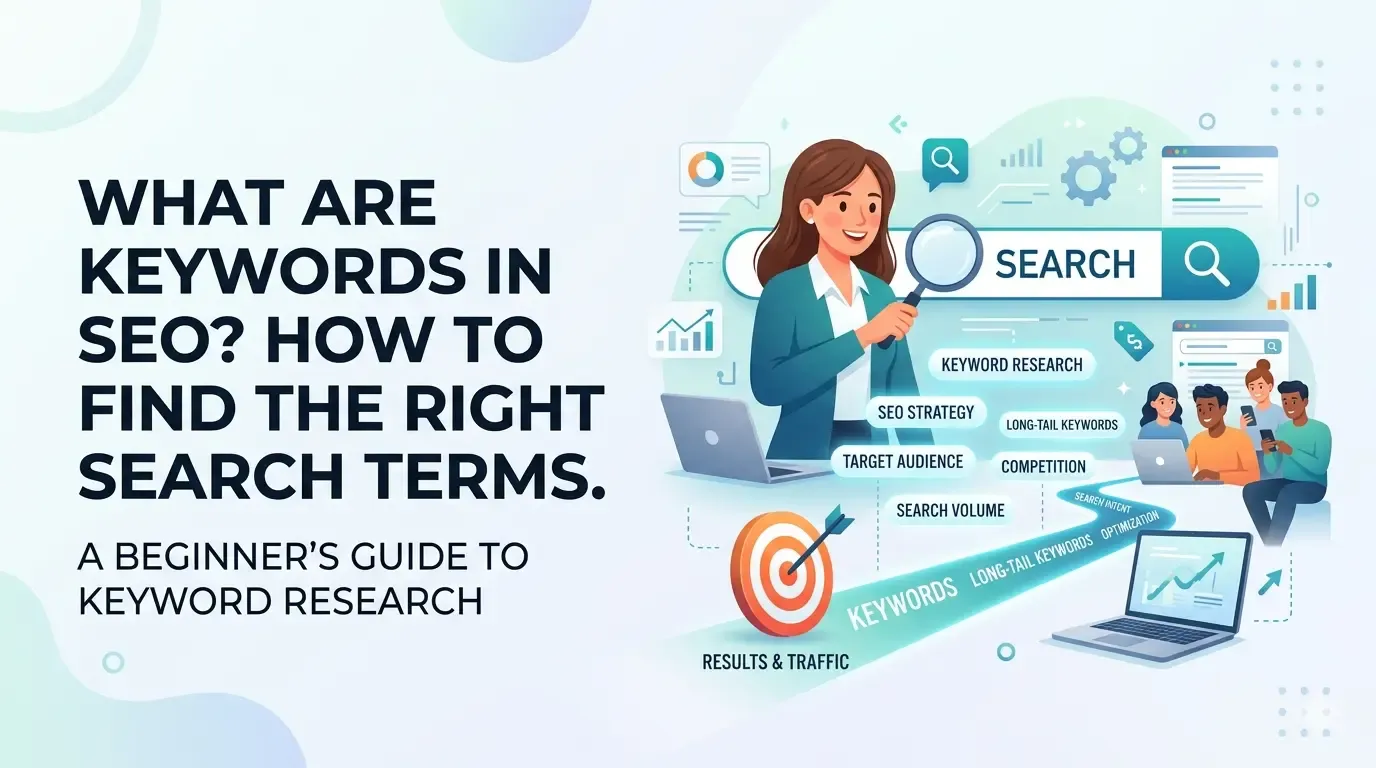
If you want your website to rank on Google, everything starts with one thing: SEO keywords.
But keywords today are not just words. They represent what people are searching, what they need, and what problems they are trying to solve.
In 2026, understanding keywords is less about stuffing phrases into content and more about understanding user intent and search behavior.
So if you're wondering what SEO keywords really are and how to find the right ones, this guide will walk you through it step by step.
What Are Keywords in SEO?
SEO keywords are the words and phrases people type into search engines when they are looking for information, products, or services.
For example:
- what is SEO
- digital marketing course in Calicut
- best keyword research tools
Each of these is a keyword or search query.
But here’s the key insight:
Keywords are not just terms. They are signals of user intent.
Why Keywords Are Important in SEO
Keywords help search engines understand what your content is about and match it with user searches.
Key Benefits of Using the Right Keywords
- improves your chances of ranking on Google
- attracts the right audience to your website
- increases organic traffic
- helps structure your content better
- aligns your content with user intent
Without keywords, your content may never reach the right audience.
Types of SEO Keywords You Should Know
Understanding different types of keywords helps you build a better strategy.
1. Short-Tail Keywords
These are broad and usually one or two words.
Examples
- SEO
- marketing
- keywords
Characteristics
- high search volume
- high competition
- low specificity
2. Long-Tail Keywords
These are more specific phrases.
Examples
- what are keywords in SEO
- how to find SEO keywords
- best keyword tools for beginners
Characteristics
- lower competition
- higher conversion potential
- more targeted audience
3. Informational Keywords
Used when users want to learn something.
Examples
- what is SEO
- how keyword research works
4. Transactional Keywords
Used when users are ready to take action.
Examples
- buy SEO course
- enroll in digital marketing course
5. Navigational Keywords
Used to find a specific brand or website.
Examples
- Google Search Console
- SEO tools website
Understanding Search Intent (Most Important Part)
Search intent is the reason behind a search query.
This is what modern SEO focuses on.
Types of Search Intent
- informational (learning)
- transactional (buying)
- navigational (finding a site)
- commercial (comparing options)
If your content does not match intent, it will not rank, even with the right keywords.
How to Find the Right SEO Keywords
Keyword research is the process of discovering the best search terms to target.
Step 1: Start with a Topic
Begin with a broad topic related to your niche.
Example: SEO → keywords → keyword research
Step 2: Use Google Suggestions
Type your topic into Google and look at:
- autocomplete suggestions
- People Also Ask
- related searches
These are real queries from users.
Step 3: Use Keyword Research Tools
Tools help you analyze keyword data.
Popular Tools
- Google Keyword Planner
- Ubersuggest
- Ahrefs
- SEMrush
What to Look For
- search volume
- keyword difficulty
- competition
- trends
Step 4: Analyze Competitors
Check what keywords other websites are ranking for.
This gives you ideas and helps you identify gaps.
Step 5: Focus on Long-Tail Keywords
Long-tail keywords are easier to rank for and bring targeted traffic.
They are especially useful for beginners.
How to Choose the Best Keywords
Not all keywords are worth targeting.
Good Keywords Have
- clear search intent
- decent search volume
- low to medium competition
- relevance to your content
Choosing the right keywords is more important than choosing many.
Keyword Placement (How to Use Them Properly)
Using keywords correctly is just as important as finding them.
Where to Use Keywords
- title (H1)
- headings (H2, H3)
- first 50–100 words
- naturally throughout content
- meta description
- image alt text
Avoid overusing keywords. Keep it natural.
Common Keyword Mistakes to Avoid
Many beginners make these mistakes.
Avoid
- keyword stuffing
- targeting highly competitive keywords
- ignoring search intent
- using irrelevant keywords
- not updating your keyword strategy
Fixing these can improve your SEO performance quickly.
Keywords in the Age of AI
SEO is evolving with AI-driven search.
What’s Changing
- focus on semantic keywords
- importance of context and meaning
- rise of conversational search
- AI understanding user intent better
Keywords still matter, but context matters more.
Final Thoughts
If you're exploring how keyword strategies work in real-world scenarios, you can explore how Milaaj Digital Academy in Calicut approaches practical, hands-on learning through its programs.
For a deeper understanding, structured learning through an SEO-focused course can help connect keyword research with real implementation.
And if you're continuing your learning journey, you might find this beginner-friendly guide on what SEO really means helpful in understanding the bigger picture.
FAQs
What are SEO keywords?
SEO keywords are words and phrases people use in search engines to find relevant content.
How do I find SEO keywords?
Use tools, Google suggestions, and competitor analysis to discover relevant search terms.
What is a long-tail keyword?
A long-tail keyword is a specific phrase with lower competition and higher conversion potential.
Are keywords still important in 2026?
Yes. Keywords still matter, but search intent and content quality are more important.
How many keywords should I use in a blog?
Focus on one main keyword and a few related terms used naturally.