If you're trying to grow a website in 2026, understanding SEO is no longer optional. Whether you're a student, business owner, freelancer, or someone exploring digital marketing, SEO is one of the most valuable skills you can learn today.
But here’s the important part. SEO has changed.
It’s no longer just about adding keywords to a page and hoping to rank. Search engines like Google now use advanced AI systems to understand user intent, content quality, and real usefulness.
So if you're wondering what is SEO and how it actually works today, this guide will break it down in the simplest and most practical way.
What Is SEO?
SEO (Search Engine Optimization) is the process of improving your website so that it appears higher in search engine results when people search for relevant topics.
But instead of thinking of SEO as just “ranking higher,” think of it this way:
👉 SEO is about helping the right people find the right content at the right time
When someone searches on Google, they usually have a problem, question, or need. SEO helps your content become the answer.
What SEO Helps You Achieve
- increase organic (free) traffic to your website
- improve visibility on search engines like Google
- build trust and authority in your niche
- attract users who are already interested in your topic
- generate leads, conversions, or opportunities
Unlike paid ads, SEO continues to bring traffic over time, making it one of the most sustainable digital marketing strategies.
How Search Engines Work in 2026
To understand SEO better, you need to know how search engines like Google actually work behind the scenes.
Today, search engines are powered by AI models that analyze content deeply, not just surface-level keywords.
Step 1: Crawling
Search engines use bots (also called crawlers or spiders) to discover new and updated content across the web. These bots move from one page to another using links.
If your website has poor structure or broken links, crawlers may miss important pages.
Step 2: Indexing
Once a page is discovered, it gets stored in a massive database called the index.
Here, search engines try to understand:
- what your page is about
- which keywords it relates to
- how useful the content is
- how it connects with other topics
Proper structure, headings, and clarity play a big role at this stage.
Step 3: Ranking
When a user searches something, Google decides which pages to show and in what order.
This decision is based on multiple factors such as:
- relevance to the query
- content quality and depth
- website authority
- user experience signals
- freshness of content
In 2026, relevance and usefulness matter more than ever before.
Why SEO Is Important in 2026
With millions of websites competing for attention, SEO is what helps you stand out.
But its importance goes beyond just traffic.
Real Benefits of SEO
- drives consistent and long-term traffic
- brings high-intent users (people already searching)
- builds brand credibility and trust
- reduces dependency on paid advertising
- improves overall website experience
For students and beginners, learning SEO also opens up career opportunities in digital marketing, content strategy, and analytics.
Types of SEO You Must Understand
SEO is not just one thing. It’s a combination of multiple strategies working together.
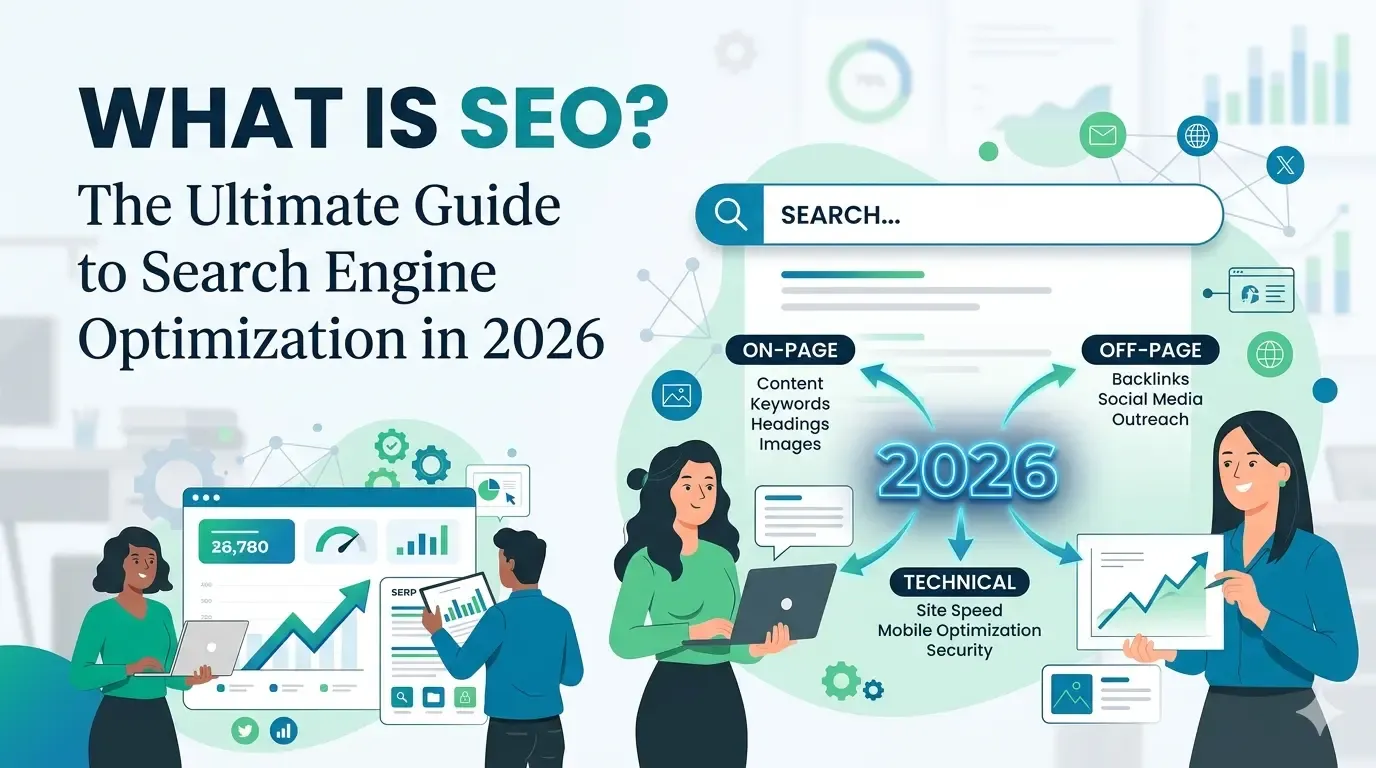
1. On-Page SEO (Content Optimization)
On-page SEO focuses on everything inside your website.
This is where most beginners should start.
Key Elements of On-Page SEO
- writing high-quality, helpful content
- using keywords naturally within the content
- optimizing titles and meta descriptions
- structuring content with proper headings (H1, H2, H3)
- adding internal links for better navigation
- improving readability and formatting
Good on-page SEO ensures your content is both search engine friendly and user friendly.
2. Off-Page SEO (Authority Building)
Off-page SEO focuses on signals outside your website.
The biggest factor here is backlinks, which are links from other websites pointing to your content.
Why Backlinks Matter
Search engines see backlinks as a vote of trust.
If high-quality websites link to you, your authority increases.
Other off-page factors include:
- brand mentions
- social sharing
- online reputation
3. Technical SEO (Performance & Structure)
Technical SEO ensures your website is easy for search engines to crawl and users to navigate.
Important Technical Factors
- fast loading speed
- mobile responsiveness
- secure website (HTTPS)
- clean and structured URLs
- proper use of structured data
- XML sitemaps
Even great content won’t rank if your technical SEO is weak.
4. Local SEO (Location-Based Visibility)
Local SEO is important for businesses targeting a specific area.
For example, searches like:
- “digital marketing course in Calicut”
- “SEO training near me”
Key Local SEO Elements
- Google Business Profile optimization
- local keywords
- reviews and ratings
- location-based content
Local SEO helps you attract nearby, high-intent users.
How SEO Works Today (Modern Ranking Factors)
SEO in 2026 is driven by intent and experience, not just keywords.
What Actually Matters Now
- understanding search intent (what the user really wants)
- creating helpful, in-depth content
- building topical authority
- optimizing for AI-driven search results
- improving user experience (UX signals)
- using structured data for better understanding
Search engines are now focused on helpful content that solves real problems, not content that is just optimized for bots.
Keyword Research for Beginners
Keywords are still important, but how you use them has changed.
Instead of targeting a single keyword, focus on topics and variations.
Types of Keywords
- informational (what is SEO)
- transactional (buy SEO course)
- navigational (Google SEO guide)
Smart Keyword Strategy
- use your main keyword naturally
- include related terms (LSI keywords)
- answer common user questions
- focus on clarity over repetition
Think like your audience, not like a search engine.
Content Optimization That Actually Works
Content is the core of SEO, but only if it is done right.
What Makes Content Rank in 2026
- clear and simple language
- logical structure with headings
- real value and actionable insights
- proper formatting for readability
- natural keyword placement
- engaging and human tone
Avoid over-optimization. Write for people first, then refine for SEO.
Technical SEO Basics You Should Not Ignore
Many beginners overlook technical SEO, but it directly affects rankings.
Must-Focus Areas
- improve page speed (fast loading pages rank better)
- ensure mobile-friendly design
- fix broken links and errors
- use structured data (schema markup)
- maintain clean site architecture
Technical SEO supports everything else you do.
Common SEO Mistakes Beginners Make
Understanding mistakes helps you avoid them early.
Most Common Errors
- keyword stuffing
- copying or duplicating content
- ignoring search intent
- poor content structure
- not updating old content
- neglecting mobile experience
Fixing even a few of these can improve your rankings significantly.
The Future of SEO
SEO is evolving faster than ever.
Key Trends to Watch
- AI-generated search results
- voice and conversational search
- visual search (images and videos)
- answer engine optimization (AEO)
- semantic and entity-based SEO
The focus is shifting from keywords to meaning and context.
How to Start Learning SEO (Beginner Roadmap)
If you're starting from scratch, follow this simple path:
Step-by-Step
- understand how search engines work
- learn keyword research basics
- practice writing SEO-friendly content
- explore tools like Google Search Console
- analyze and improve your content
- stay updated with trends
The best way to learn SEO is by doing, testing, and improving.
Final Thoughts
SEO in 2026 is not just about ranking higher on Google. It is about creating content that genuinely helps users while making it easier for search engines to understand and trust your website.
If you're curious about how these concepts are applied in real-world scenarios, you can explore how Milaaj Digital Academy in Calicut approaches hands-on, practical learning in digital skills.
For those who want to build a deeper understanding step by step, learning through a structured SEO training program can help connect theory with real implementation.
And if you're looking to continue learning, you might find our guide on SEO Checklist 2026 useful for understanding how modern ranking factors work in detail.
FAQs
What is SEO in simple terms?
SEO is the process of improving a website so it ranks higher on search engines and attracts organic traffic.
Is SEO difficult for beginners?
No. With consistent practice and the right approach, beginners can learn and apply SEO effectively.
How long does SEO take to show results?
SEO usually takes 3 to 6 months to show noticeable improvements, depending on competition and effort.
Is SEO better than paid ads?
SEO provides long-term traffic, while ads offer immediate results. Both can work together effectively.
Can I learn SEO without coding?
Yes. Basic SEO does not require coding, but technical knowledge can be helpful as you advance.