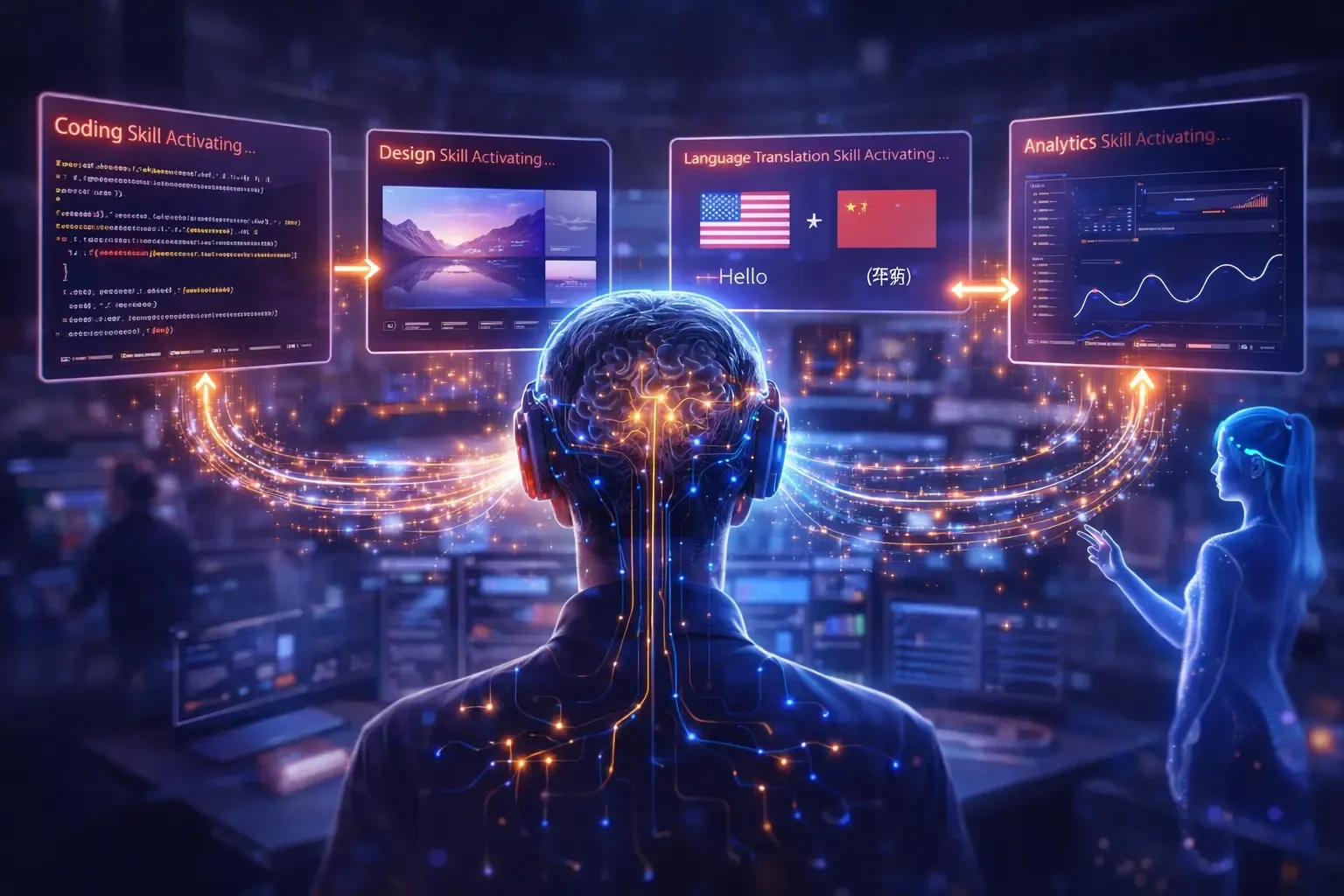
What if you didn’t need to “learn first, then do”? What if learning happened exactly when you needed it?
That is the shift happening right now.
Skill switching systems are changing how people build skills. Instead of spending weeks on courses, users now access knowledge instantly while working. These systems guide you step by step in real time, helping you complete tasks while learning at the same time.
This approach is transforming productivity, career growth, and even education. Understanding skill switching systems is becoming essential for anyone who wants to stay competitive in a fast-moving digital world.
What Are Skill Switching Systems?
Skill switching systems are AI-powered tools that provide real-time, contextual learning while you perform a task.
Unlike traditional education, where you learn before applying knowledge, these systems integrate learning directly into your workflow.
Key characteristics
- real-time assistance
- contextual, task-based learning
- personalized suggestions
- adaptive feedback loops
- seamless integration into tools and workflows
Instead of acting like a course, these systems behave like a smart assistant that teaches you while you work.
Why Skill Switching Systems Are Gaining Popularity
The modern work environment demands speed, adaptability, and multi-skill capabilities.
Traditional learning methods often fail because:
- they take too much time
- knowledge is forgotten before application
- they are not tailored to real tasks
- they lack immediate relevance
Skill switching systems solve these problems by delivering just-in-time learning.
Key drivers behind their growth
- rise of AI-powered tools
- increasing demand for multi-skilled professionals
- fast-changing job requirements
- remote and digital-first work environments
People no longer want to “prepare for work later.” They want to perform better now.
How Skill Switching Systems Work
These systems rely on a combination of advanced technologies to deliver instant learning experiences.
Core technologies
- artificial intelligence
- machine learning
- natural language processing
- behavioral data analysis
- contextual awareness systems
How the process works
- You start a task (writing, coding, designing, etc.)
- The system analyzes your intent and context
- It provides real-time suggestions or instructions
- You apply the knowledge instantly
- The system adapts based on your behavior
This loop creates a continuous learning environment.
Real-World Examples of Skill Switching Systems
To fully understand skill switching systems, it helps to look at practical use cases.
Content creation and marketing
AI writing assistants suggest headlines, improve readability, and optimize SEO while you write.
Software development
Coding assistants provide real-time code suggestions, debug errors, and recommend best practices.
Graphic design
Design tools recommend layouts, color schemes, and typography instantly.
Language learning
Translation tools and AI assistants help users communicate while correcting grammar in real time.
Data analysis
AI tools help interpret data, generate insights, and suggest actions without needing deep technical knowledge.
Benefits of Skill Switching Systems
The impact of skill switching systems goes beyond convenience. They fundamentally change how people work and learn.
Faster skill acquisition
- learning happens instantly during task execution
- reduces the gap between theory and practice
Increased productivity
- eliminates the need to switch between learning and working
- speeds up task completion
Reduced learning friction
- no need for long courses or extensive preparation
- learning becomes effortless and continuous
Personalized experience
- adapts to your skill level
- provides relevant suggestions based on context
Career adaptability
- helps professionals quickly learn new tools and skills
- supports career growth in dynamic industries
Skill Switching vs Traditional Learning Models
Understanding the difference highlights why this shift matters.
Traditional learning
- structured courses
- fixed curriculum
- delayed application
- generalized content
Skill switching systems
- real-time learning
- task-based guidance
- immediate application
- personalized insights
Traditional learning builds foundations, but skill switching systems enable execution.
Industries Being Transformed
Skill switching systems are already reshaping multiple industries.
Digital marketing
Marketers can create campaigns, analyze data, and optimize content instantly using AI tools.
Software development
Developers rely on AI assistants to write code faster and solve complex problems.
Education
Learning platforms are becoming interactive and adaptive rather than static.
Customer support
Agents receive real-time suggestions to improve responses and customer satisfaction.
Healthcare and training
Professionals can access instant guidance during complex procedures or decision-making processes.
The Psychology Behind Learning in the Moment
One reason skill switching systems are effective is how they align with human learning behavior.
Why it works better
- learning by doing improves retention
- immediate application reinforces understanding
- contextual learning increases relevance
- reduces cognitive overload
Instead of memorizing information, users experience learning in action.
Challenges and Limitations
Despite their advantages, skill switching systems are not perfect.
Common challenges
- over-reliance on AI assistance
- risk of incorrect suggestions
- reduced deep learning if overused
- lack of foundational knowledge
Hidden risk
If users depend entirely on AI, they may struggle to perform tasks independently.
This is why balance is important.
How to Use Skill Switching Systems Effectively
To get the most value from these tools, you need a strategic approach.
Best practices
- use AI as a guide, not a replacement
- verify important outputs
- focus on understanding core concepts
- review and reflect on what you learn
- combine with structured learning when needed
The goal is to enhance your skills, not replace them.
Building a Hybrid Learning System
The most effective professionals combine both approaches.
Ideal learning model
- use traditional learning for fundamentals
- use skill switching systems for execution
- apply knowledge in real-world tasks
- continuously improve through feedback
This creates a powerful cycle of learning and application.
The Future of Skill Switching Systems
The evolution of these systems is just beginning.
What to expect
- deeper personalization based on user behavior
- integration with augmented reality and virtual reality
- voice-based real-time learning assistants
- smarter predictive learning systems
- seamless integration into everyday tools
In the future, learning may become completely invisible, happening naturally as part of daily work.
Why Skill Switching Systems Matter for Your Career
The job market is changing rapidly. Employers now value adaptability more than static knowledge.
Skill switching systems help you:
- learn new tools quickly
- stay relevant in fast-changing industries
- improve productivity
- become more versatile
Professionals who adopt these systems early will have a significant advantage.
Final Thoughts
The rise of skill switching systems marks a major shift in how we approach learning and work.
Instead of separating learning from doing, these systems combine both into a seamless experience. They make learning faster, more relevant, and more practical.
However, the real advantage comes from balance. When you combine AI-powered learning with human understanding and critical thinking, you unlock true potential.
The future belongs to those who can learn, adapt, and apply skills in real time.
FAQs
What are skill switching systems?
Skill switching systems are AI tools that teach and guide users in real time while they perform tasks, enabling instant learning and application.
How do skill switching systems improve productivity?
They reduce the need for separate learning time by providing instant guidance, helping users complete tasks faster and more efficiently.
Are skill switching systems suitable for beginners?
Yes. They provide step-by-step guidance, making them useful for beginners while also supporting advanced users.
Do skill switching systems replace traditional learning?
No. They complement traditional learning by helping users apply knowledge instantly, but foundational learning is still important.
What industries benefit most from skill switching systems?
Industries like marketing, software development, education, and customer support benefit the most due to fast-changing skill requirements.