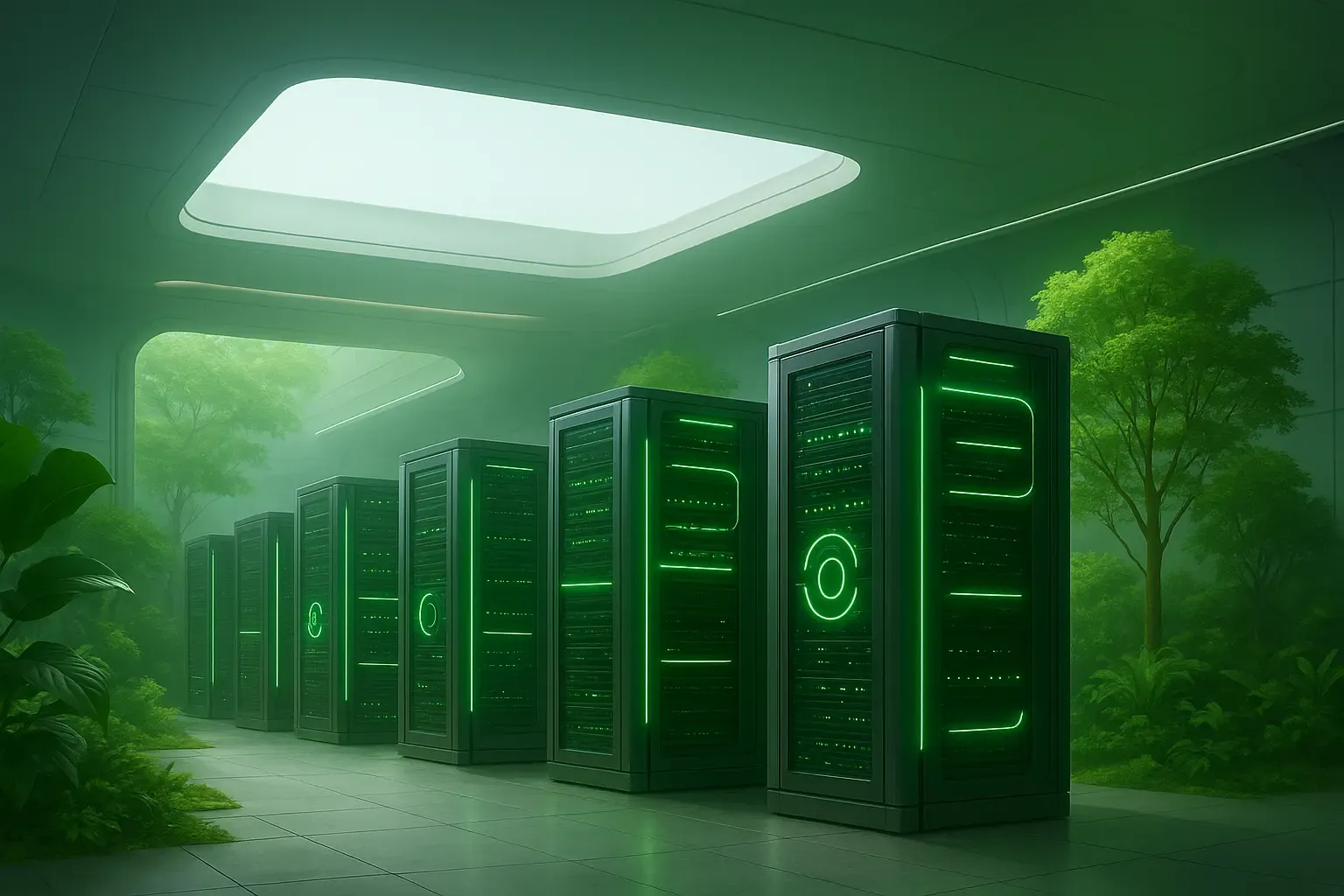
Cloud computing keeps growing at a massive pace, and with it comes a serious challenge. The world depends on data centers for almost everything we do online. Every message we send, every photo we upload, every app we use, and every AI model we run lives somewhere inside these huge server facilities. They process enormous amounts of data every second, and that requires electricity at a scale that is hard to imagine.
As customer demand increases, companies face a new reality. Cloud services must remain fast, reliable, and highly available. Yet at the same time, they need to reduce their environmental footprint. This is where green cloud computing enters the picture. It focuses on making data centers more energy efficient, more sustainable, and more responsible.
Energy efficient data centers are no longer just a trend. They are becoming essential for long term cloud growth, especially as AI workloads push global electricity demand even higher. Businesses, governments, and tech innovators all recognize that sustainability is not just a buzzword. It is becoming a new standard for digital infrastructure.
This blog explores how green cloud computing works, why it matters, the technologies driving it forward, and how organizations can adopt cleaner cloud strategies without sacrificing performance.
What Green Cloud Computing Actually Means
Green cloud computing refers to the design, development, and operation of cloud systems that minimize energy use, reduce carbon emissions, and optimize resource efficiency. It focuses on both hardware and software layers. The goal is to make cloud operations environmentally responsible while keeping performance strong.
At its core, green cloud computing brings together three major ideas:
Energy efficiency. Reducing electricity usage inside data centers.Sustainable infrastructure. Using renewable energy, eco friendly materials, and efficient cooling.Intelligent resource management. Making workloads smarter, lighter, and more dynamic.
When these practices come together, data centers operate more efficiently and deliver cleaner computing at scale.
Why Data Centers Consume So Much Energy
Modern data centers require massive amounts of electricity. They power servers, storage, networking equipment, and cooling systems. Even when workloads are not running at full capacity, the infrastructure must stay online 24 hours a day.
Several reasons explain the high energy demand:
Constant uptime. Cloud platforms cannot shut down. They must be available at all times.Intensive computing. AI, big data, and large scale cloud applications require heavy processing.Cooling needs. Servers generate significant heat and must be cooled continuously.Hardware density. Modern data centers store thousands of machines in tight racks.
AI is accelerating this challenge even further. Training and deploying generative AI models requires computing power at unprecedented levels. As workloads grow, cloud providers must find new ways to reduce energy consumption and improve sustainability.
How Green Cloud Computing Reduces Energy Usage
To understand how sustainability in cloud computing works, it helps to look at the key innovations driving it. Energy efficient data centers depend on a combination of hardware upgrades, software intelligence, and smarter infrastructure planning.
Below are the most influential strategies.
Use of Renewable Energy Sources
Many leading cloud providers now run their data centers on wind, solar, hydro, and geothermal energy. The idea is simple. If servers require electricity, then the source of that electricity can be clean rather than carbon heavy.
Companies like Google, Microsoft, Amazon, and Apple commit to large renewable energy investments. Some regions even build data centers directly next to renewable power plants to ensure a consistent supply.
This approach reduces global carbon emissions and helps companies meet sustainability goals.
Efficient Cooling Systems for Reduced Power Consumption
Cooling is one of the biggest energy expenses in data centers. Older facilities rely heavily on traditional air conditioning systems, which consume large amounts of electricity.
Modern green data centers use advanced cooling methods:
Liquid cooling. Uses water or coolant to remove heat more efficiently than air.Free air cooling. Pulls in naturally cool outside air when climate allows it.Hot and cold aisle containment. Separates airflow to reduce wasted cooling.Immersion cooling. Submerges servers in non conductive fluids for ultra efficient heat removal.
These technologies allow data centers to stay cool while saving significant energy.
AI Driven Resource Optimization
Artificial intelligence plays a major role in making cloud infrastructure greener. AI can monitor workloads, adjust resource usage, manage cooling systems, and predict energy demand.
Examples of AI driven optimization include:
Dynamic resource allocation. Automatically shifting workloads to servers using renewable energy.Power management. Adjusting server usage during low traffic or peak efficiency times.Predictive cooling. Using AI to adjust cooling before temperatures rise too high.
AI optimizes systems faster and more accurately than manual processes ever could.
Virtualization and Containerization for Lower Energy Use
Virtual machines and containers allow multiple applications to run on a single physical server. This reduces the total hardware needed and cuts both electricity and cooling requirements.
Virtualization also enables:
Efficient scaling. Apps can adjust resource usage automatically.Higher utilization rates. Servers operate closer to capacity instead of wasting idle energy.Flexible deployment. Workloads can move to locations with the cleanest energy at any moment.
In cloud environments, higher efficiency equals lower power consumption.
Server Hardware Designed for Efficiency
Modern hardware manufacturers create energy optimized chips, processors, and storage systems. These new components consume less electricity while delivering stronger computing power.
Some advancements include:
Low power CPUs and GPUs. Designed for high performance with reduced heat output.Solid state storage. Uses less energy than traditional hard drives.ARM based architectures. Built for efficiency rather than raw horsepower.
These upgrades significantly reduce the energy footprint of cloud environments.
Geographical Optimization for Clean Computing
Cloud providers often choose data center locations based on climate and energy availability. Cool climates naturally reduce cooling needs. Regions with strong renewable energy grids ensure sustainable operations.
This approach allows companies to shift workloads globally to maximize both sustainability and performance.
The Business Value of Green Cloud Computing
The move toward energy efficient cloud systems is not only beneficial for the planet. It also delivers practical and financial advantages for organizations.
Key benefits include:
Lower operational costs. Energy efficient systems reduce utility expenses.Stronger brand reputation. Customers prefer businesses that adopt sustainable practices.Regulatory compliance. Governments increasingly enforce environmental standards.Better long term scalability. Efficient infrastructure supports future growth.More reliable systems. Optimized data centers can manage workloads more effectively.
Green cloud computing is becoming a strategic business advantage rather than a technical upgrade.
How Organizations Can Adopt Green Cloud Strategies
Every company, regardless of size, can take meaningful steps toward cleaner cloud operations. Transitioning to green cloud practices does not require a complete rebuild. It often starts with small, manageable changes.
Here are some practical steps:
- Choose cloud providers with renewable energy commitments.
- Move workloads to energy efficient regions when possible.
- Use serverless computing to avoid running idle machines.
- Enable autoscaling to reduce unnecessary resource use.
- Optimize your applications for lower processing demand.
- Use containers or microservices to improve efficiency.
- Monitor your energy and resource footprint regularly.
Even a few of these changes can create measurable environmental improvements.
The Future of Sustainable Cloud Computing
The shift to green cloud infrastructure is accelerating, and the next wave of innovation will push efficiency even further.
Upcoming trends include:
AI driven autonomous data centers. Machines will optimize energy use without human intervention.Carbon aware computing. Workloads will move based on real time carbon intensity data.Biodegradable server materials. Hardware components will become more sustainable.Next generation cooling fluids. Designed to increase thermal efficiency even more.Quantum energy modeling. Predicts cloud load patterns to reduce unnecessary power use.
The green cloud movement is not slowing down. It is shaping the future of global digital infrastructure.
Final Thoughts
Green cloud computing is becoming the new foundation of modern digital technology. As cloud adoption continues to rise, sustainability is no longer optional. It is a requirement for businesses, governments, and cloud providers.
Energy efficient data centers deliver cleaner operations, lower costs, stronger performance, and long term reliability. With renewable energy, smart cooling, AI optimization, virtualization, and better hardware design, the cloud can grow without increasing its environmental impact.
This movement is changing how digital infrastructure is built and maintained. Organizations that adopt green cloud strategies now position themselves for a future where efficiency, innovation, and responsibility go hand in hand.