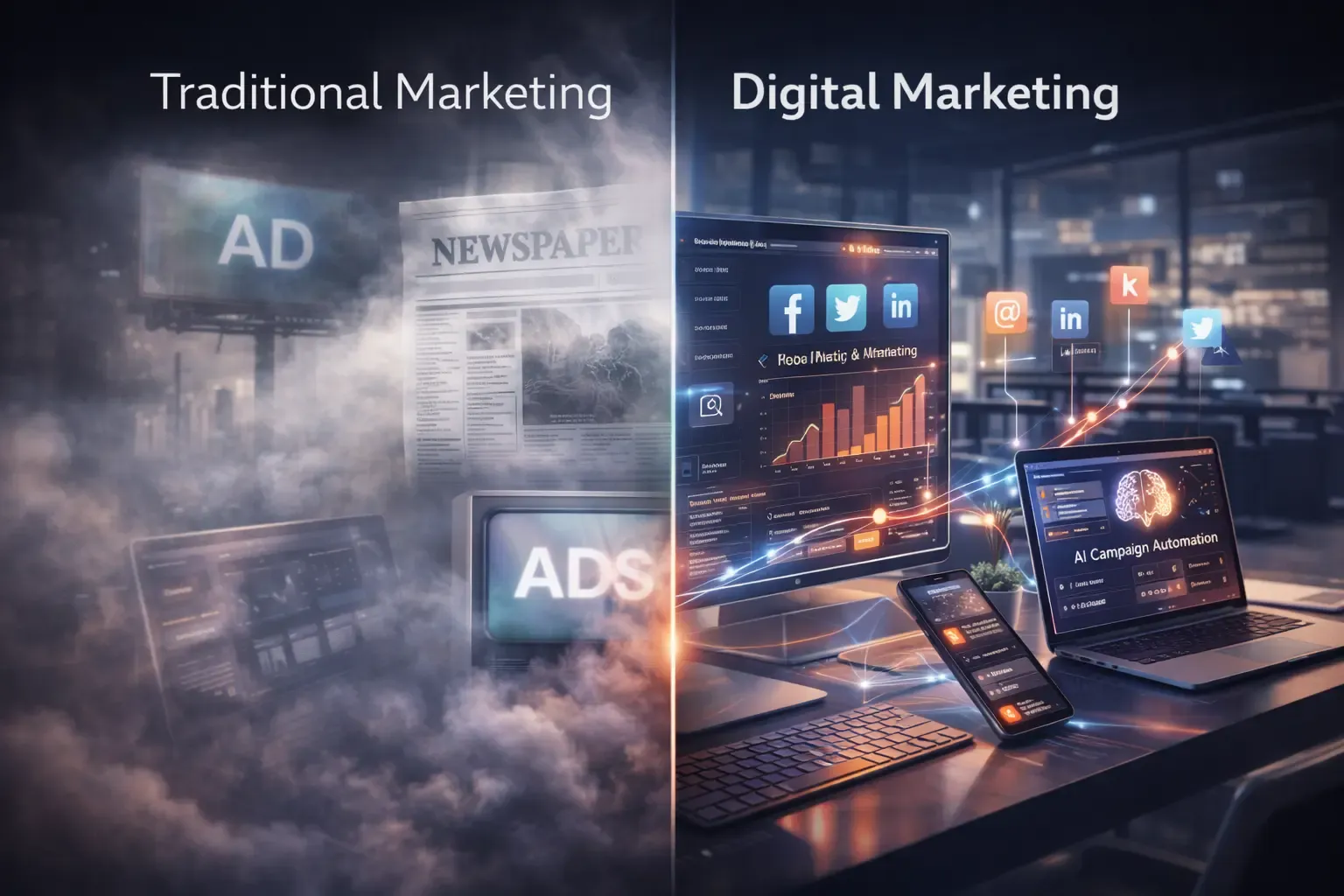
The marketing landscape has undergone a massive transformation over the last decade. In 2026, the debate around Digital Marketing vs Traditional Marketing is no longer about which is better. It is about understanding why businesses have permanently shifted toward digital strategies.
Consumers now live in a hyper-connected world where smartphones, social media, search engines, and AI-driven platforms shape purchasing decisions. Traditional marketing channels like TV, radio, and print still exist, but they no longer dominate the customer journey.
This shift did not happen overnight. It happened because digital marketing delivers measurable results, targeted reach, and real-time engagement that traditional marketing cannot match.
Let’s explore why this change is permanent and what it means for businesses moving forward.
Understanding Traditional Marketing
Traditional marketing refers to promotional strategies that existed before the rise of the internet and digital platforms.
Common Traditional Marketing Channels
- Television advertising
- Radio commercials
- Newspaper and magazine ads
- Billboards and outdoor advertising
- Direct mail campaigns
- Event sponsorships
These channels helped brands reach large audiences for decades. However, they rely on mass communication rather than precise targeting.
Limitations of Traditional Marketing
Traditional marketing still has value, but it faces several limitations in the modern era.
• Limited audience targeting• High advertising costs• Difficult to measure ROI• Slow campaign adjustments• Limited real-time engagement
Businesses today need faster, smarter, and more measurable marketing approaches.
What Is Digital Marketing?
Digital marketing refers to promoting products or services using online platforms and digital technologies.
Core Digital Marketing Channels
• Search engine optimization (SEO)• Social media marketing• Content marketing• Email marketing• Pay-per-click advertising• Influencer marketing
These strategies allow brands to connect directly with users through search engines, mobile devices, and social platforms.
Unlike traditional marketing, digital campaigns generate data that can be analyzed and optimized instantly.
Why Businesses Are Shifting to Digital Marketing in 2026
The shift toward digital marketing has accelerated dramatically over the past few years. Several factors explain why this transition is now permanent.
1. Consumers Spend Most of Their Time Online
Modern consumers live in digital environments.
People search for products on Google, watch reviews on YouTube, discover brands on Instagram, and compare options on marketplaces.
This means marketing must appear where customers spend their time.
Digital marketing ensures visibility in these spaces.
2. Data-Driven Marketing Decisions
One of the biggest advantages in the Digital Marketing vs Traditional Marketing debate is data.
Digital platforms provide detailed analytics including:
• Website traffic• Click-through rates• Conversion rates• Customer behavior patterns• Engagement metrics
Tools like Google Analytics, HubSpot, and Meta Ads Manager help marketers understand exactly what works and what does not.
Traditional marketing rarely provides this level of insight.
3. Precise Audience Targeting
Digital marketing allows businesses to target specific audiences based on:
• Demographics• Interests• Location• Online behavior• Search intent
For example, a fitness brand can show ads specifically to users searching for home workout equipment or fitness apps.
Traditional marketing broadcasts messages to broad audiences, often wasting budget on uninterested viewers.
4. Cost-Effective Marketing for Businesses
Small businesses benefit greatly from digital marketing because it requires lower budgets compared to traditional campaigns.
Running a social media campaign or Google Ads strategy can reach thousands of users for a fraction of the cost of television or billboard advertising.
This democratizes marketing and allows startups to compete with larger brands.
5. Real-Time Campaign Optimization
Another key advantage in Digital Marketing vs Traditional Marketing is the ability to optimize campaigns instantly.
Digital marketers can:
• Adjust targeting• Change ad creatives• Modify budgets• Pause underperforming campaigns
All in real time.
Traditional campaigns such as magazine or TV ads cannot be easily changed once published.
6. Personalization and Customer Experience
Digital marketing enables brands to deliver personalized experiences.
Examples include:
• Personalized email campaigns• Product recommendations• Targeted retargeting ads• Customized website experiences
Personalization improves engagement and conversion rates significantly.
Traditional marketing rarely achieves this level of customization.
Digital Marketing Trends Driving the 2026 Shift
Several emerging trends reinforce the permanent shift toward digital marketing.
AI-Powered Marketing
Artificial intelligence helps marketers analyze data, automate campaigns, and predict customer behavior.
Video and Short-Form Content
Platforms like YouTube, TikTok, and Instagram Reels dominate online engagement.
Voice and Conversational Search
Search behavior is becoming more conversational, requiring natural language content.
Automation and Smart Campaigns
Tools now automate entire marketing workflows, from lead capture to customer nurturing.
These trends strengthen the case for digital-first marketing strategies.
Does Traditional Marketing Still Matter?
While digital marketing dominates, traditional channels still serve specific purposes.
For example:
• Large-scale brand awareness campaigns• Local advertising through billboards or radio• Event-based promotions
However, most successful businesses combine digital marketing with selective traditional strategies.
This hybrid approach ensures maximum reach and engagement.
The Future of Marketing Beyond 2026
Looking ahead, marketing will continue evolving toward:
• AI-driven personalization• Predictive customer targeting• Integrated omnichannel strategies• Real-time data optimization
Businesses that invest in digital capabilities today will gain a significant competitive advantage.
The shift toward digital marketing is not temporary. It reflects how people communicate, search, shop, and interact in a connected world.
FAQ
What is the difference between digital marketing and traditional marketing?
Digital marketing uses online platforms such as search engines, social media, and email, while traditional marketing relies on offline channels like TV, radio, newspapers, and billboards.
Why is digital marketing replacing traditional marketing?
Digital marketing offers better targeting, real-time analytics, lower costs, and higher engagement compared to traditional marketing methods.
Is traditional marketing still relevant in 2026?
Traditional marketing still works for brand awareness and local campaigns, but most businesses prioritize digital marketing for measurable results and online visibility.
Which is more cost-effective: digital or traditional marketing?
Digital marketing is generally more cost-effective because campaigns can target specific audiences and be optimized in real time.
Why is digital marketing important for businesses today?
Digital marketing helps businesses reach online audiences, analyze performance data, personalize campaigns, and generate measurable ROI.