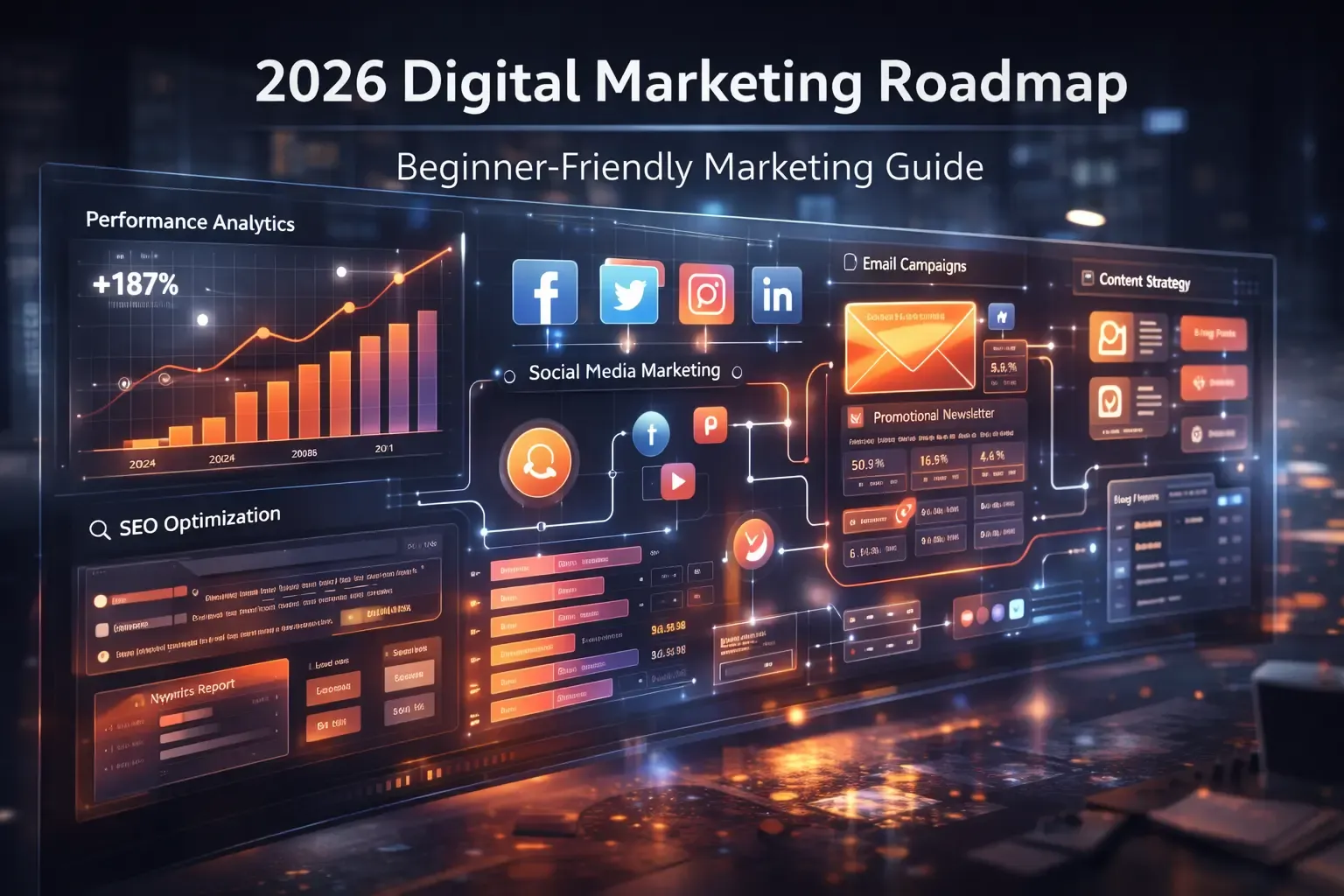
The world of digital marketing is evolving rapidly, and Digital Marketing Roadmap 2026 is your essential guide to navigating this ever-changing landscape. Whether you're a complete beginner or just updating your skills, this roadmap will help you master the strategies, tools, and techniques you need to succeed in 2026. From SEO and content marketing to social media and email campaigns, this step-by-step guide lays out a clear path to measurable results.
In the first few minutes of implementing this roadmap, you’ll understand not just what to do, but why each step matters. By following this guide, you’ll gain practical insights and actionable steps to launch and grow your digital presence effectively.
Step 1: Define Your Goals and Audience
Before diving into any campaigns, it’s crucial to understand what you want to achieve. Digital marketing without clear goals is like sailing without a compass.
Key Actions:
- Identify SMART goals: Specific, Measurable, Achievable, Relevant, Time-bound.
- Define your target audience: age, interests, behavior, location.
- Map customer pain points and needs to your solutions.
Tools like Google Analytics, HubSpot, and SEMrush can help research audience behavior and set realistic KPIs.
Step 2: Build Your Digital Foundation
Your digital foundation is the bedrock of your marketing efforts. It includes your website, branding, and social profiles.
Essentials:
- Website: Mobile-friendly, fast-loading, and optimized for user experience.
- Branding: Consistent logos, colors, and messaging.
- Core platforms: Create profiles on Facebook (Meta), Instagram, LinkedIn, YouTube, and any niche platforms relevant to your audience.
Remember, Google prioritizes trustworthy and authoritative sites, so ensure your website clearly reflects your expertise and credibility.
Step 3: SEO Strategy in 2026
SEO remains a critical pillar of digital marketing. But modern SEO focuses on user intent, entity relevance, and helpful content signals.
Actionable Steps:
- Conduct keyword research using Ahrefs, SEMrush, or Google Keyword Planner.
- Optimize on-page SEO: meta tags, headings, alt text, internal linking.
- Develop content clusters around key topics to signal expertise to search engines.
- Focus on entity connections: reference known platforms, tools, or brands (e.g., Google Analytics, HubSpot).
- Build quality backlinks from authoritative websites.
Remember, Google now prioritizes helpful content that answers user queries naturally, so write for humans first.
Step 4: Content Marketing Plan
Content is still king in 2026—but strategy matters more than volume.
Key Components:
- Blog posts: 1200–2000 words targeting high-intent keywords and LSI topics.
- Videos: Tutorials, explainer videos, and short-form content for social platforms.
- Infographics & visual guides: Ideal for engagement and backlinks.
- Content calendar: Plan posts consistently across channels.
Your content should educate, solve problems, and guide users through your marketing funnel.
Step 5: Social Media Strategy
Social media drives engagement, traffic, and brand awareness. Focus on platforms where your audience is active.
Best Practices:
- Post relevant content based on platform type.
- Use analytics to track engagement and refine strategy.
- Engage with users: respond to comments, share stories, and build community.
- Experiment with ads: Meta Ads, LinkedIn campaigns, TikTok promotions.
Consistency and relevance are more important than posting frequency.
Step 6: Email Marketing
Email remains one of the highest ROI channels in 2026. Done right, it nurtures leads and drives conversions.
Steps for Beginners:
- Build an email list using lead magnets, signup forms, and landing pages.
- Segment your audience based on behavior, interests, and stage in the funnel.
- Create personalized campaigns: welcome series, newsletters, product updates.
- Test subject lines, timing, and content using A/B testing.
Tools like Mailchimp, HubSpot, or ActiveCampaign make segmentation and automation easier.
Step 7: Paid Advertising Strategy
Paid ads complement organic efforts and drive immediate traffic.
Key Considerations:
- Google Ads: Target search intent with paid search campaigns.
- Social Ads: Use Meta Ads Manager, LinkedIn, or TikTok for audience targeting.
- Retargeting campaigns: Re-engage visitors who didn’t convert.
- Track ROI using conversion pixels and analytics dashboards.
Paid campaigns should always align with your content and SEO strategies.
Step 8: Analytics and Optimization
You can’t improve what you don’t measure. Analytics are central to your roadmap.
Focus Areas:
- Track website traffic, bounce rates, and session durations with Google Analytics 4.
- Monitor social engagement, CTRs, and conversions.
- Optimize campaigns continuously: test headlines, copy, visuals, and CTAs.
- Use AI tools like ChatGPT or Jasper for content suggestions and optimization tips.
This step ensures your digital marketing efforts evolve with performance data.
Step 9: Automation and AI in Marketing
2026 is all about efficiency. Automate repetitive tasks using AI and workflow tools.
Automation Examples:
- Email drip campaigns
- Social media posting
- Chatbots for lead capture
- Content idea generation
Automation helps maintain consistency while freeing time for strategy and creative work.
Step 10: Continuous Learning and Adaptation
Digital marketing is constantly changing. Stay updated by:
- Following industry blogs: Moz, HubSpot, Neil Patel, Search Engine Journal.
- Participating in online communities: LinkedIn groups, Slack channels.
- Attending webinars and online courses.
- Testing new tools and strategies regularly.
Adaptation ensures your roadmap stays relevant and effective in a fast-evolving digital world.
Benefits of Following the 2026 Roadmap
- Structured learning path for beginners
- Step-by-step execution reduces overwhelm
- Higher ROI with integrated SEO, content, and social strategies
- Improved user engagement through targeted, context-aware campaigns
- Enhanced authority and trust in your brand online
This roadmap creates a foundation for long-term digital marketing success.
FAQs
What is the Digital Marketing Roadmap 2026?
It is a step-by-step guide for beginners that outlines key strategies like SEO, content marketing, social media, email, and paid ads for 2026.
How do beginners start with digital marketing in 2026?
Start by defining goals, understanding your audience, and building a digital foundation including a website, social profiles, and a content plan.
Which tools are essential for the 2026 roadmap?
Google Analytics 4, HubSpot, Mailchimp, SEMrush, Ahrefs, Meta Ads Manager, and ChatGPT or Jasper for AI content support.
Why is SEO important in 2026?
SEO ensures your content is discoverable, contextually relevant, and authoritative, improving organic traffic and engagement.
How do I measure success in digital marketing?
Track KPIs like website traffic, engagement rates, conversion rates, email open rates, and ROI on paid campaigns using analytics tools.