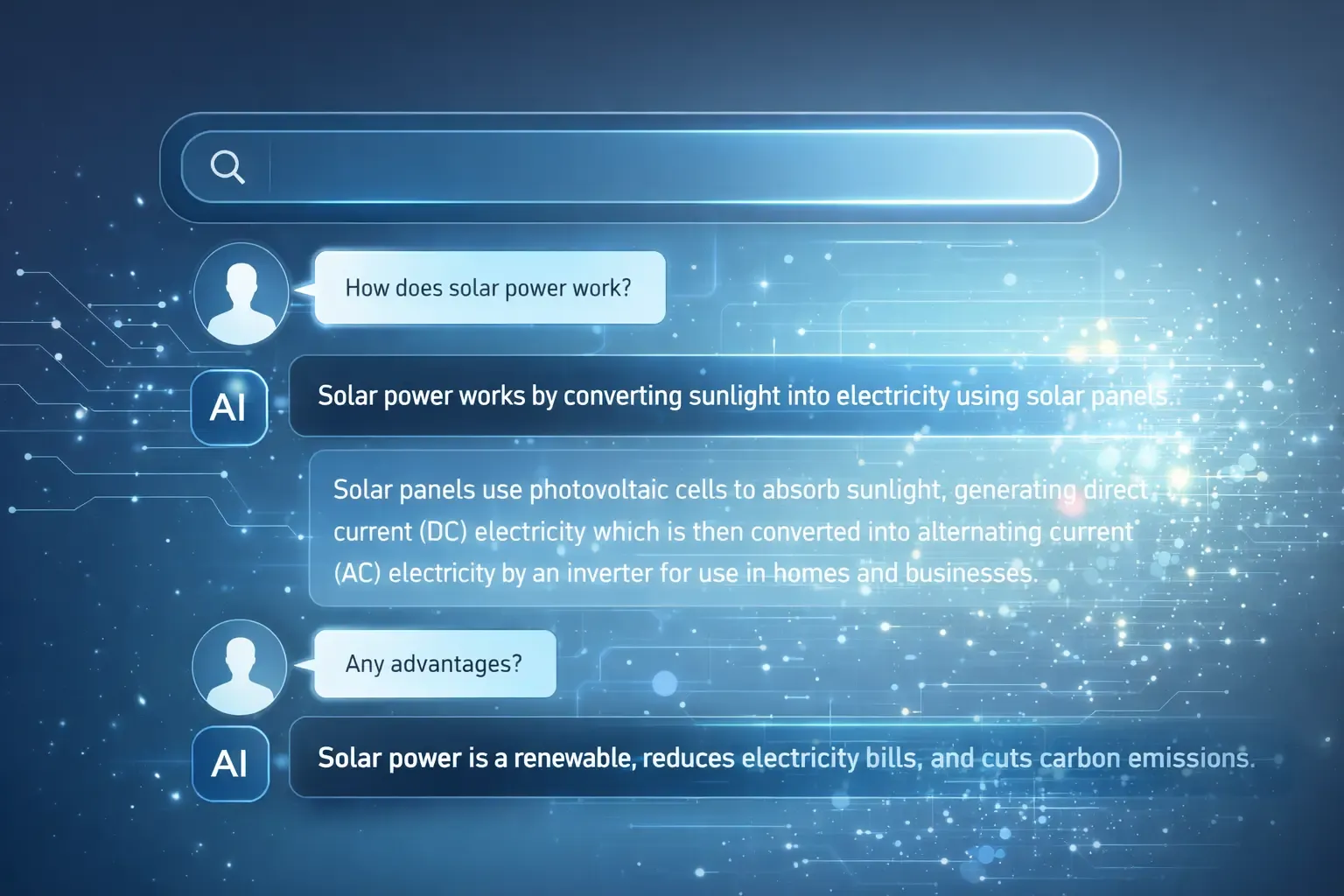
Search no longer works the way it used to.Typing a few keywords and scanning blue links is slowly fading into the background.
Today, search engines behave more like assistants.They explain topics, compare options, summarize pages, and guide users step by step.
AI assisted explainers are at the center of this shift.They are transforming search from a lookup tool into an ongoing conversation.
What Are AI Assisted Explainers
AI assisted explainers are AI generated responses that interpret, summarize, and explain information directly within search results.
Instead of pointing users to ten links, search engines now try to answer questions clearly and instantly.
These explainers often include:
- Natural language summaries
- Follow up prompts
- Contextual clarifications
- Comparisons and examples
- Step by step breakdowns
The goal is simple.Help users understand, not just find, information.
Why Search Is Becoming Conversational
Search engines are responding to changes in how people think and behave online.
Users no longer search in keywords.They search in questions.
They expect:
- Immediate clarity
- Simple explanations
- Answers tailored to intent
- A flow that continues naturally
AI makes this possible by understanding language, context, and intent together.
Instead of asking one query at a time, users now refine, expand, and explore topics through conversation.
How Conversational Search Actually Works
Behind the scenes, conversational search combines several technologies.
AI models analyze:
- Query intent
- Past interactions
- Topic relationships
- Content credibility
- Real time signals
The system then generates an explainer that fits the moment.
For example, someone searching for cloud security might see:
- A summary definition
- Key risks explained simply
- A comparison of solutions
- Suggested next questions
Search becomes a guided experience rather than a scavenger hunt.
The Role of Search Generative Experience
Search Generative Experience, or SGE, pushes AI explainers even further.
Instead of displaying a single answer, SGE:
- Synthesizes information from multiple sources
- Highlights consensus and differences
- Offers follow up prompts
- Updates answers dynamically
This changes what visibility means for websites.
Ranking is no longer just about position.It is about contribution.
Content must be clear enough for AI to extract, trust, and reuse.
What This Means for Content Creators
AI assisted explainers reward clarity over cleverness.
Content that performs well in conversational search usually:
- Explains concepts simply
- Uses direct language
- Answers specific questions
- Breaks topics into logical sections
- Avoids fluff and filler
Long paragraphs that wander lose value.Focused explanations win.
Creators must think like teachers, not marketers.
How SEO Is Adapting to Conversational Search
Traditional SEO focused on keywords and backlinks.Conversational search adds new layers.
Search engines now evaluate:
- How well content answers questions
- Whether explanations match user intent
- If information is structured clearly
- How trustworthy the source appears
- Whether content supports follow up queries
This pushes SEO toward intent optimization and topical depth.
The Rise of Answer First Content
Users often get what they need without clicking.
This does not mean SEO is dead.It means content must earn trust before the click.
Answer first content includes:
- Clear definitions near the top
- Summary paragraphs
- FAQ sections
- Lists and short explanations
- Clean heading hierarchy
When AI trusts your content, it becomes a source, even without traffic.
Voice Search and Conversational AI
Conversational search is not limited to screens.
Voice assistants rely heavily on AI assisted explainers because:
- Users expect spoken answers
- There is no page to scroll
- Responses must be concise and clear
This makes natural language structure essential.
Content written for humans works best for voice based search.
Trust, Accuracy, and EEAT Signals
AI explainers cannot afford to be wrong.Search engines prioritize safety and accuracy.
They look for:
- Author expertise
- Source transparency
- Updated information
- Consistent topical coverage
- Clear ownership and accountability
EEAT is no longer optional.It is foundational to visibility in AI driven search.
How Brands Can Optimize for AI Assisted Explainers
To stay visible in conversational search, brands should:
- Write content that explains, not sells
- Use headings that match real questions
- Add concise summaries under sections
- Include FAQs that mirror user language
- Maintain content freshness
- Link related topics internally
- Show real expertise and experience
The goal is to support the conversation, not interrupt it.
The Shift From Search Results to Search Experiences
Search engines are no longer lists of links.They are evolving into interactive knowledge systems.
Users explore topics in layers:
- What is this
- Why does it matter
- How does it work
- What should I do next
AI assisted explainers guide this journey naturally.
Brands that understand this shift will stay relevant.Those that cling to old tactics will slowly disappear.
What the Future of Search Looks Like
In the near future, search will feel less like a tool and more like dialogue.
Expect:
- Ongoing conversations across sessions
- Personalized explanations
- Context aware answers
- Fewer clicks but deeper understanding
- Stronger focus on trust and clarity
Search engines will reward content that helps users think, decide, and act.
Final Thoughts
AI assisted explainers are changing the purpose of search.
Search is no longer about finding pages.It is about understanding ideas.
Conversational search rewards clarity, honesty, and real knowledge.It favors creators who teach, guide, and explain.
The future of SEO belongs to those who can speak clearly to both humans and machines.