If you’re trying to grow a website, attract more traffic, or generate leads online, you’ll eventually come across two terms again and again.
SEO and SEM.
At first, they might seem similar. After all, both aim to bring visibility on search engines. But once you look a little deeper, the differences become clear.
More importantly, choosing the right approach can directly impact how fast you grow and how sustainable that growth is.
So instead of looking at them as competing strategies, it’s better to understand how each one works, where they fit, and how they can support your goals.
Let’s break it down in a practical way.
What Is SEO and How It Works in Real Scenarios
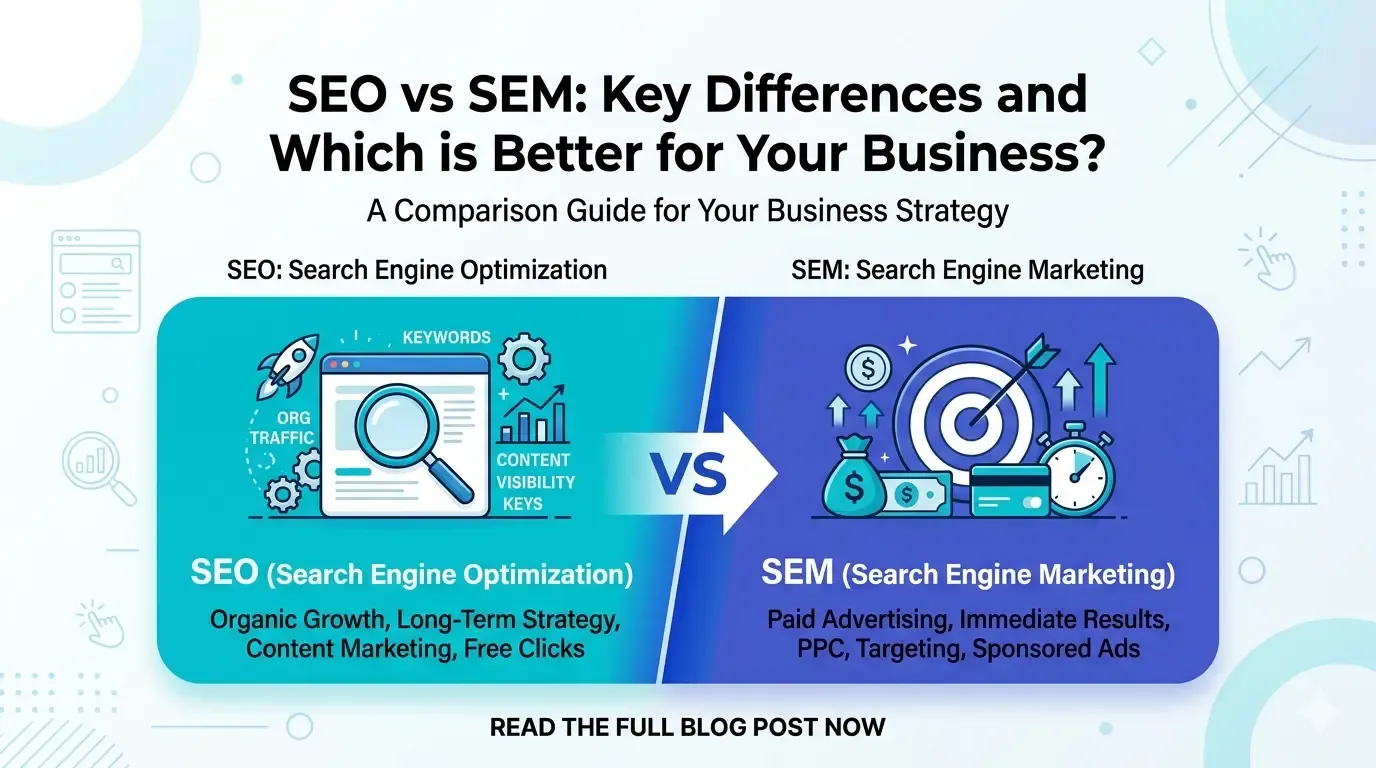
SEO, or search engine optimization, is the process of improving your website so it ranks higher in organic search results on platforms like Google Search.
Unlike paid ads, you don’t pay for each visitor. Instead, you earn traffic by creating relevant, useful, and optimized content.
A typical SEO strategy includes:
- keyword research based on user intent
- creating high-quality blog content and landing pages
- optimizing on-page elements like titles, headings, and meta descriptions
- improving technical SEO such as site speed, mobile usability, and indexing
- building backlinks to increase domain authority
For example, if someone searches “best digital marketing course,” SEO helps your page appear in those results naturally.
It takes time to build, but once it starts working, it can bring consistent and scalable organic traffic without ongoing ad spend.
What Is SEM and How It Works in Practice
SEM, or search engine marketing, refers to paid strategies used to appear in search results.
The most common form is pay-per-click advertising through platforms like Google Ads.
With SEM, you can:
- bid on specific keywords
- show ads at the top of search results
- target users based on location, device, and behavior
- control your daily budget and spending
- measure results in real time
For instance, if you want immediate visibility for a new service, SEM allows you to appear on top almost instantly.
You pay only when someone clicks your ad, which makes it measurable and performance-driven.
SEO vs SEM: Key Differences Explained Clearly
Understanding the differences helps you choose the right approach based on your business goals.
Traffic Source
SEO generates organic traffic through search engine rankings.SEM drives paid traffic through advertisements.
Time to Results
SEO takes time to build authority and rankings.SEM delivers immediate visibility and clicks.
Cost Structure
SEO requires time, effort, and content investment but no cost per click.SEM involves ongoing ad spend and bidding for keywords.
Sustainability
SEO provides long-term traffic even after initial effort.SEM traffic stops as soon as you pause your campaigns.
Click Behavior
Users often trust organic results more.Ads are visible but may be skipped by some users.
Data and Testing
SEO takes time to gather data and insights.SEM provides quick data for testing keywords and campaigns.
SEO vs SEM: Which One Should You Choose
There’s no one-size-fits-all answer here.
It depends on your current situation, goals, and resources.
Choose SEO if your goal is:
- building long-term organic traffic
- reducing dependency on paid ads
- improving brand credibility and trust
- creating a sustainable content-driven strategy
SEO is ideal if you are willing to invest time and focus on long-term growth.
Choose SEM if your goal is:
- generating quick traffic and leads
- launching a new product or service
- testing new markets or keywords
- running time-sensitive campaigns
SEM is perfect when speed matters.
In reality, most successful businesses use both.
How SEO and SEM Work Together in a Smart Strategy
Instead of choosing one over the other, combining both can give better results.
Here’s how:
- use SEM to get immediate traffic while SEO is building
- test high-performing keywords through ads before targeting them in content
- retarget users who visited your website through paid campaigns
- use SEO content to reduce long-term ad costs
This creates a balanced approach where short-term and long-term strategies support each other.
Real-World Example of Combined Search Strategy
Let’s say you run a digital service business.
- you launch Google Ads to get instant visibility
- at the same time, you publish SEO-optimized blog content
- over a few months, your organic rankings improve
- you start getting consistent traffic without paying for every click
- you reduce ad spend and focus on high-converting campaigns
This is how businesses scale efficiently using both strategies together.
Advantages and Limitations of SEO
Benefits of SEO
- consistent long-term traffic
- builds authority and trust
- cost-effective over time
- improves overall website quality and user experience
Limitations of SEO
- slow initial results
- requires consistent content creation
- depends on algorithm updates
- competitive keywords take time to rank
Advantages and Limitations of SEM
Benefits of SEM
- immediate results and visibility
- precise audience targeting
- easy to measure and optimize
- flexible budget control
Limitations of SEM
- continuous cost for traffic
- competition can increase cost per click
- requires constant monitoring and optimization
- traffic stops when campaigns stop
Common SEO and SEM Mistakes to Avoid
Many beginners struggle because of avoidable mistakes.
Here are a few to watch out for:
- relying only on paid ads without building organic presence
- expecting SEO results too quickly
- targeting keywords without understanding search intent
- sending paid traffic to poorly optimized landing pages
- not tracking conversions and user behavior
Avoiding these mistakes can save both time and budget.
How SEO and SEM Fit into a Complete Digital Marketing Strategy
SEO and SEM are just parts of a bigger system.
They connect with:
- content marketing and blogging
- social media marketing
- email marketing campaigns
- conversion rate optimization
Together, they help attract, engage, and convert users at different stages of the customer journey.
If you want to understand how everything connects, this beginner-friendly guide to digital marketing gives you a clear and practical overview.
Final Thoughts
SEO vs SEM is not really about choosing a winner.
It’s about understanding how each one works and using them effectively.
SEO builds your foundation over time. SEM gives you speed when you need it.
When you combine both, you create a strategy that is both scalable and sustainable.
Start small. Test what works. Learn from your data.
Over time, you’ll find the right balance for your business.
If you’re looking to apply these strategies in real-world scenarios, Milaaj Digital Academy focuses on practical learning that helps connect ideas with execution.
That’s where real growth begins.
FAQs
What is the main difference between SEO and SEM
SEO focuses on organic traffic, while SEM focuses on paid search advertising.
Which is better for beginners SEO or SEM
SEO is better for long-term learning, while SEM is useful for quick results.
Can SEO and SEM work together
Yes, combining both strategies often delivers the best results.
Does SEM include SEO
No, SEM mainly refers to paid search advertising.
How long does SEO take compared to SEM
SEO takes months, while SEM can deliver results immediately.