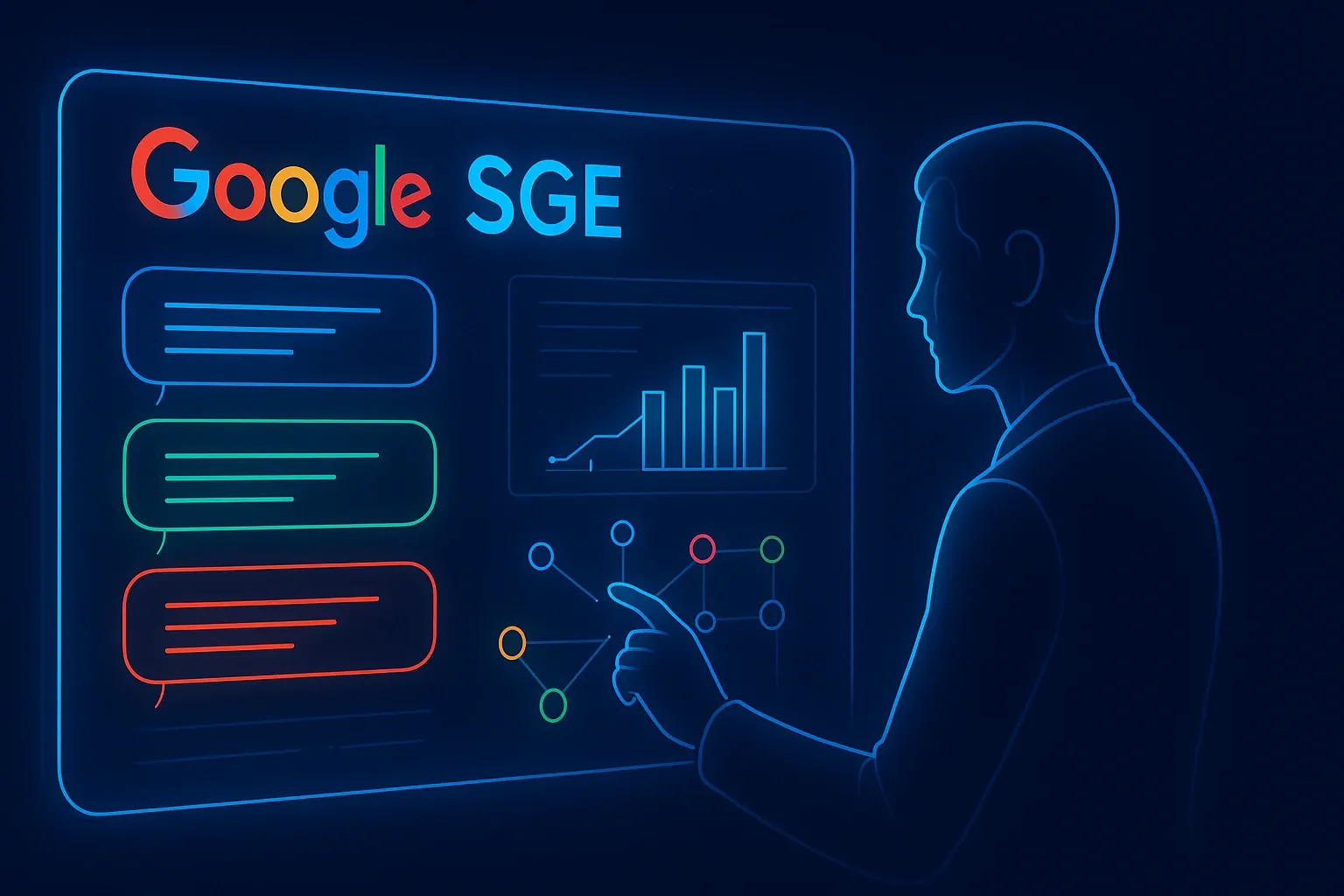
For years, search engine optimization (SEO) has revolved around keywords — finding the right phrases, optimizing density, and structuring content to rank on Google. But in 2025, the rules have shifted dramatically with the rollout of Google’s Search Generative Experience (SGE).
Instead of focusing solely on matching keywords, Google’s SGE uses artificial intelligence to generate contextual, intent-driven results. This represents one of the biggest transformations in search history — moving SEO away from keyword manipulation and into an era of topical authority, context, and user satisfaction.
In this blog, we’ll explore what Google’s SGE is, why it’s changing SEO forever, and how businesses, marketers, and creators can adapt to thrive in the future of search.
What Is Google’s Search Generative Experience (SGE)?
Google’s Search Generative Experience (SGE) is the company’s AI-powered approach to delivering search results. Instead of only showing blue links, SGE generates summaries, context, and answers directly within search, blending traditional results with conversational AI.
Key features of SGE include:
- AI-generated summaries that provide quick, context-rich answers.
- Deeper context that goes beyond exact keyword matches.
- Multimodal search, combining text, images, and video in results.
- Follow-up queries where users can refine their search like a conversation.
SGE represents a paradigm shift — search is no longer just about keywords, but about understanding intent and providing the most relevant content possible.
Why Keywords Are No Longer Enough
Traditionally, SEO strategies were built around keyword research and optimization. But SGE changes the landscape by:
- Prioritizing Context Over KeywordsInstead of simply matching “best running shoes 2025,” SGE looks at user intent, such as whether the searcher wants reviews, buying guides, or sustainability insights.
- Topical Authority > Keyword StuffingContent that demonstrates expertise, depth, and trustworthiness across a topic will perform better than content optimized around one high-volume keyword.
- User Experience as a Ranking SignalGoogle now prioritizes sites that provide value — fast-loading, trustworthy, accurate — because AI summaries depend on credible sources.
- Semantic and Conversational QueriesWith voice search and conversational AI, queries are longer, more natural, and more contextual. Content must answer these queries holistically.
How SGE Impacts SEO Rankings in 2025
1. Visibility Inside AI Summaries
Being featured in an AI-generated answer block can drive massive traffic — but requires strong authority and clear, structured content.
2. More Competition for Clicks
Because AI summaries provide direct answers, users may not click on traditional links. SEO strategies now focus on ensuring content is cited by Google’s AI.
3. Rise of EEAT (Experience, Expertise, Authority, Trust)
Google heavily relies on EEAT signals when choosing which sources to trust for AI-generated answers. Sites without credibility, real authorship, and transparency risk losing visibility.
4. Content Format Evolution
Long-form blogs still matter, but structured content like FAQs, schema markup, and knowledge-rich clusters are more likely to be surfaced by SGE.
5. Shift From Keywords to Entities
SGE looks at entities (people, places, concepts) instead of just words. Content that covers entities comprehensively gains a higher chance of ranking.
How to Optimize for Google SGE in 2025
Build Topical Authority
- Create content clusters around major topics.
- Interlink related articles to demonstrate depth.
- Use schema markup to help Google connect your content with entities.
Improve EEAT Signals
- Add author bios showcasing expertise.
- Cite reliable, verifiable sources.
- Use HTTPS, privacy policies, and trust signals.
Structure Content for AI Discovery
- Write clear, scannable answers to common questions.
- Use headings, bullet points, and concise summaries.
- Add multimedia (images, video, infographics) to support engagement.
Optimize for Conversational Search
- Include long-tail, natural language queries in your content.
- Create FAQs that mirror how people actually speak.
- Address why, how, and what questions instead of only focusing on transactional keywords.
Technical Performance Still Matters
- Optimize Core Web Vitals (LCP, INP, CLS).
- Use mobile-first responsive design.
- Reduce code bloat and server response times.
Content That Wins in the SGE Era
- In-Depth Guides – Long-form, authoritative content that covers every aspect of a topic.
- Answer-Oriented Content – Clear, structured answers to common user queries.
- Multimodal Content – Text supported by video, infographics, and interactive media.
- First-Hand Experience Content – Google increasingly rewards content written from personal expertise rather than generic AI output.
The Business Impact of SGE
- Higher Stakes for SEO – Only the most authoritative and trustworthy sites will be cited in AI summaries.
- Shift in Click Behavior – Fewer clicks on traditional organic results, more reliance on AI-generated snippets.
- Content Strategy Overhaul – Brands must focus on building authority and trust, not just keyword targeting.
- Competitive Advantage for Early Adopters – Those who optimize for SGE now will dominate visibility in 2025 and beyond.
Future of SEO Beyond Keywords
- Entity-Based SEO will replace keyword-first strategies.
- Personalized Search Results will adapt based on user history and context.
- Multimodal Search will become the standard, combining text, image, and video queries.
- AI as a Gatekeeper – Search engines are becoming AI-driven content curators instead of just directories of links.
Conclusion
The rise of Google’s Search Generative Experience (SGE) signals the end of keyword-only SEO strategies. Success in 2025 and beyond requires a shift toward topical authority, contextual relevance, and trustworthiness.
Instead of chasing high-volume keywords, brands and creators must focus on building comprehensive content ecosystems that demonstrate expertise and answer user intent holistically.
SEO has always been about adapting to change — and in the age of SGE, those who embrace this transformation will not only survive but thrive in the new search era.