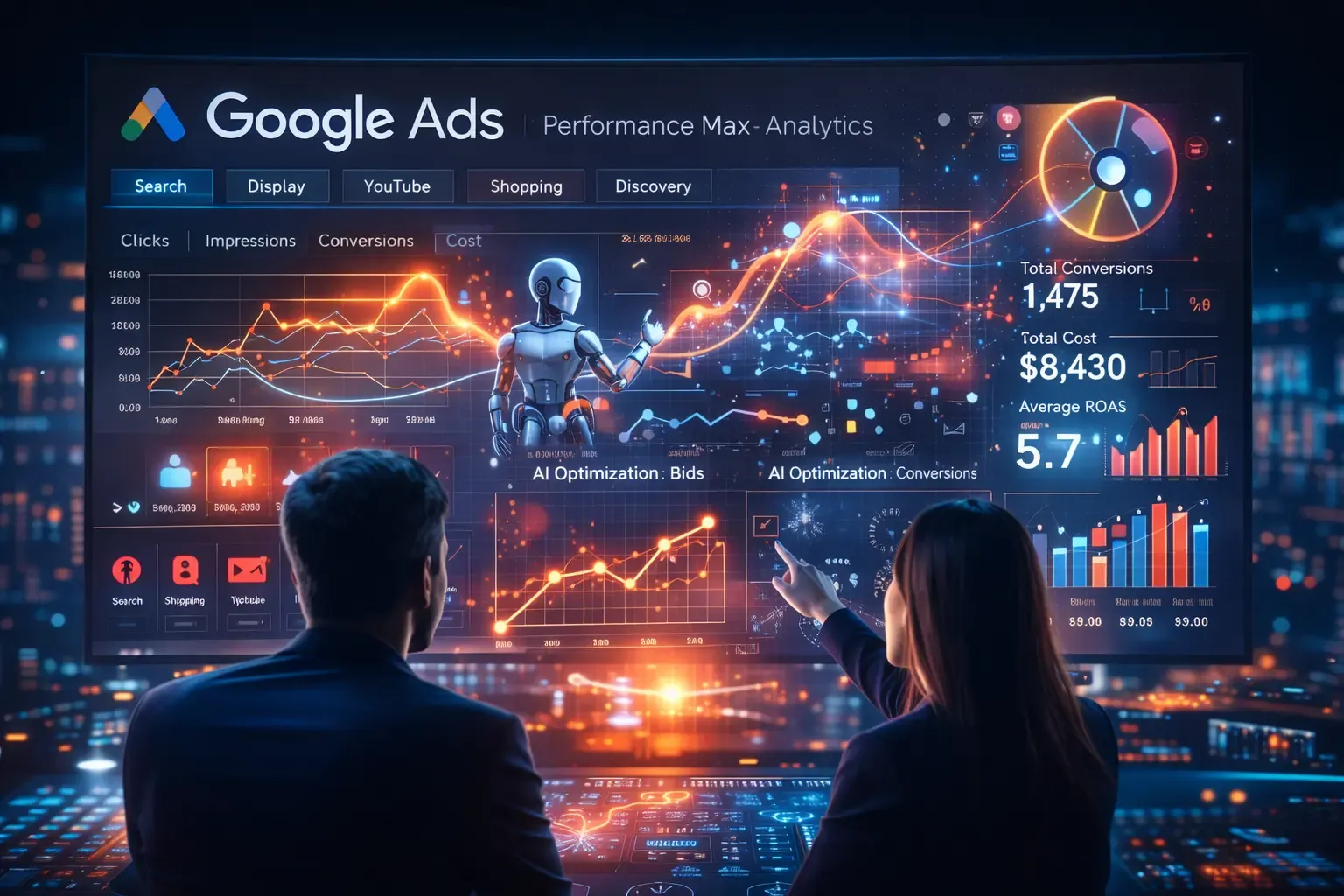
Digital advertising is evolving rapidly, and automation is becoming a central part of modern marketing strategies. One of the most significant innovations in Google’s advertising ecosystem is Performance Max campaigns.
These campaigns use artificial intelligence and machine learning to optimize advertising performance across all Google channels. Instead of managing multiple campaign types separately, advertisers can use Performance Max campaigns to reach audiences across search, display, YouTube, Gmail, Discover, and shopping ads within a single campaign.
For businesses and marketers, understanding how Performance Max works is essential for staying competitive in the future of Google Ads.
What Are Performance Max Campaigns?
Performance Max campaigns are goal-based advertising campaigns within Google Ads that use automation to deliver ads across all Google platforms.
Unlike traditional campaigns that focus on a single channel, PMax campaigns distribute ads across multiple Google properties automatically.
These channels include:
• Google Search• YouTube• Google Display Network• Gmail• Google Discover• Google Shopping
Google’s AI determines where and when your ads should appear based on user behavior and campaign goals.
Why Performance Max Campaigns Are Important
Automation is becoming increasingly important in digital advertising. With growing data complexity and changing user behavior, manual campaign management is becoming less effective.
Performance Max campaigns help advertisers by:
• Using AI to optimize ad placements• Reaching audiences across multiple channels• Improving conversion opportunities• Reducing manual campaign management
This shift allows marketers to focus more on strategy and creative assets rather than constant campaign adjustments.
How Performance Max Campaigns Work
Performance Max campaigns rely heavily on machine learning algorithms.
Advertisers provide certain inputs, and Google’s AI handles optimization.
Key inputs include
• campaign objectives• budget settings• audience signals• creative assets such as images, videos, and headlines
Google’s system then tests different combinations of assets and placements to maximize performance.
The more data the campaign collects, the better the algorithm becomes at identifying high-performing opportunities.
Key Features of Performance Max Campaigns
Performance Max campaigns offer several features that make them powerful tools for advertisers.
Cross Channel Advertising
Instead of managing separate campaigns for each platform, PMax distributes ads automatically across Google’s entire ecosystem.
Automated Bidding
Google uses machine learning to adjust bids in real time based on the likelihood of conversions.
Smart Audience Targeting
PMax campaigns use audience signals to identify users who are most likely to take action.
Asset Optimization
Advertisers provide multiple creative assets, and Google automatically combines them into effective ad formats.
Benefits of Using Performance Max Campaigns
For marketers and businesses, Performance Max campaigns provide several important advantages.
Simplified campaign management
Managing one campaign across multiple channels saves time and reduces complexity.
Increased reach
Ads appear across a wide network of Google platforms, increasing visibility.
Improved conversion potential
AI optimization helps identify users most likely to convert.
Data driven decision making
Performance Max uses large datasets to continuously improve campaign results.
Best Practices for Running Performance Max Campaigns
Although automation handles much of the optimization, advertisers should still follow certain best practices.
Provide high quality creative assets
Strong images, videos, and headlines improve the algorithm’s ability to generate effective ads.
Use clear conversion goals
Define your campaign objective clearly, such as purchases, leads, or website visits.
Add audience signals
Providing audience data helps Google understand who your ideal customers are.
Monitor performance insights
Even automated campaigns require regular analysis to identify trends and opportunities.
Performance Max vs Traditional Google Ads Campaigns
Many marketers wonder how Performance Max compares with traditional Google Ads campaigns.
Traditional campaigns require advertisers to manage:
• keyword targeting• bidding adjustments• individual channel strategies
Performance Max campaigns automate most of these processes using machine learning.
However, this also means advertisers have less manual control over specific placements and keywords.
Instead, success depends more on strong creative assets and accurate conversion tracking.
Challenges of Performance Max Campaigns
While PMax campaigns offer many advantages, they also come with certain challenges.
Reduced transparency
Because Google handles optimization automatically, advertisers have limited visibility into specific targeting decisions.
Dependence on data quality
Poor conversion tracking or weak creative assets can negatively affect campaign performance.
Learning period
Performance Max campaigns need time to gather data before reaching optimal results.
Understanding these limitations helps marketers use PMax more effectively.
The Future of Google Ads Automation
Automation is becoming the foundation of digital advertising platforms. Google continues to integrate artificial intelligence into its ad systems to improve efficiency and results.
In the future, we can expect:
• more advanced predictive targeting• improved automated bidding strategies• smarter audience insights• deeper integration between AI and advertising
Performance Max campaigns represent a major step toward fully automated advertising ecosystems.
Final Thoughts
As digital advertising evolves, automation will play an increasingly important role in campaign management.
Performance Max campaigns allow advertisers to leverage Google’s powerful machine learning technology to reach audiences across multiple platforms while optimizing for conversions.
By understanding how these campaigns work and following best practices, marketers can take advantage of this automation to improve performance and stay competitive in the future of Google Ads.
FAQs
What is a Performance Max campaign in Google Ads?
A Performance Max campaign uses Google’s AI to show ads across Search, YouTube, Display, Discover, Gmail, and Shopping from a single automated campaign.
Are Performance Max campaigns good for beginners?
Yes. Performance Max campaigns simplify campaign management by automating targeting, bidding, and placements, making them easier for beginners to run Google Ads.
How long does a Performance Max campaign take to work?
Most Performance Max campaigns need about two to four weeks to gather data and allow Google’s algorithm to optimize performance.
What assets are needed for a Performance Max campaign?
You need headlines, descriptions, images, videos, audience signals, and conversion goals so Google can automatically build and test different ad combinations.
Can Performance Max campaigns replace traditional Google Ads campaigns?
Not always. Performance Max works well for automation and reach, but search campaigns still offer more control over keywords and bidding strategies.
How do Performance Max campaigns find customers?
Google uses machine learning, audience signals, and user behavior data to show ads to people most likely to convert.
Do Performance Max campaigns work for small businesses?
Yes. Small businesses can use Performance Max campaigns to reach multiple Google platforms without managing separate campaigns.
How can I improve my Performance Max campaign results?
Use strong creative assets, accurate conversion tracking, clear campaign goals, and allow enough learning time for Google’s AI to optimize performance.