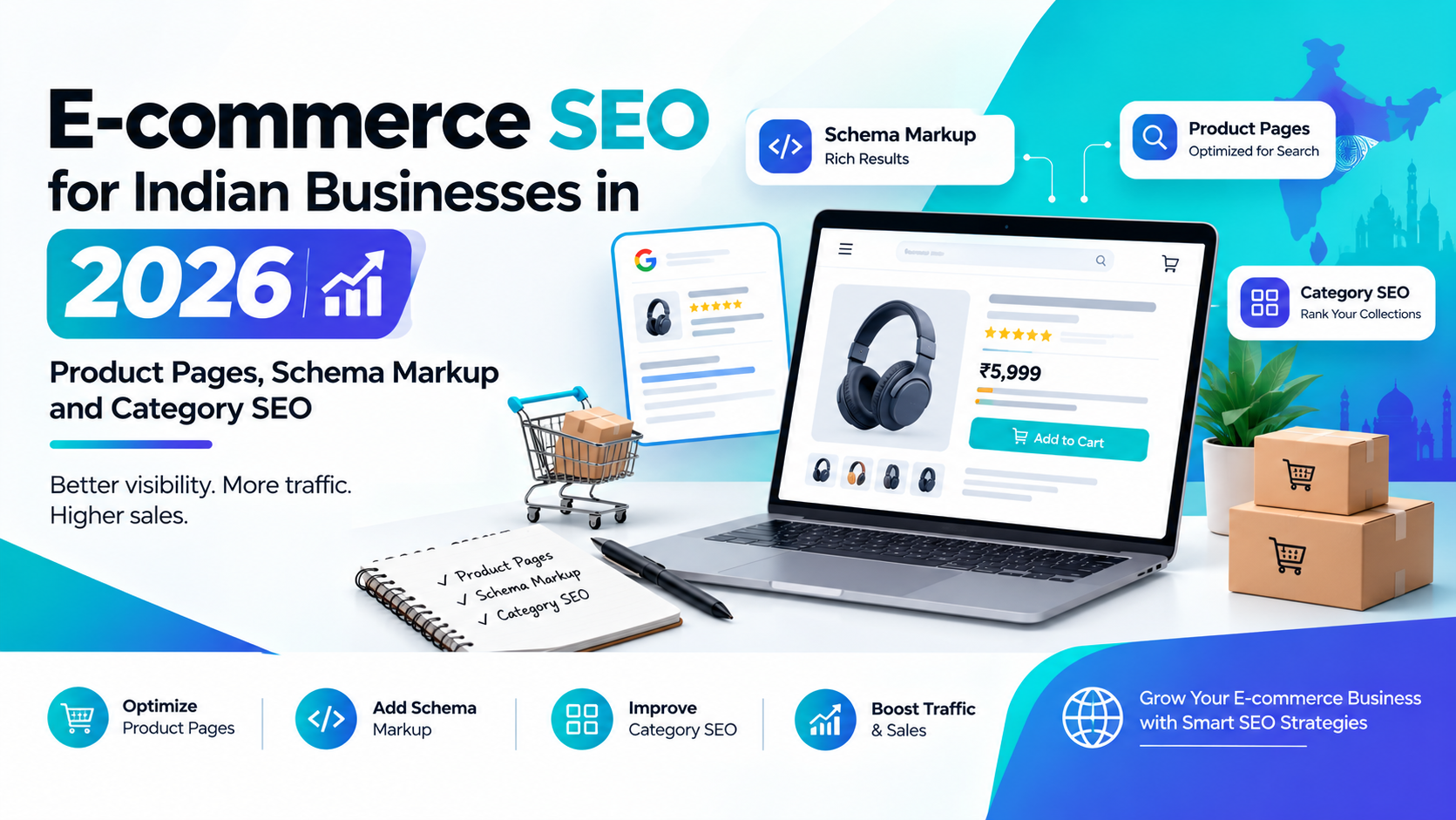
Your product page might look perfect to you, but Google's AI doesn't care how nice your photos are. It cares whether your page speaks its language, and in 2026, that language is structured data, not just keywords. If you're running an online store in India and still treating SEO like it's 2019, you're leaving real revenue on the table. Let's fix that, one section at a time.
Why E-commerce SEO for Indian Businesses Looks Different in 2026
The rules haven't just shifted slightly, they've been rewritten. Search results no longer show ten blue links and call it a day. Instead, shoppers get AI-generated answers, comparison tables, and product shortlists before they even scroll.
AI Overviews Are Already Eating Your Clicks
Google's AI Overviews now appear on a meaningful share of shopping-related searches, and that number keeps climbing every quarter. When AI answers a query directly inside the results page, your product still needs to be the one it recommends, or you lose the sale before the shopper ever reaches your site. This shift makes e-commerce SEO for Indian businesses less about ranking a blue link and more about becoming the source AI trusts enough to cite.
Mobile-First Shoppers Change the Rules
Most Indian shoppers browse and buy directly from their phones, often on inconsistent network speeds. That means your site's mobile performance isn't a nice-to-have anymore, it's the baseline Google measures you against through mobile-first indexing. If your category pages load slowly on a mid-range Android phone in a tier-2 city, you're already losing ground to competitors who fixed this months ago.
Product Page SEO: The Foundation of Every Online Store
Everything else you do in e-commerce SEO for Indian businesses eventually funnels back to the product page. Get this wrong, and no amount of category optimization will save you.
Write Product Descriptions That Actually Rank
Skip the manufacturer's copy-paste description. Write unique content that answers real buyer questions: who is this product for, what problem does it solve, and how does it compare to similar options. Naturally weave in the terms your customers actually search for, since generic descriptions rarely rank and never build trust with first-time visitors.
Optimize Images and Alt Text for Visual Search
Every product image needs descriptive alt text that mentions the product name, color, and key feature, not just "product1.jpg" left over from a bulk upload. Visual search is growing fast in India, and Google increasingly pulls product images directly into shopping results when the alt text and file structure are clean.
Nail Your Title Tags and Meta Descriptions
Your title tag should include your primary keyword plus a genuine reason to click, whether that's free shipping, a discount, or same-day delivery. Meta descriptions won't directly boost rankings, but they heavily influence click-through rate, and a higher click-through rate sends a strong signal back to Google that your page deserves its spot.
Schema Markup for E-commerce: What You Can't Skip Anymore
If product pages are the foundation, schema markup is the translator that helps Google actually understand what's on that page. Without it, you're relying on Google to guess, and guessing rarely favors you.
Product Schema: Price, Availability and Reviews
Product schema, implemented in JSON-LD format, tells search engines your exact price, stock status, and star rating. This is what unlocks rich results, the listings that show price and reviews directly in search, and it can meaningfully increase your click-through rate compared to a plain text listing. Google has also recently added a category property to Product schema, letting you declare your product's category directly in page markup instead of relying only on your Merchant Center feed.
shippingDetails and returnPolicy Are No Longer Optional
Here's where a lot of Indian sellers fall behind. As of 2026, the shippingDetails and returnPolicy properties inside your Product schema have effectively become requirements, not suggestions. Skip them, and your listing may simply fail to display in enriched form, regardless of how good the rest of your page looks. Given how much Indian shoppers care about return policies before purchasing, this schema addition genuinely helps conversions too, not just rankings.
BreadcrumbList and Category Schema
Breadcrumb schema shows your site's structure directly in search results, helping users understand where a product sits within your catalog before they even click. It's a small addition, but it consistently improves both crawlability and the way your listings look on the results page, which matters more than ever when every SERP feature is competing for attention.
Category Page SEO: The Most Underrated Growth Lever
Product pages get all the attention, but category pages often carry more long-term SEO value, since they target broader, higher-volume search terms.
Structuring Categories Around Search Intent
Build your category hierarchy around how customers actually search, not how your warehouse organizes inventory. A shopper searching "cotton kurtas for women" wants a category page built exactly around that phrase, not a generic "ethnic wear" page they have to dig through. Clear, intent-matched categories consistently outperform broad, catch-all pages.
Avoiding Duplicate Content Across Filters
Filtered category URLs, like sorting by price or color, can quietly create thousands of near-duplicate pages that confuse search engines and dilute your rankings. Use canonical tags correctly, and only let genuinely unique filter combinations get indexed. This single fix often resolves crawl budget issues that have been quietly capping growth for months.
How to Prepare Your Store for AI Search and Agentic Commerce
AI-driven shopping assistants increasingly complete purchases on a buyer's behalf, pulling data straight from your product feed and structured markup. Consequently, your feed and your on-page schema now need to match exactly, since any inconsistency between the two can quietly disqualify you from AI-generated recommendations. Keep your Merchant Center feed and your Product schema in sync, update pricing fields like priceValidUntil promptly during sales, and treat your product data as a living asset rather than a one-time setup task.
A Simple E-commerce SEO Checklist for 2026
Before you move on, run through this quick list: unique product descriptions, descriptive image alt text, complete Product schema with shippingDetails and returnPolicy, BreadcrumbList schema on every category, canonical tags on filtered URLs, and a Merchant Center feed that matches your live site. Nail these six, and you're already ahead of most competitors still relying on outdated tactics.
If you want to go deeper into building these skills professionally, our SEO & AI Search course covers technical SEO, structured data, and generative engine optimization in detail, exactly the areas this guide just walked through.
Frequently Asked Questions
What is the most important schema type for e-commerce SEO?
Product schema matters most, since it directly powers rich results showing price, availability, and star ratings. However, pairing it with shippingDetails, returnPolicy, and BreadcrumbList schema significantly strengthens its impact in 2026.
Does schema markup directly improve Google rankings?
Not directly, but it improves how your listing appears in search results, which increases click-through rate. Search engines also use schema to understand your content more accurately, which indirectly supports better visibility over time.
How often should Indian e-commerce sites update their product schema?
Update it whenever your price, stock status, or promotional dates change. Outdated fields like priceValidUntil can cause your listing to stop appearing in enriched search results entirely.
Are category pages more important than product pages for SEO?
Both matter, but category pages often capture higher-volume, broader search terms, while product pages capture buyers closer to a purchase decision. A strong e-commerce SEO strategy for Indian businesses treats them as equally important, just for different stages of the buyer journey.
How does mobile-first indexing affect Indian e-commerce sites specifically?
Since most Indian shoppers browse on mobile devices, often on slower connections, Google evaluates your mobile page speed and usability as the primary version of your site. A slow or poorly formatted mobile category page can hurt rankings even if your desktop version looks flawless.
E-commerce SEO for Indian businesses in 2026 isn't about chasing a single algorithm update anymore. It's about building product pages, schema, and category structures that both search engines and AI systems can genuinely understand and trust. Get those fundamentals right, and the rankings tend to follow on their own. For more practical breakdowns like this one, browse our digital marketing insights for strategies you can apply the same day you read them.