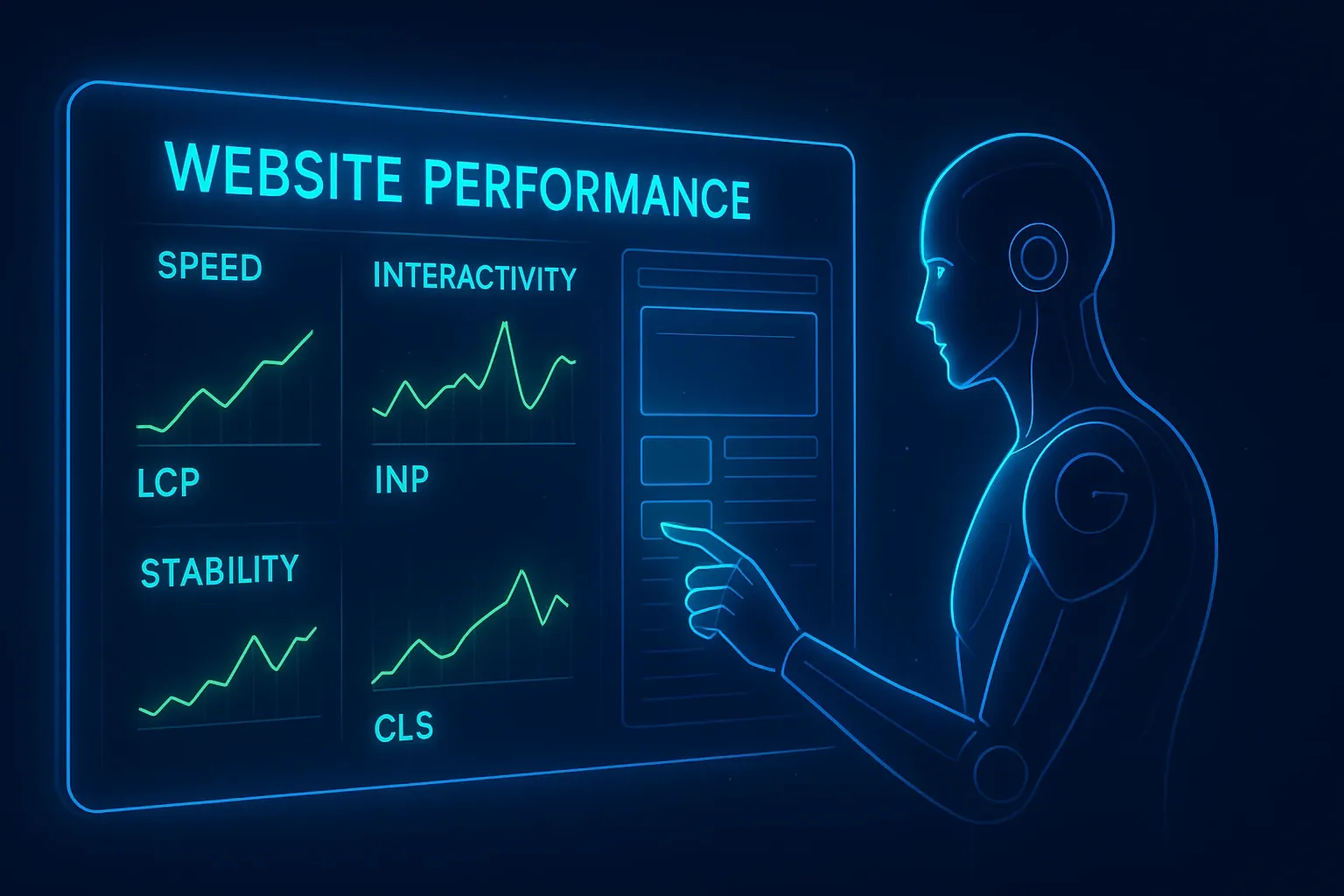
In 2020, Google introduced Core Web Vitals (CWV) as a key ranking factor, focusing on user experience signals like loading speed, interactivity, and visual stability. By 2025, these metrics have evolved significantly, shaping how websites are ranked and discovered.
With search competition higher than ever, website owners, SEO specialists, and developers must understand what really matters now in Core Web Vitals — and how to optimize for them to gain visibility and authority.
This blog explores the latest CWV updates, how they affect search rankings, and the strategies that actually move the needle.
What Are Core Web Vitals?
Core Web Vitals are a set of standardized metrics Google uses to measure real-world user experience on a website.
In 2025, the primary CWV metrics include:
- Largest Contentful Paint (LCP) – Measures how quickly the largest piece of content (image, video, or text) loads.
- First Input Delay (FID) – Measures responsiveness and how quickly a page responds to user interaction.
- Cumulative Layout Shift (CLS) – Measures visual stability to ensure elements don’t move unexpectedly.
- Interaction to Next Paint (INP) – Tracks overall responsiveness across user interactions.
How Core Web Vitals Impact Rankings in 2025
1. Not a Primary Ranking Factor, but a Tie-Breaker
Google has clarified that CWV alone won’t outrank content relevance. However, in competitive niches, a better page experience can give the edge.
2. User Engagement Metrics Are Stronger Than Ever
High bounce rates, poor mobile performance, and unresponsive pages negatively impact rankings. Core Web Vitals directly feed into these signals.
3. AI-Driven Search and CWV
With Google’s Search Generative Experience (SGE), fast-loading, stable websites are prioritized because they integrate better with AI-driven results.
4. Mobile-First Indexing + CWV
Since most searches come from mobile, poor CWV scores on smartphones can hurt overall site visibility.
The Evolution of Core Web Vitals Since 2020
- 2021: CWV became a ranking factor.
- 2022–2023: Mobile-first indexing aligned CWV strongly with mobile experience.
- 2024: FID was replaced by INP, reflecting modern interactive needs.
- 2025: CWV is now fully integrated into Google’s Page Experience system, combining with security, HTTPS, and mobile usability signals.
What Really Impacts Rankings Now?
1. Content Still Reigns Supreme
Even in 2025, Google prioritizes content quality, relevance, and authority above everything else. But poor CWV scores can hold back even great content.
2. INP Over FID
Since Interaction to Next Paint provides a more complete picture of responsiveness, Google weighs it more heavily.
3. Visual Stability Matters More
Websites overloaded with ads or popups struggle with CLS, which directly impacts user trust and conversion.
4. Mobile Performance First
CWV on mobile devices is now more heavily weighted than desktop.
5. AI & Semantic Search Integration
Google’s AI-powered search surfaces pages with fast, stable experiences since these integrate better into instant, conversational results.
How to Optimize Core Web Vitals in 2025
Optimize Largest Contentful Paint (LCP)
- Use next-gen image formats like WebP and AVIF.
- Deploy content delivery networks (CDNs) for global speed.
- Implement server-side rendering (SSR) and edge caching.
- Prioritize critical CSS and preload hero images.
Improve Interaction to Next Paint (INP)
- Minimize JavaScript execution.
- Break up long tasks with web workers.
- Reduce third-party scripts that block interactivity.
- Use lazy hydration for interactive elements.
Reduce Cumulative Layout Shift (CLS)
- Set explicit width and height for all images and video elements.
- Avoid dynamic content shifts (ads, banners, pop-ups).
- Implement font-display: swap for better text stability.
Technical Enhancements for 2025
- Leverage serverless and edge computing for low-latency delivery.
- Use HTTP/3 and QUIC for faster data transfer.
- Implement AI-powered monitoring tools that predict and resolve performance issues in real time.
Tools to Measure Core Web Vitals in 2025
- Google Search Console – Updated CWV reports with INP.
- PageSpeed Insights – Offers lab and field data.
- Lighthouse 12.0 – Advanced auditing with AI suggestions.
- Chrome User Experience Report (CrUX) – Real-user monitoring at scale.
- Third-Party Tools – Platforms like WebPageTest, GTmetrix, and Semrush provide deeper diagnostics.
Common Mistakes Businesses Make
- Over-prioritizing CWV over content. A fast site with thin content won’t rank.
- Ignoring mobile performance. Most CWV issues show up on smartphones.
- Relying solely on lab data. Real-world user conditions vary drastically.
- Not updating frameworks. Outdated CMS themes and plugins drag performance.
The Business Impact of Core Web Vitals
- SEO Rankings – Strong CWV helps edge out competitors.
- Conversions – Faster, more stable sites reduce cart abandonment.
- Brand Trust – Users associate stability and speed with professionalism.
- Advertising ROI – Ad-heavy sites with poor CLS see higher bounce rates.
The Future of Core Web Vitals
- AI-Enhanced Metrics: Google may introduce adaptive scoring, factoring in real-time user behavior.
- Personalized Page Experience: Metrics may shift based on device type, network conditions, or user preferences.
- Integration with Sustainability: Energy-efficient, optimized websites could align with Google’s green web initiatives.
- Beyond the Web: As PWAs and WebAssembly apps grow, CWV will evolve to measure more complex user experiences.
Conclusion
Core Web Vitals in 2025 aren’t about chasing numbers — they’re about delivering a seamless, reliable, and enjoyable user experience. While content quality remains the ultimate ranking factor, CWV plays a critical role in ensuring users stay engaged and satisfied.
By prioritizing fast load times, smooth interactivity, and visual stability, businesses can not only improve search visibility but also enhance customer trust and conversions.
In an era where AI and semantic search dominate, a fast, stable, mobile-first website is no longer optional — it’s the foundation of digital success.