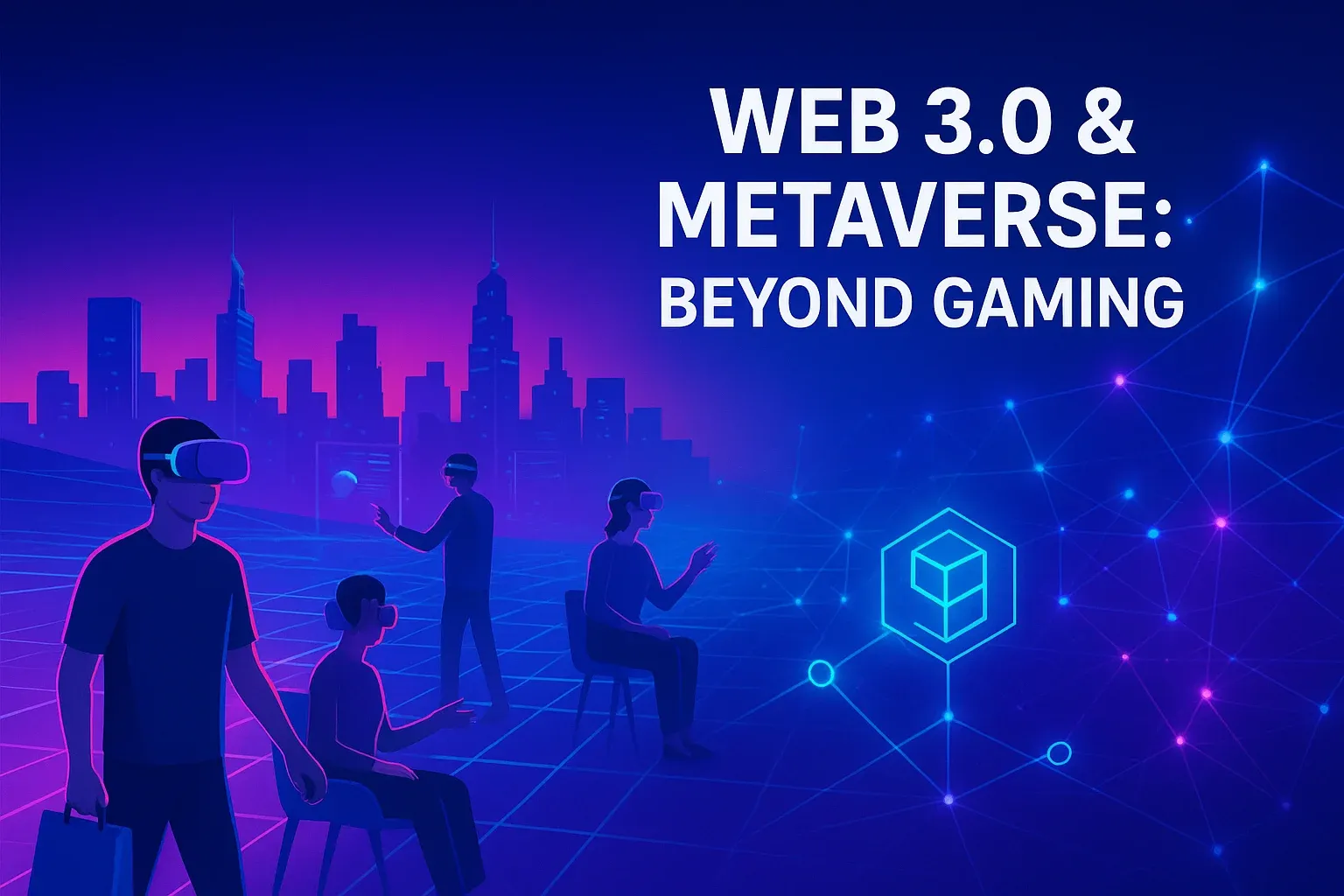
The internet is transforming once again. After the static web pages of Web 1.0 and the social, interactive world of Web 2.0, we are now entering Web 3.0—a decentralized and user-driven era powered by blockchain, artificial intelligence, and immersive technologies.
Alongside this shift, the metaverse has emerged as more than just a digital playground for gamers. It is quickly expanding into a vast ecosystem with real-world applications in education, healthcare, finance, real estate, and remote work. By blending virtual environments with blockchain-backed ownership and AI-powered personalization, the metaverse is evolving into a transformative tool for businesses and individuals alike.
What Is Web 3.0?
Web 3.0 represents the next generation of the internet, where users regain control of their data and online presence. Unlike Web 2.0, where platforms like Google and Facebook centralize control, Web 3.0 is decentralized and built around user ownership.
Core Features of Web 3.0:
- Decentralized networks with no single point of control
- Blockchain-based transparency and security
- Tokenized assets that represent digital ownership
- Smart contracts that automate digital agreements
- Artificial intelligence delivering personalized online experiences
What Is the Metaverse?
The metaverse is a persistent, 3D digital environment where people can interact, work, learn, and trade. It combines virtual reality (VR), augmented reality (AR), and blockchain technologies to create immersive experiences that mimic, and often enhance, real life.
Layers of the Metaverse:
- Infrastructure – Powered by 5G, 6G, and cloud computing
- Immersive Access – Devices like VR headsets, AR glasses, and haptic tech
- Blockchain – Digital identity, NFTs, and secure ownership
- Applications – Education, healthcare, retail, workspaces, and entertainment
Together, Web 3.0 and the metaverse create a foundation for immersive, decentralized, and user-controlled digital ecosystems.
Real-World Applications
1. Education and Training
Virtual classrooms are no longer experimental—they are becoming mainstream. Students across the globe can join immersive learning environments, interact with realistic 3D simulations, and even earn blockchain-secured certificates that prevent fraud.
Doctors, engineers, and pilots are already using virtual simulations to practice complex procedures and skills, saving time and reducing risks before applying them in the real world.
2. Healthcare
The metaverse is reshaping healthcare through:
- Virtual clinics that allow patients and doctors to meet in realistic digital environments.
- Digital twins of patients, where data from wearables and AI is used to create virtual models for more accurate diagnoses.
- Blockchain medical records that ensure security and universal accessibility.
These innovations make healthcare more accessible, accurate, and secure.
3. Retail and E-Commerce
Shopping is moving into immersive spaces where consumers can:
- Visit virtual malls and interact with products as if physically present.
- Purchase NFT-based fashion and accessories that blur the line between physical and digital style.
- Receive personalized recommendations through AI-powered shopping assistants in real time.
Brands are building digital storefronts where customers not only shop but also engage with products in unique, interactive ways.
4. Real Estate
Virtual real estate is becoming as valuable as physical property. Buyers can tour homes using VR, explore digital cities, and even purchase virtual land within metaverse platforms.
Smart contracts are being used to secure property deals—both digital and physical—ensuring transparent, fraud-resistant transactions.
5. Remote Work and Collaboration
The future of work is shifting into immersive spaces where employees:
- Enter virtual offices with 3D avatars instead of relying on flat video calls.
- Collaborate globally in shared, decentralized work environments.
- Use AI-powered assistants to automate repetitive workflows.
This makes remote work more engaging, productive, and human-like.
6. Finance and Banking
Banking is entering the digital frontier through:
- Virtual bank branches inside the metaverse, offering personalized services.
- Decentralized finance (DeFi) platforms, where people can lend, borrow, and invest without intermediaries.
- NFT-backed portfolios that allow investors to manage unique assets, from digital art to tokenized property.
The finance sector is rapidly embracing decentralization, making banking more transparent and inclusive.
7. Entertainment and Media
The entertainment industry is pushing boundaries with:
- Virtual concerts where millions of fans can join from across the globe.
- NFT ticketing systems that eliminate fraud and scalping.
- Interactive storytelling in which movies and shows unfold in immersive, participatory environments.
This is not just entertainment—it’s a new economy where creators and audiences share value.
Benefits of Web 3.0 and the Metaverse
- True data ownership and control for users
- More inclusive access to global education, healthcare, and finance
- Entirely new business models that generate jobs and value
- Enhanced immersion and engagement across industries
Challenges and Concerns
Despite the promise, challenges remain:
- Lack of clear regulatory frameworks across different countries
- Privacy and security risks in managing decentralized identities
- High hardware costs for immersive devices like VR headsets
- A growing digital divide between connected and under-connected populations
The Future Outlook
By 2030, experts predict over a billion users will be active in the metaverse. Businesses across all sectors—from finance to healthcare—will rely on Web 3.0 infrastructure for daily operations. Hybrid experiences, blending the physical and digital, will become standard.
The future is not about choosing between the real and the virtual—it’s about creating a seamless experience where both worlds coexist and complement each other.
Conclusion
Web 3.0 and the metaverse are no longer just futuristic buzzwords. They are shaping the present and defining the next chapter of the internet. Beyond gaming, these technologies are unlocking opportunities in education, healthcare, finance, retail, and remote work.
The true challenge ahead is ensuring that this transformation is inclusive, secure, and sustainable. If done right, Web 3.0 and the metaverse could be the most significant technological leap of the century—turning imagination into everyday reality.