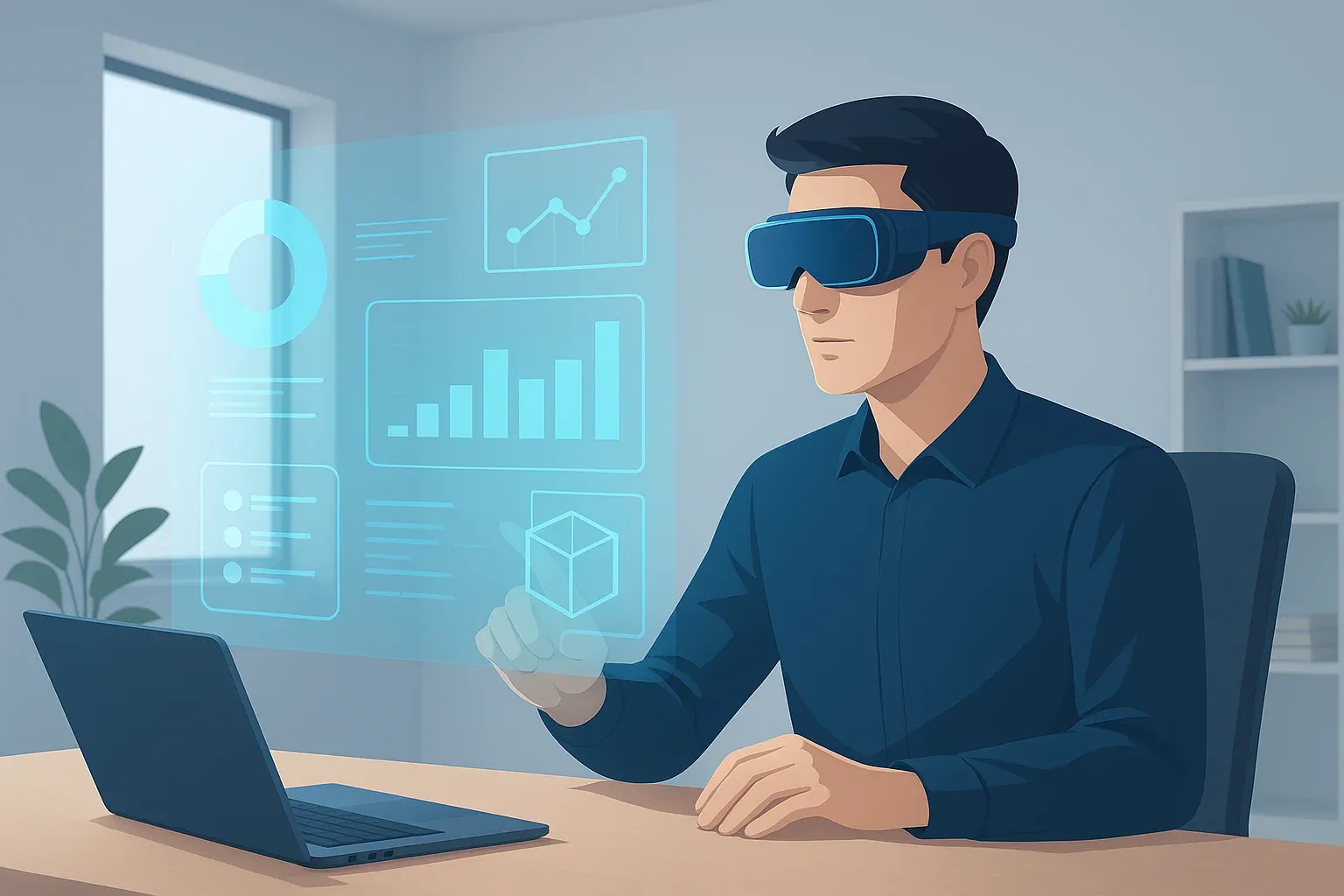
Technology has always changed how humans interact with the world, but few innovations have been as transformative as immersive technologies. What started with virtual reality (VR) headsets for gaming is rapidly evolving into spatial computing, where digital information seamlessly blends into physical environments.
In 2025, immersive tech is no longer limited to gamers and tech enthusiasts—it is reshaping workplaces, education, healthcare, design, retail, and even personal productivity. By moving from fully simulated environments to spatially aware computing systems, the line between digital and physical is fading, making interactions more natural, contextual, and powerful.
This article explores the journey from VR to spatial computing, its real-world applications, and how it is shaping the way we live, work, and connect.
What Is Spatial Computing?
Spatial computing refers to the integration of digital content into the physical world using technologies such as VR, AR (augmented reality), MR (mixed reality), and AI-driven sensors. Unlike traditional VR, which immerses users in a completely virtual environment, spatial computing allows digital elements to coexist with physical surroundings in real time.
Think of it as the next step in human-computer interaction—where instead of staring at a flat screen, you interact with holograms, digital twins, and intelligent virtual objects embedded in your real environment.
The Journey: From VR to Spatial Computing
Virtual Reality (VR) – The First Step
VR created immersive, fully digital environments where users could game, explore, or simulate real-life scenarios. While groundbreaking, VR was limited to enclosed experiences that cut users off from the real world.
Augmented Reality (AR) – The Overlay Layer
AR brought a breakthrough by overlaying digital information onto real-world surroundings. From Pokémon Go to AR navigation, AR allowed users to blend physical reality with digital enhancements.
Mixed Reality (MR) – The Interactive Bridge
MR went a step further by allowing digital and physical objects to interact. For example, virtual furniture could be placed in your living room and physically walk around it, changing perspective naturally.
Spatial Computing – The Future Standard
Spatial computing unifies all these technologies into a context-aware, intelligent system. It doesn’t just display digital information—it understands the physical environment, user intent, and context, creating seamless human-computer interactions.
Everyday Applications of Spatial Computing
1. Work and Productivity
- Immersive Collaboration: Virtual offices allow remote teams to collaborate in shared 3D spaces, replacing flat video calls.
- Holographic Meetings: Business leaders can present to global audiences using life-like holograms.
- Hands-Free Interfaces: Gesture-based and voice-controlled systems streamline workflow without relying on traditional screens.
2. Education and Learning
- Immersive Classrooms: Students can walk through the solar system or dissect a 3D heart in real time.
- Global Collaboration: Classrooms across the world connect for shared virtual field trips.
- Skill-Based Training: From medical surgery practice to aviation simulations, learners benefit from risk-free, hands-on experiences.
3. Healthcare
- Surgical Simulations: Surgeons use spatial computing for practice before operating.
- Patient Care: Virtual clinics allow remote consultations with realistic 3D interactions.
- Rehabilitation Programs: AR-based therapy helps stroke and injury patients recover mobility.
4. Retail and Shopping
- Virtual Try-Ons: Shoppers see how clothes, glasses, or furniture fit in real life before buying.
- Immersive Showrooms: Retailers create digital storefronts where products can be explored in 3D.
- Personalized Shopping: AI and AR combine to suggest products tailored to customer preferences.
5. Real Estate and Architecture
- 3D Property Tours: Buyers explore homes virtually before visiting in person.
- Architectural Visualization: Builders overlay blueprints onto physical spaces for real-time adjustments.
- Smart Cities: Urban planners use spatial data to design more efficient, sustainable cities.
6. Entertainment and Media
- Immersive Concerts: Fans join interactive performances in 3D worlds.
- Cinematic Experiences: Movies evolve into mixed-reality stories where viewers step inside the narrative.
- Sports Broadcasting: Fans experience live games from multiple perspectives, including field-level holograms.
7. Personal Lifestyle
- Fitness & Wellness: AR coaches guide workouts in real time.
- Home Automation: Smart homes integrate spatial awareness for intuitive control.
- Navigation & Travel: AR maps overlay directions directly into a user’s field of view.
Benefits of Spatial Computing
- Enhanced Productivity – Eliminates screen fatigue and enables natural interactions.
- Deeper Engagement – Experiences feel personal, immersive, and memorable.
- Greater Accessibility – Provides remote access to education, healthcare, and work.
- New Business Models – From immersive advertising to metaverse commerce.
Challenges Ahead
- Cost Barriers – Devices like VR headsets and AR glasses are still expensive.
- Privacy & Security – Collecting real-world spatial data raises concerns.
- Technical Limitations – Requires robust 5G/6G networks and edge computing.
- Adoption Resistance – Many industries are slow to transition from traditional workflows.
The Future of Immersive Tech
By 2030, spatial computing will likely become as common as smartphones today. Advances in lightweight AR glasses, brain-computer interfaces, and AI-powered assistants will make immersive technology a seamless part of daily life.
Workplaces will replace flat screens with holographic workspaces, classrooms will use fully interactive environments, and shopping will happen in immersive digital showrooms as naturally as browsing a website today.
Ultimately, spatial computing will not replace reality—it will augment and enhance it, allowing humans to navigate the digital and physical simultaneously.
Conclusion
The shift from VR to spatial computing represents a fundamental change in how humans interact with technology. What once felt like science fiction is now a rapidly growing part of everyday life—transforming industries from education to healthcare and redefining personal experiences.
The immersive future is not about escaping reality but about expanding it. As spatial computing becomes mainstream, it will reshape not just how we use technology, but how we live, connect, and create in a blended digital-physical world.