Modern organizations face constant change. Deadlines shift. Projects expand. Skills evolve. Workloads spike unexpectedly.
Traditional management structures struggle to adapt at that speed.
That challenge has given rise to Self-Optimizing Teams.
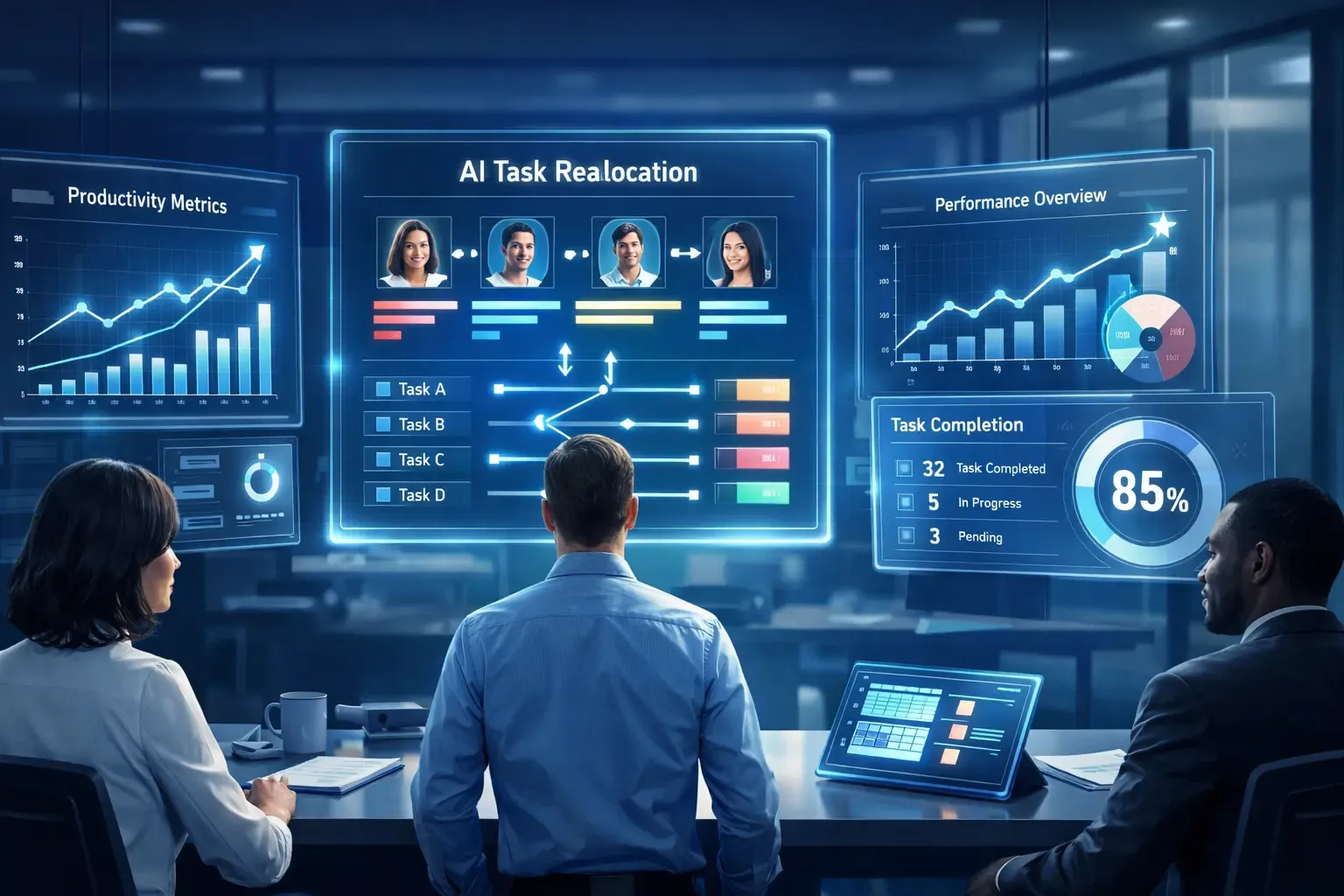
Self-Optimizing Teams use artificial intelligence to analyze performance, skills, availability, and priorities in real time, then reassign tasks automatically. Instead of static project plans and manual scheduling, work flows dynamically to the people best equipped to handle it at any moment.
This article explores how Self-Optimizing Teams work, why they matter, and how they are reshaping the future of work.
What Are Self-Optimizing Teams?
Self-Optimizing Teams describe organizational systems where AI continuously adjusts task distribution based on live performance data and operational conditions.
Rather than relying on managers to reassign work after problems emerge, AI systems act proactively.
They monitor:
- Task completion speed
- Quality metrics
- Skill alignment
- Availability
- Collaboration patterns
- Burnout indicators
Using these signals, the system recommends or executes reallocations to maintain productivity and balance.
Why Dynamic Task Reassignment Matters
Work rarely unfolds exactly as planned.
Employees get overloaded. Specialists become bottlenecks. Unexpected issues surface. Manual intervention often arrives too late.
Self-Optimizing Teams solve these problems by enabling:
- Faster project delivery
- Better use of specialized skills
- Reduced idle time
- Balanced workloads
- Higher employee satisfaction
When work adapts continuously, organizations gain resilience.
How Self-Optimizing Teams Work
Behind the scenes, several AI components coordinate decisions.
Performance Monitoring
AI systems track output quality, speed, and reliability across tasks. They establish baseline expectations for each role and adjust them over time.
Skill Mapping
Employee profiles evolve dynamically. Certifications, completed projects, feedback scores, and learning progress update skill models.
Workload Analysis
Algorithms monitor task queues, meeting schedules, and time pressure to detect overload or underutilization.
Decision Engines
Optimization models evaluate thousands of task assignment scenarios in seconds, balancing speed, quality, fairness, and strategic goals.
Core Technologies Powering Self-Optimizing Teams
Multiple AI techniques enable these systems.
Machine Learning Models
Models learn which individuals or teams perform best under certain conditions.
Optimization Algorithms
These systems solve scheduling problems, allocating tasks while respecting deadlines and dependencies.
Natural Language Processing
NLP analyzes task descriptions, tickets, and documents to classify work automatically.
Behavioral Analytics
Interaction patterns reveal collaboration strength, stress risk, or disengagement.
Self-Optimizing Teams vs Traditional Workforce Management
The contrast highlights why this model is gaining traction.
Traditional Team Management
- Static project plans
- Manual reallocation
- Periodic performance reviews
- Manager-driven scheduling
- Slow reaction to change
Self-Optimizing Teams
- Continuous reassignment
- AI-assisted decisions
- Real-time performance data
- Adaptive scheduling
- Rapid response to disruption
This shift turns workforce coordination into a living system.
Real-World Applications of Self-Optimizing Teams
Self-Optimizing Teams already influence many sectors.
Software Development
AI systems route bugs, features, and code reviews to engineers whose expertise and workload match each task.
Customer Support Centers
Tickets flow to agents best equipped for specific issues, languages, or urgency levels.
Healthcare Operations
Hospitals optimize staffing by shifting duties based on patient volume and clinician availability.
Manufacturing and Logistics
Factories and warehouses adjust assignments as demand fluctuates or machines require maintenance.
Consulting and Professional Services
Projects rebalance as new data arrives, ensuring specialists focus where they create the most value.
How Self-Optimizing Teams Improve Productivity
Dynamic coordination creates measurable gains.
Faster Throughput
Tasks move quickly to capable contributors.
Better Quality
Assignments align with proven strengths.
Lower Burnout
Workloads stay balanced.
Increased Engagement
Employees spend more time on meaningful work.
Human and AI Collaboration in Self-Optimizing Teams
These systems do not replace managers.
They augment decision-making.
Leaders retain authority while AI provides:
- Reassignment recommendations
- Bottleneck forecasts
- Skill gap analysis
- Hiring insights
- Training priorities
Human oversight ensures fairness, empathy, and strategic alignment.
Challenges in Building Self-Optimizing Teams
Despite promise, implementation brings hurdles.
Data Quality
Poor or biased data leads to weak decisions.
Employee Trust
Workers may resist opaque automation.
Over-Optimization
Focusing solely on output can harm morale.
Privacy Concerns
Monitoring requires strict governance.
Transparent design remains essential.
Ethical Considerations and Governance
Responsible systems include:
- Clear explanation of task changes
- Opt-in monitoring policies
- Bias audits
- Human override controls
- Data minimization
Ethics ensure Self-Optimizing Teams empower people rather than control them.
The Future of Self-Optimizing Teams
As AI grows more sophisticated, these systems will expand.
Expect:
- Emotion-aware workload balancing
- Autonomous project coordination
- Continuous reskilling recommendations
- Cross-company talent marketplaces
- Predictive hiring models
Workforces will behave more like adaptive networks than rigid hierarchies.
Why Self-Optimizing Teams Matter for the Future of Work
Organizations face constant disruption.
Those that can reallocate talent instantly gain a competitive advantage.
Self-Optimizing Teams transform operations from reactive to anticipatory, allowing companies to move faster while supporting employee wellbeing.
Final Thoughts
Self-Optimizing Teams represent a powerful evolution in workforce management.
By reassigning tasks based on performance, skills, and capacity, AI enables teams to operate fluidly and efficiently in unpredictable environments.
The future of work belongs to organizations that learn how to optimize not just systems, but people and collaboration in real time.