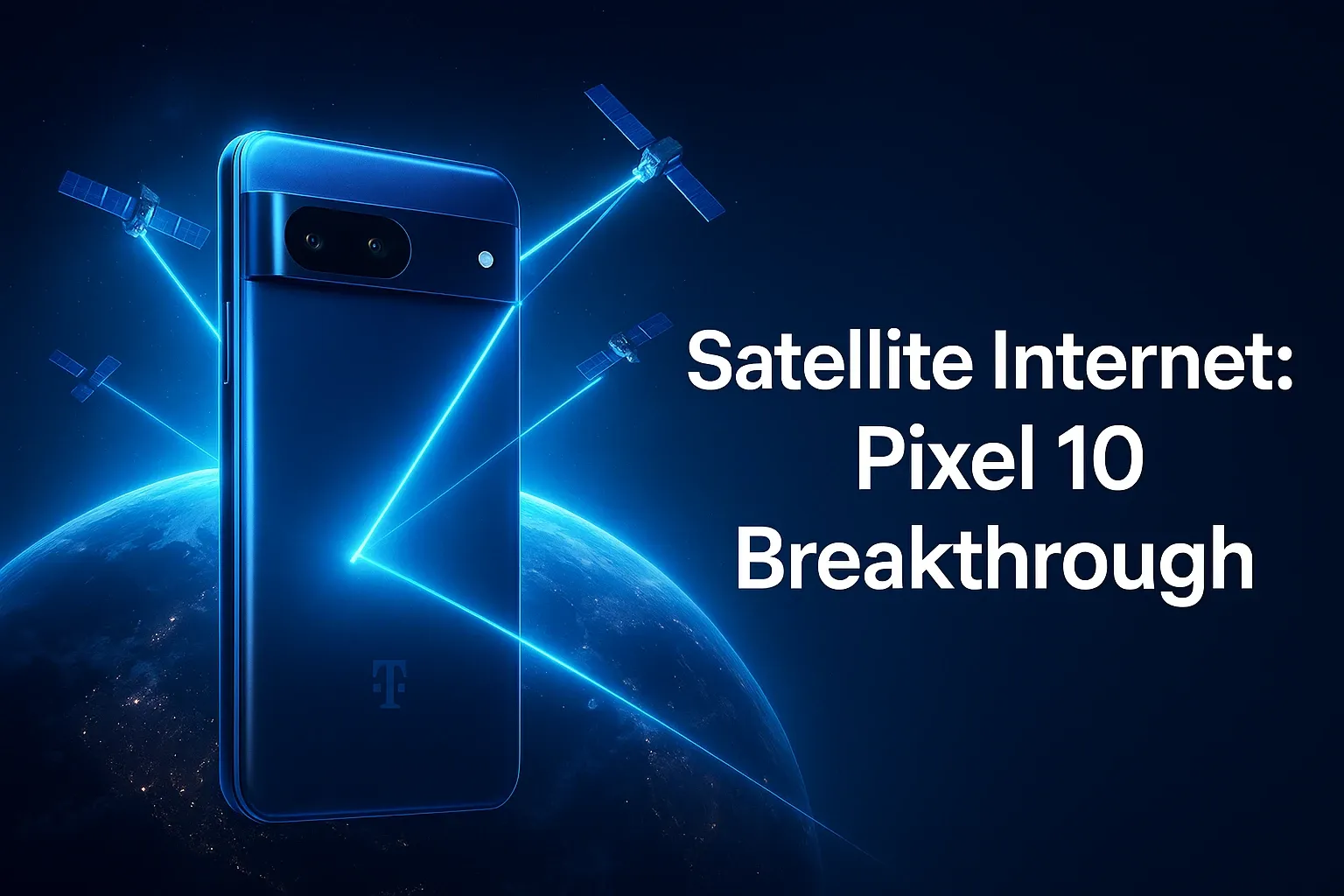
In the fast-changing world of mobile technology, few innovations have generated as much buzz as the integration of satellite internet into smartphones. With the launch of Google’s Pixel 10, T-Mobile has made a bold move that could reshape the way we think about connectivity. For years, satellite internet has been viewed as a solution for rural areas and space-based communications, but now, it is stepping into the pockets of everyday users.
This breakthrough signals more than just another smartphone upgrade — it’s the beginning of a future where global connectivity is no longer limited by cell towers or coverage maps. Let’s dive deeper into what this means for consumers, the telecom industry, and the broader world of internet access.
What Is Satellite Internet and Why Does It Matter?
Satellite internet works by connecting devices directly to satellites orbiting the Earth instead of relying solely on traditional ground-based cell towers. This makes it a game-changer for places where regular coverage is weak or non-existent — think remote villages, hiking trails, or areas hit by natural disasters.
Unlike 5G and 4G networks, which depend on an extensive web of towers, satellite signals can cover wide geographic regions. This is why companies like SpaceX (with Starlink) and OneWeb have invested heavily in the technology. The Pixel 10’s integration with T-Mobile’s satellite network marks the first time a mainstream smartphone brand has brought this kind of access into the hands of regular consumers.
T-Mobile and Pixel 10: A Historic Partnership
The collaboration between Google and T-Mobile is central to this story. Together, they’ve made it possible for Pixel 10 users to connect to satellites directly from their device, eliminating the need for bulky external equipment.
At launch, the feature will primarily focus on emergency messaging. Imagine being stranded on a road trip with no signal or hiking in the mountains when an accident occurs — the Pixel 10 will allow you to send critical text messages via satellite, even when you’re completely outside of network range.
This emergency-first approach is smart. It eases consumers into the technology while providing real-life use cases that can save lives. Over time, as satellite capacity improves, we may see expanded features like calls, browsing, or streaming — but for now, messaging is the safest and most reliable starting point.
Why Pixel 10’s Satellite Connectivity Is a Big Deal
So why is this such a big deal compared to what we already have? Let’s look at the key reasons:
- Global Reach: Traditional cell service struggles in rural or offshore areas, while satellites can cover nearly anywhere on Earth.
- Emergency Lifeline: The feature gives users peace of mind knowing they can call for help when normal networks fail.
- Future-Proofing Devices: As satellite internet matures, phones like the Pixel 10 are paving the way for more advanced features.
- Industry Standard Shift: This move forces competitors like Apple, Samsung, and Huawei to accelerate their own satellite integration.
In other words, the Pixel 10 isn’t just a smartphone launch — it’s a preview of where the entire industry is heading.
How Does Satellite Internet Compare to 5G?
Some may wonder whether satellite internet is meant to replace 5G. The answer is no — at least not yet. 5G is faster and better for everyday activities like video streaming, gaming, or browsing, while satellite networks tend to have higher latency.
Instead of replacing 5G, satellite connectivity will complement it, filling in the gaps where cell towers can’t reach. For urban users, this might not change much. But for rural communities, travelers, and emergency responders, the difference could be life-changing.
Challenges Facing Satellite Internet on Smartphones
Despite its promise, there are hurdles to overcome before satellite internet becomes mainstream on every smartphone:
- Latency and Speed: Satellite signals travel thousands of miles, which can slow down response times.
- Network Capacity: Right now, satellites can’t handle millions of simultaneous users for high-bandwidth activities.
- Battery Usage: Maintaining a satellite connection can drain a smartphone’s battery more quickly.
- Costs: The technology requires heavy investments, and subscription models may come with added fees.
- Regulatory Approvals: Different countries may have different rules for satellite communication.
These challenges explain why the Pixel 10 is starting small with emergency messaging before rolling out larger features.
What This Means for the Future of Connectivity
The Pixel 10 is not just another smartphone launch; it’s a proof of concept that global, reliable communication is possible without relying only on traditional infrastructure. Looking ahead, we could see:
- Wider Consumer Adoption: Other smartphones integrating satellite features as a standard option.
- Partnerships Across Tech Giants: Collaborations between phone makers and satellite providers (Apple already hinted at this in earlier iPhone models).
- Global Internet Access: Closing the digital divide for communities in remote areas.
- Disaster Response Revolution: First responders and humanitarian organizations relying on satellite-enabled smartphones.
The future of mobile technology may no longer be about choosing between 5G and 6G, but rather how seamlessly these networks can integrate with satellite coverage.
The Bigger Picture: T-Mobile’s Competitive Edge
By moving early with the Pixel 10 partnership, T-Mobile has positioned itself as an innovator in the telecom space. Instead of focusing solely on tower expansions, they are investing in next-generation connectivity that scales globally.
This could reshape the competitive landscape, pushing other carriers like AT&T, Verizon, and even international players to follow suit. In the long run, it may also open opportunities for affordable global roaming without the traditional headaches of switching SIM cards or paying steep fees.
Conclusion
The launch of the Pixel 10 with T-Mobile’s satellite internet breakthrough is more than just a flashy new feature — it’s a step into a new era of connectivity. For consumers, it means safety and peace of mind. For the industry, it means competition and innovation. And for the world, it could mean global internet access that finally bridges the gap between urban centers and remote corners of the planet.
While challenges remain, one thing is clear: satellite internet in smartphones is no longer science fiction — it’s here, and it’s only going to grow.
FAQs
1. Does the Pixel 10 support satellite internet?Yes, Pixel 10 supports satellite connectivity for emergency messaging in areas without traditional coverage.
2. How is satellite internet different from 5G?Satellite provides global reach, while 5G delivers higher speeds but depends on cell towers. They complement each other.
3. Is satellite connectivity free with the Pixel 10?Currently, T-Mobile offers emergency messaging support. Expanded features may come with future subscription models.
4. Can other smartphones connect to satellites?Apple and Huawei have tested limited satellite features, but Pixel 10’s T-Mobile partnership sets a new benchmark.
5. What is the future of satellite internet in mobile phones?Expect more phones to include it by default, expanded features beyond messaging, and broader global coverage.