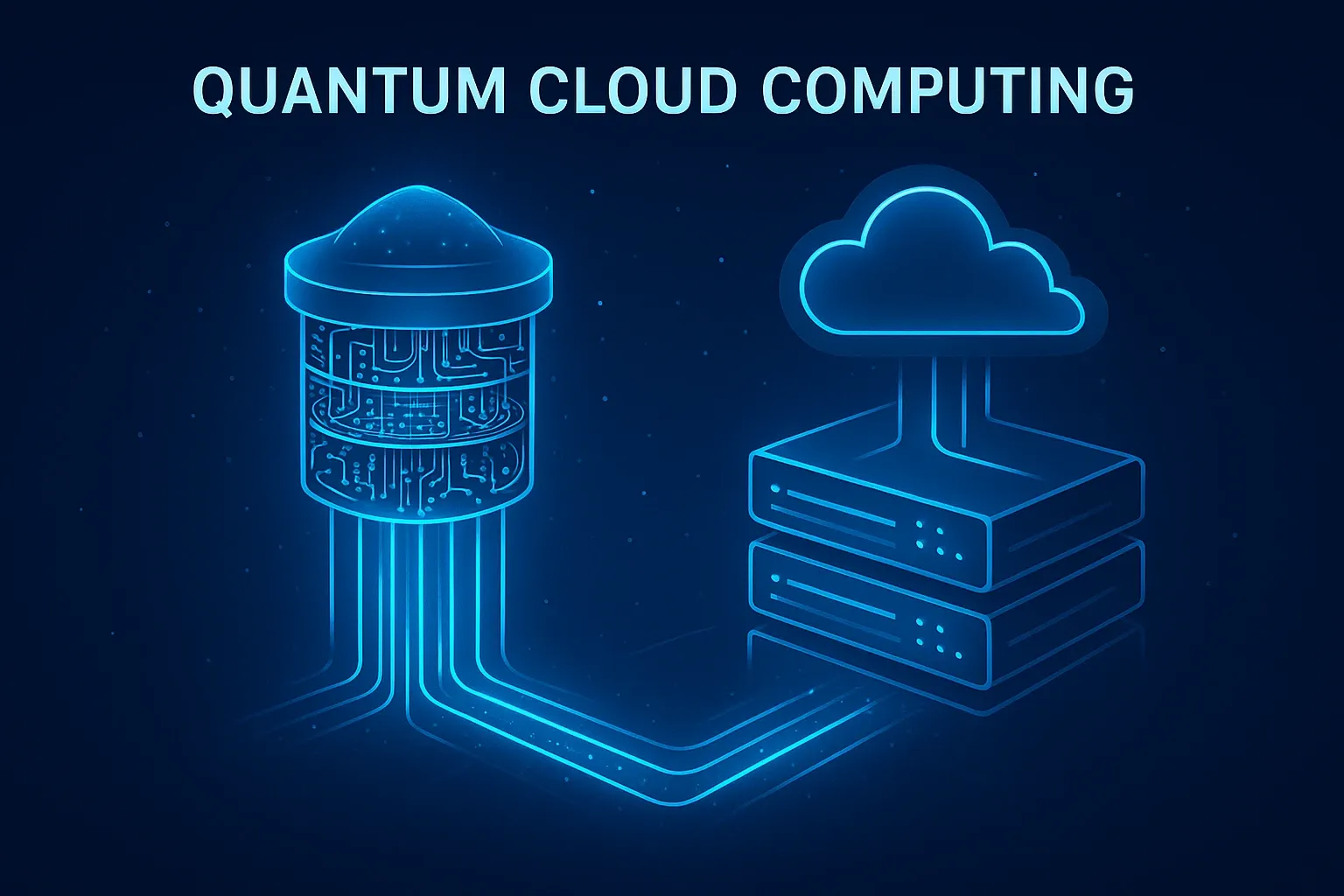
Quantum computing once belonged only to the world of theoretical physics and high-end laboratories. Today, it’s making its way into the digital mainstream through quantum cloud computing, an innovation that could redefine how we process information online.
The race is on to bring quantum power to the cloud, allowing businesses, researchers, and even startups to access extraordinary computing abilities without owning a quantum machine. This movement could reshape everything from artificial intelligence to cybersecurity and scientific modeling.
What Is Quantum Cloud Computing?
Quantum cloud computing combines the vast resources of cloud technology with the incredible processing potential of quantum computers. Instead of buying a physical quantum computer, users can rent quantum computing time via cloud platforms offered by major tech companies.
These systems use qubits instead of traditional bits. While bits represent either 0 or 1, qubits can exist in multiple states simultaneously, thanks to the principle of superposition. When combined with entanglement, quantum computers can process complex calculations exponentially faster than classical machines.
This makes the cloud-based quantum model ideal for tasks such as:
- Molecular simulation and drug discovery
- Cryptography and data security
- Machine learning and AI optimization
- Financial modeling and logistics planning
By making quantum processing available online, cloud providers are unlocking quantum advantages for industries that previously couldn’t afford or maintain this technology.
How Quantum Cloud Computing Works
Quantum cloud systems rely on a layered structure that connects users to real or simulated quantum processors through the internet.
Here’s how it works in simple terms:
- User Access: Developers connect through a web interface or API.
- Hybrid Backend: The system routes computations between classical and quantum processors.
- Quantum Execution: Real quantum hardware or simulators execute the job.
- Results Delivery: The cloud platform returns analyzed results directly to the user.
This structure mirrors traditional cloud computing but introduces a quantum layer, allowing seamless integration between existing software and quantum algorithms.
Key Players Driving Quantum Cloud Services
The world’s leading tech companies are investing heavily in quantum accessibility. Some of the most prominent platforms include:
IBM Quantum
IBM’s Quantum Experience offers real quantum hardware access via the cloud. Users can design quantum circuits using IBM Qiskit and run them on real devices.
Google Quantum AI
Google’s Cirq platform provides access to quantum simulators and experimental processors. The company’s ultimate goal is to create a large-scale quantum internet.
Microsoft Azure Quantum
Microsoft combines classical computing with quantum simulators under Azure Quantum, creating a unified platform for developers to test hybrid algorithms.
Amazon Braket
Amazon Web Services (AWS) allows users to design, simulate, and run quantum algorithms using a mix of hardware from multiple vendors through Amazon Braket.
Each platform contributes to a broader mission — making quantum computing in the cloud both practical and accessible.
Why Quantum Computing in the Cloud Matters
Quantum cloud computing removes the cost barrier associated with owning quantum machines. Traditional quantum setups require ultra-cold environments and specialized hardware, costing millions of dollars. By moving this to the cloud, companies can simply pay for what they use.
More importantly, it democratizes access to quantum innovation. Researchers, universities, and developers worldwide can now experiment, test, and deploy quantum applications online, fueling faster innovation across multiple industries.
Benefits of Quantum Cloud Computing
1. Accessibility
Anyone with an internet connection can access quantum power, removing the exclusivity that once surrounded the field.
2. Scalability
Cloud infrastructure can scale with computational demand, supporting more complex experiments over time.
3. Cost Efficiency
Instead of investing in expensive equipment, users only pay for quantum computing resources when needed.
4. Collaboration
Cloud platforms promote open collaboration, allowing global researchers to share algorithms, data, and outcomes seamlessly.
5. Innovation Acceleration
Quantum-as-a-Service (QaaS) models accelerate research in AI, materials science, and cybersecurity by enabling faster iteration.
Challenges Slowing Down the Quantum Cloud Revolution
Despite its potential, quantum cloud computing still faces major technical and logistical challenges.
Hardware Limitations
Quantum processors remain highly sensitive to temperature and noise, often requiring extreme conditions to maintain stability.
Error Correction
Quantum bits are error-prone. Developing stable quantum error correction methods is essential to achieve reliable computation.
Connectivity
Integrating quantum processors into existing cloud infrastructure requires massive bandwidth and synchronization precision.
Security Concerns
While quantum encryption offers security advantages, the transmission of quantum data across networks introduces new vulnerabilities.
Lack of Standardization
Different companies use different platforms and programming languages. This fragmentation slows down the creation of universal quantum frameworks.
How AI and Quantum Cloud Computing Work Together
Artificial intelligence and quantum computing complement each other naturally. AI needs massive data processing power, while quantum systems excel at handling complex, multi-variable calculations.
When integrated in the cloud, AI-driven quantum algorithms can improve everything from real-time analytics to natural language processing and predictive modeling. AI can also help optimize quantum error correction and resource allocation in real-time, improving stability and performance.
The Race for Quantum Advantage
Tech companies are competing to achieve what’s known as quantum advantage, the point where quantum systems outperform classical computers in real-world tasks.
Cloud-based platforms accelerate this race by letting developers test algorithms on both simulated and real quantum processors. As these systems improve, we can expect to see quantum computing used commercially for AI model training, financial forecasting, and advanced cryptographic systems.
Security in the Age of Quantum Cloud
While quantum technology can break existing encryption methods, it can also make data safer. The development of post-quantum cryptography ensures that communications remain secure even when quantum computers become mainstream.
Cloud providers are experimenting with quantum key distribution (QKD) to create unbreakable encryption methods for secure online transactions and government communications.
In the near future, these techniques could become standard for sensitive cloud operations worldwide.
The Future of Quantum Cloud Infrastructure
The next phase of quantum cloud computing will bring hybrid systems that blend classical and quantum hardware seamlessly. These systems will be capable of solving problems that are currently beyond reach.
We can expect to see:
- Quantum edge computing that processes data closer to the user.
- Quantum networks linking multiple processors for distributed power.
- AI-managed quantum scheduling to optimize workloads and energy efficiency.
As this ecosystem matures, the internet may evolve into a quantum internet, enabling near-instant communication and unhackable data transmission.
Conclusion
Quantum cloud computing is not just another tech trend — it represents a fundamental leap in how we access computational power. By merging the flexibility of cloud computing with the precision of quantum processing, we are stepping into a future where even small teams can harness quantum potential online.
The journey is still in its early stages, but the momentum is unstoppable. As accessibility grows and hardware improves, quantum computing in the cloud will reshape industries, redefine security, and open the door to a new era of digital innovation.