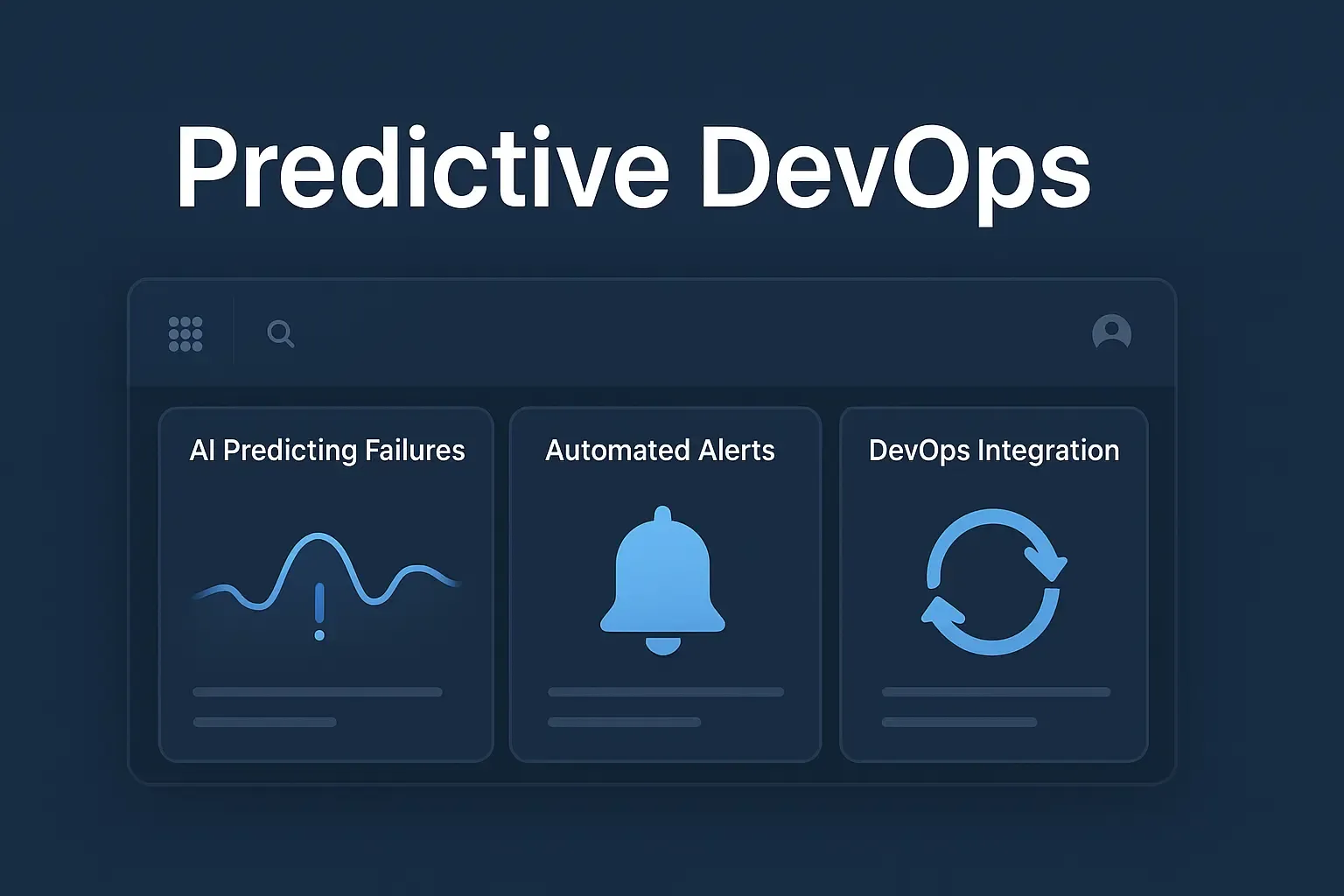
Modern software systems move fast. Release cycles are shorter, infrastructure is more complex, and teams depend on constant uptime to keep products reliable. But the traditional model of DevOps is reactive. Engineers fix issues after alerts go off and troubleshoot once failures have already interrupted performance.
Predictive DevOps changes this mindset entirely. Instead of waiting for problems to appear, AI systems analyze data, detect early warning signals, and predict failures before they impact users. This shift from reactive to proactive operations is quickly becoming one of the most important trends in engineering and IT.
In this deep dive, you will understand how predictive DevOps works, why it is powerful, and how teams can adopt AI tools to improve reliability, agility, and overall system performance.
The Evolution of DevOps Toward Predictive Intelligence
DevOps originally focused on automation, collaboration, CI and CD pipelines, monitoring, and reliability. But as systems scaled, DevOps also inherited larger volumes of logs, events, metrics, and traces. The sheer amount of data made it impossible for humans alone to identify patterns quickly enough.
This set the stage for AI powered DevOps tools. These tools analyze historical and real time data to detect anomalies, predict failures, and offer insights that were previously buried in technical noise.
Predictive DevOps is the next natural step. It connects DevOps workflows to machine learning models that forecast issues before they occur. Once these predictions are made, automated pipelines can respond instantly with fixes, scaling actions, alerts, or rollback recommendations.
Why Predictive DevOps Matters in Modern Engineering
There are strong reasons why engineering teams are shifting investment into predictive systems.
1. Downtime Costs Are Increasing
Even a few minutes of downtime can lead to revenue loss, reduced trust, and unhappy customers. Predictive DevOps prevents these incidents by identifying failure patterns early.
2. Infrastructure Has Become More Distributed
Cloud environments, microservices, container orchestration, and edge computing add complexity. Predictive analytics brings visibility into these sprawling systems.
3. Manual Monitoring Is Not Enough
Human engineers cannot track thousands of metrics in real time. AI tools can process massive data streams instantly and detect issues human eyes may miss.
4. Scaling Requires Automation
Teams can no longer rely on slow manual response processes. Predictive DevOps uses automated workflows that trigger immediate actions.
5. AI Unlocks Patterns Hidden in Logs
Patterns signaling upcoming failures often exist long before alerts fire. Machine learning models can surface these hidden signals.
Predictive DevOps serves as the intelligent layer that sits on top of traditional DevOps and improves reliability once systems grow beyond human capacity.
How Predictive DevOps Works Behind the Scenes
Predictive DevOps tools rely on several key components. Together, they form a pipeline that collects data, processes signals, identifies risks, and provides proactive recommendations.
Data Collection
AI models gather data from every operational source, including:
- Logs
- Metrics
- Distributed traces
- Event histories
- Traffic patterns
- Error rates
- Server performance
- Application latency
- User behavior signals
The more data available, the more accurate the predictions.
Feature Extraction
The system identifies meaningful signals from the data such as:
- Sudden latency spikes
- Slow memory leaks
- Irregular traffic flows
- CPU saturation patterns
- Disk bottlenecks
- Error bursts in specific services
- Degraded responses from external APIs
These signals help the models anticipate what might happen next.
Predictive Modeling
Machine learning models such as anomaly detection, time series forecasting, and classification models analyze patterns and generate predictions about:
- Cloud outages
- Microservice failures
- Database crashes
- Network instability
- Storage capacity exhaustion
- API slowdown
- Application regressions
- Potential downtimes
Automated Response
Once predictions have been made, they trigger automated responses including:
- Scaling up compute resources
- Restarting unhealthy containers
- Rolling back deployments
- Triggering remediation scripts
- Alerting engineers
- Creating incident tickets
- Redistributing traffic
- Cleaning logs or cache
Predictive DevOps makes the system self aware and capable of preventing issues before they happen.
Key Capabilities of Predictive DevOps Tools
Modern predictive DevOps platforms include several important capabilities that help teams stay ahead of problems.
1. Anomaly Detection
AI identifies unusual behavior such as out of range metrics, odd traffic spikes, or strange process activity.
2. Early Incident Detection
The system can warn teams about upcoming outages hours or minutes before traditional alerts would catch them.
3. Automated RCA
Root cause analysis becomes easier because AI correlates events across multiple systems.
4. Capacity Planning
Predictive models forecast when resources will run out and recommend scaling actions.
5. Deployment Risk Detection
Models can analyze deployment behavior to predict which releases may introduce production issues.
6. Continuous Learning
Models learn from past incidents and improve prediction accuracy over time.
7. Intelligent Alerting
Instead of sending thousands of alerts, predictive systems group related signals and prioritize critical issues.
The Role of Machine Learning in Predictive DevOps
Several machine learning techniques power predictive operations.
Time Series Forecasting
Predicts when metrics such as CPU usage or disk space might hit unsafe levels.
Classification Models
Categorize events and determine which patterns indicate risk.
Clustering
Groups similar incidents and identifies common failure types.
Probabilistic Modeling
Estimates the likelihood of events such as service crashes or API degradation.
NLP for Log Analysis
Natural language processing can understand and cluster log messages to detect patterns.
Reinforcement Learning
Helps systems improve response strategies by learning from outcomes.
These models turn massive data streams into useful insights that support reliability and uptime.
Real World Use Cases of Predictive DevOps
Predictive DevOps has already found adoption across multiple industries.
E-commerce
AI predicts traffic surges, potential checkout page failures, payment gateway slowdowns, or inventory system lag.
Fintech
Models monitor transaction flows to detect early signs of fraud or payment service outages.
Cloud Infrastructure
Predictive analytics helps cloud providers detect disk failures, node crashes, and network congestion.
SaaS Platforms
Predicts which microservices are likely to overload during user growth or feature launches.
Telecom
AI helps predict network interference, latency spikes, and equipment failures.
Gaming
Predicts server overloads during tournaments or new content releases.
These use cases demonstrate how predictive DevOps reduces outages and improves customer experience.
Benefits of Predictive DevOps
Fewer Outages
Teams fix issues long before they become customer facing.
Reduced MTTR
Mean time to resolution drops because AI isolates the root cause faster.
Increased Reliability
Systems self correct and become more resilient.
Better Performance
Predictive scaling and optimization improve application speed.
Happier Teams
Engineers spend less time firefighting and more time innovating.
Cost Savings
Reduced downtime and optimized infrastructure lower operational costs.
Challenges Teams May Face
Predictive DevOps is powerful, but it comes with challenges.
Data Quality
Poor or inconsistent data reduces prediction accuracy.
Model Training Requirements
Models require historical data to learn effectively.
Tooling Complexity
Integrating predictive analytics with existing DevOps tools requires time.
False Positives
Early models may misinterpret signals until tuned.
Cultural Adoption
Teams must trust predictions and adjust workflows accordingly.
With the right strategy, these challenges can be managed effectively.
Best Practices for Building a Predictive DevOps Workflow
Centralize Logs and Metrics
Use a unified data pipeline for all operational data.
Monitor Model Accuracy
Regularly retrain and adjust models.
Use Automated Remediation Carefully
Start with low risk automated actions before scaling up.
Keep Human Oversight
Engineers should validate high impact predictions.
Test Models in Staging
Validate predictions before enabling them in production.
Build Incrementally
Adopt predictive capabilities one stage at a time.
The Future of Predictive DevOps
Predictive DevOps will soon become a default part of software operations. The future will bring:
- More autonomous systems
- Smarter self healing pipelines
- Better predictive accuracy
- Deeper integrations with CI and CD systems
- Real time risk scoring for deployments
- AI powered observability tools
- Automated load management
As AI evolves, DevOps will move from monitoring to anticipating, from reacting to preventing, and from manual workflows to intelligent systems.
Final Thoughts
Predictive DevOps represents a major shift in how engineering teams operate. With AI tools capable of forecasting failures before they occur, businesses can protect uptime, reduce costs, and elevate user experience. The combination of predictive intelligence and automated operational workflows is shaping the future of reliability and infrastructure management.