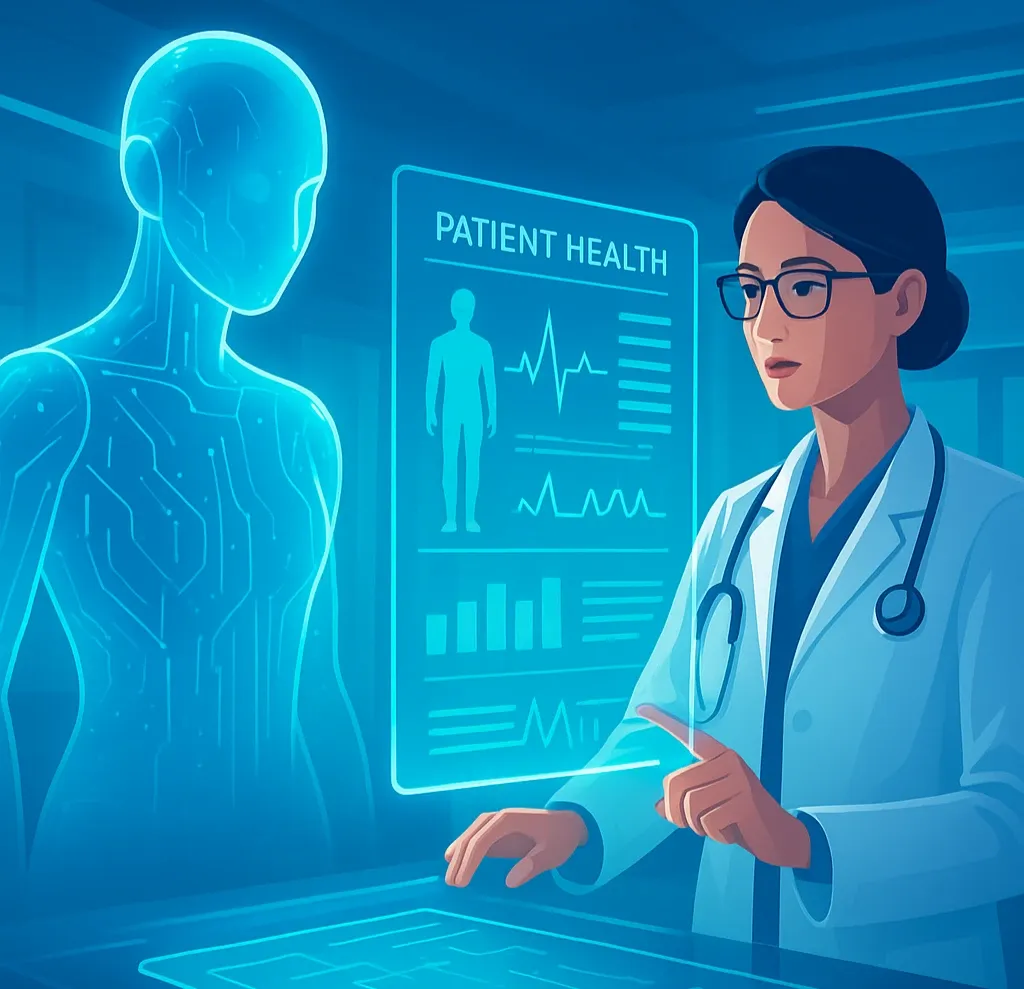
Artificial intelligence has become the backbone of healthcare innovation. From assisting doctors in diagnosing rare diseases to forecasting patient health risks, predictive AI is reshaping medicine in ways that were unimaginable a decade ago. But in 2025, the excitement around predictive AI comes with serious ethical questions.
How do we balance life-saving opportunities with the risks of bias, privacy violations, and over-reliance on machines? As hospitals, startups, and governments race to integrate predictive systems into medical care, the stakes couldn’t be higher.
This article explores the ethics of predictive AI in healthcare, its transformative opportunities, and the risks society must address to ensure technology serves humanity—not the other way around.
What Is Predictive AI in Healthcare?
Predictive AI refers to systems that analyze medical data to forecast patient outcomes. Using machine learning models trained on huge datasets, these tools can identify patterns and anticipate:
- Disease risks (e.g., cancer, diabetes, heart disease)
- Hospital readmissions
- Treatment success rates
- Medication side effects
- Patient deterioration in ICUs
Unlike traditional diagnostics, predictive AI focuses on prevention and foresight—helping clinicians act before problems become life-threatening.
Opportunities of Predictive AI in Healthcare
1. Early Disease Detection
AI models can analyze genetic data, medical imaging, and patient histories to detect conditions years before symptoms appear. For example:
- Detecting cancer at stage 1 instead of stage 3
- Identifying early-onset Alzheimer’s risk
- Flagging silent cardiovascular risks
2. Personalized Medicine
Predictive AI enables tailored treatment plans by analyzing individual patient profiles. Instead of “one-size-fits-all” prescriptions, medicine becomes highly personalized and precise.
3. Reducing Healthcare Costs
Preventing disease progression saves both patients and healthcare systems billions. Predictive AI reduces hospital admissions and unnecessary treatments, optimizing resource allocation.
4. Supporting Medical Staff
In 2025, global healthcare faces a shortage of professionals. AI tools help ease workload by providing decision support, freeing doctors to focus on complex cases and patient empathy.
5. Global Accessibility
Predictive AI could revolutionize care in developing nations, where shortages of doctors and diagnostic facilities limit patient outcomes. AI-driven mobile apps already bring basic screening to remote villages.
Ethical Risks and Challenges
1. Data Privacy & Patient Consent
AI thrives on data volume, but this often means sensitive patient information is aggregated. Without strong regulations, predictive AI could violate privacy or expose health records to breaches.
2. Algorithmic Bias
If AI models are trained on non-diverse datasets, they risk discrimination. For example:
- Over-diagnosing certain populations
- Underestimating risks in underrepresented groups
- Excluding minorities from predictive accuracy
This bias could deepen healthcare inequalities instead of solving them.
3. Over-Reliance on Machines
Doctors may become too dependent on AI recommendations. When AI predictions are taken as absolute truths, critical human judgment may decline, leading to misdiagnoses.
4. Accountability & Liability
If predictive AI makes an error, who is responsible—the doctor, the hospital, or the AI developer? In 2025, legal frameworks are still catching up to define liability.
5. Patient Trust
Healthcare depends on trust. If patients believe their lives are being decided by opaque algorithms, it could erode confidence in medical systems.
Case Studies: Predictive AI in Action
Google’s DeepMind & Kidney Disease
DeepMind’s AI system has been able to predict acute kidney injury up to 48 hours earlier than human doctors. This life-saving lead time could save thousands of lives annually.
IBM Watson’s Oncology Trials
Although controversial, Watson demonstrated how predictive AI could match patients to the best cancer treatments based on genetic profiles.
COVID-19 Predictive Tools
During the pandemic, predictive AI helped forecast ICU demand, infection spikes, and patient deterioration, proving its real-world importance.
Regulatory Landscape in 2025
Governments are moving toward stronger regulation:
- Europe: The EU AI Act introduces strict guidelines for high-risk AI systems in healthcare.
- United States: The FDA now requires AI explainability in medical devices.
- Asia: Countries like Singapore and South Korea are pushing for AI ethics certifications for healthcare products.
But regulation is still fragmented, leaving gaps for exploitation.
The Ethical Framework for Predictive AI
For predictive AI to succeed, experts suggest adopting a 5-pillar framework:
- Transparency – AI predictions must be explainable, not black boxes.
- Equity – Models must be tested for fairness across demographics.
- Accountability – Clear legal responsibility for AI errors.
- Consent – Patients must control how their data is used.
- Collaboration – AI should support doctors, not replace them.
Future Outlook: Predictive AI Beyond 2025
Looking ahead, predictive AI could expand into areas such as:
- Preventive Genomics – forecasting inherited diseases before birth.
- Wearable Predictive Systems – AI-driven wearables predicting health risks in real-time.
- Population Health Forecasting – predicting epidemics and public health crises before they occur.
But unless ethical concerns are addressed, progress may face public resistance.
Conclusion
Predictive AI is the double-edged sword of modern medicine. Its ability to revolutionize healthcare is undeniable—but so are the risks of misuse, bias, and overreach. In 2025, the healthcare industry stands at a crossroads:
- Will predictive AI usher in a new era of personalized, life-saving medicine?
- Or will unchecked risks lead to ethical failures and loss of public trust?
The answer depends on whether governments, doctors, AI companies, and patients can collaborate to build a system that values ethics as much as efficiency.
In the end, predictive AI should not just predict outcomes—it should predict a better future for healthcare itself.