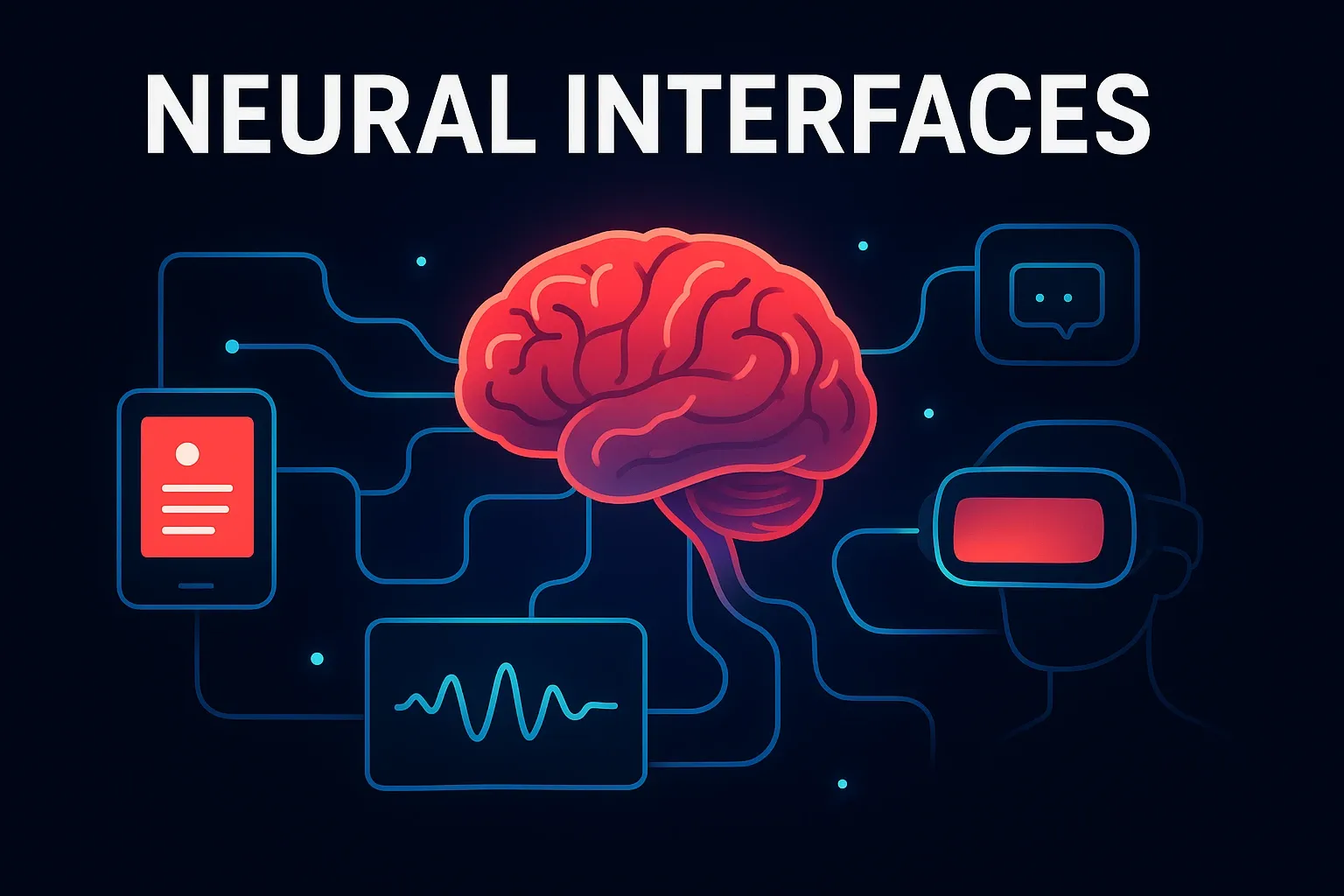
Imagine controlling your smartphone, computer, or even your home appliances with just a thought. What once seemed like science fiction is rapidly becoming reality thanks to neural interfaces, also known as brain-computer interfaces (BCIs). These groundbreaking technologies are transforming how humans interact with machines, opening possibilities that could redefine accessibility, productivity, and entertainment.
In this article, we’ll explore what neural interfaces are, how they work, their real-world applications, the challenges they face, and why they’re poised to become mainstream in the near future.
Introduction to Neural Interfaces
Neural interfaces are systems that read, interpret, and translate brain signals into commands that computers or devices can understand. At their core, they create a direct communication pathway between the brain and technology, bypassing traditional input methods like keyboards, touchscreens, or voice commands.
Recent advancements in neuroscience, signal processing, and AI have made thought-controlled devices increasingly accurate and reliable. The potential of this technology extends beyond novelty—it can enhance accessibility for people with disabilities, improve productivity, and even transform gaming and virtual reality experiences.
How Neural Interfaces Work
Neural interfaces rely on detecting electrical signals generated by the brain, interpreting them, and translating them into actionable commands for devices. While there are several types, the most common include:
- Non-invasive BCIs – Use sensors placed on the scalp, like EEG (electroencephalography) headsets, to detect brainwave patterns. They are safe and easy to use but have lower signal resolution.
- Invasive BCIs – Involve surgically implanted electrodes directly in the brain. These provide high-resolution signals but come with surgical risks.
- Partially invasive BCIs – Placed inside the skull but outside brain tissue. They offer a compromise between signal clarity and safety.
Once the brain signals are captured, advanced algorithms and AI decode them into meaningful commands. For example, thinking about moving a cursor to the left could instruct a computer to move the pointer or type a letter.
Real-World Applications of Neural Interfaces
Neural interfaces are no longer confined to research labs—they are finding practical applications across multiple fields:
1. Accessibility and Assistive Technology
For individuals with mobility impairments or paralysis, neural interfaces can restore independence. Devices like robotic arms, speech synthesizers, or wheelchair controls can be operated directly through thought.
2. Gaming and Virtual Reality
The gaming industry is exploring BCIs to create immersive experiences controlled entirely by the mind. Players could manipulate characters, interact with virtual environments, or navigate menus without traditional controllers.
3. Medical Monitoring and Rehabilitation
Neural interfaces help monitor brain activity for patients with epilepsy, depression, or neurodegenerative diseases. They are also used in rehabilitation, retraining the brain after strokes or injuries.
4. Smart Homes and IoT
With BCIs, users could control lights, thermostats, or entertainment systems using only their thoughts. This integration transforms daily living into a more seamless and personalized experience.
5. Communication Enhancement
For people unable to speak or type, BCIs can enable thought-to-text communication, allowing users to write emails or messages purely through brain activity.
Why Neural Interfaces Are Going Mainstream
Several factors are driving the mainstream adoption of neural interfaces:
- Technological Advancements: Improvements in sensors, AI, and wireless connectivity make BCIs more practical and accurate.
- Consumer Interest: Companies like Neuralink, NextMind, and OpenBCI are creating products for consumers, not just researchers.
- Healthcare Demand: BCIs provide life-changing applications for rehabilitation, accessibility, and neurological care.
- Gaming and Entertainment: Immersive mind-controlled experiences are driving market demand and investment.
As these technologies improve, costs are decreasing, devices are becoming more user-friendly, and adoption across industries is accelerating.
Challenges Facing Neural Interfaces
Despite their potential, neural interfaces face significant challenges:
- Signal Accuracy: Non-invasive devices can struggle with noise, making precise control difficult.
- Safety and Ethics: Invasive devices pose surgical risks, and there are concerns about privacy and security of neural data.
- Standardization: Lack of universal standards complicates device compatibility.
- Accessibility: High costs and technological complexity limit widespread adoption for now.
Addressing these challenges will be crucial for BCIs to become truly mainstream and widely accepted.
Future of Neural Interfaces
The future of neural interfaces is immensely promising:
- Integration with AI: Enhanced decoding algorithms will improve device responsiveness and accuracy.
- Wearable Consumer Devices: Expect sleek, head-mounted devices that integrate seamlessly into daily life.
- Neurofeedback and Cognitive Enhancement: BCIs could monitor mental health, improve focus, or enhance learning.
- Mind-to-Mind Communication: In the long term, BCIs may enable direct brain-to-brain interaction, creating entirely new modes of communication.
With each advancement, neural interfaces are moving closer to the realm of everyday technology.
How to Get Started With Neural Interfaces
If you’re curious about exploring BCIs, here are some ways to begin:
- Non-invasive headsets: Affordable EEG headsets are available for gaming, meditation, and research.
- Developer Kits: OpenBCI and similar platforms allow enthusiasts and researchers to experiment with neural signal processing.
- Consumer Products: Some companies offer devices that enable thought-controlled gaming or smart home integration.
- Education: Learning about neuroscience, AI, and signal processing is key for understanding and building with BCIs.
Starting small with non-invasive, beginner-friendly devices is a practical approach before moving to more advanced setups.
Ethical and Privacy Considerations
As neural interfaces collect sensitive brain data, privacy is a major concern. Questions arise such as:
- Who owns the data generated by your thoughts?
- Can BCIs be hacked or misused?
- How should consent and transparency be handled for invasive devices?
Developing ethical guidelines, strong data security measures, and regulations is critical to ensure that neural interfaces benefit society without compromising personal privacy.
Conclusion
Neural interfaces are no longer science fiction—they are becoming a part of everyday life. From enabling accessibility and rehabilitation to creating immersive gaming experiences and controlling smart devices with thought, BCIs are transforming how humans interact with technology.
While challenges remain in accuracy, ethics, and accessibility, continued advancements in AI, sensors, and signal processing are bringing thought-controlled devices closer to mainstream adoption.
For businesses, developers, and consumers, understanding and engaging with neural interfaces now is a chance to participate in one of the most revolutionary technologies of our time. The future where our minds directly control machines is arriving faster than most of us imagined—and it’s only the beginning.