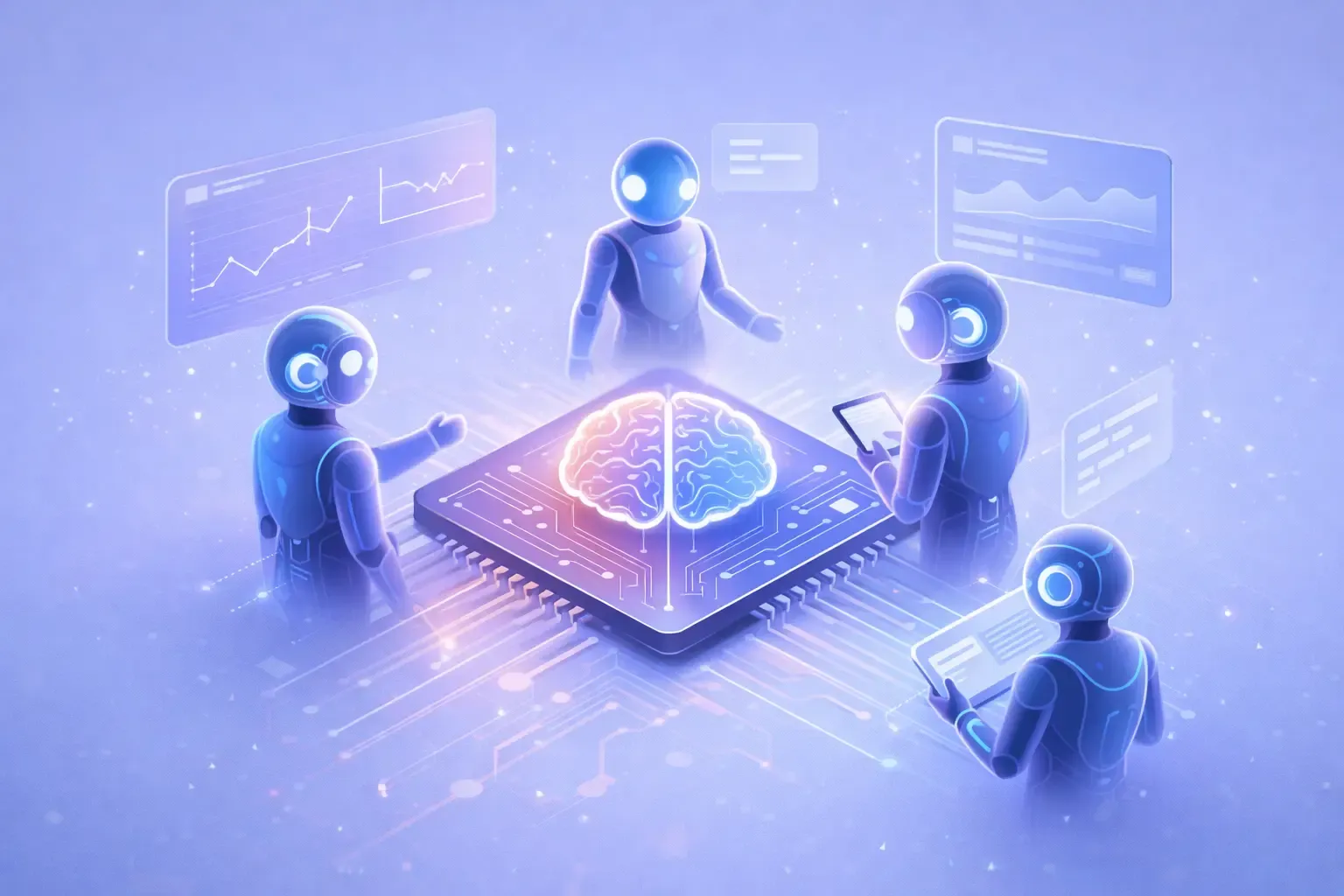
Artificial intelligence is moving beyond single models that answer prompts in isolation. A new wave of research focuses on teams of AI agents that collaborate, plan, debate, and execute tasks together.
That is exactly what happens when Meta Releases Multi Agent Llama Framework, a system designed to help autonomous AI agents work as coordinated groups rather than standalone tools.
This release signals a major step toward scalable automation, advanced reasoning pipelines, and real world AI orchestration.
In this guide, you will learn:
- What the new framework is
- How Meta built its multi agent architecture
- Why autonomous AI systems matter
- Key features and design goals
- Potential use cases
- Industry implications
- Future directions
- FAQs optimized for Google snippets
Let us explore what makes this launch so important.
What Is Meta Multi Agent Llama Framework
When Meta Releases Multi Agent Llama Framework, the company introduces a development platform that allows multiple Llama based agents to collaborate on complex tasks.
Instead of asking one large language model to solve everything, the framework divides work among specialized agents such as planners, researchers, critics, and executors. Each agent handles part of the process, and together they produce stronger results.
This approach mirrors how human teams operate. One person gathers data, another checks quality, and another executes the plan.
The Meta Multi Agent Llama Framework supports:
- Agent role assignment
- Message passing between agents
- Shared memory systems
- Task decomposition pipelines
- Feedback loops
- Monitoring tools
These capabilities make it easier to build autonomous AI systems that operate with limited human intervention.
Why Meta Is Betting on Multi Agent AI
Large language models already perform well in many tasks, but they still struggle with:
- Long multi step reasoning
- Persistent goals
- Tool coordination
- Error correction
- Complex workflows
Multi agent systems solve these issues by spreading responsibility across several AI components.
When Meta Releases Multi Agent Llama Framework, it positions Llama models as the backbone for agent driven automation.
Meta sees several benefits:
- Improved reliability through internal checks
- Faster parallel execution
- Better planning depth
- Reduced hallucinations
- Easier debugging of decisions
These advantages explain why multi agent AI is becoming central to enterprise systems, robotics, and research labs.
How the Multi Agent Llama Framework Works
The framework sits on top of Meta’s Llama models and orchestration tools. It defines how agents communicate, store information, and decide what to do next.
Agent Roles and Responsibilities
Developers can create agents with clear purposes such as:
- Planner agent that breaks goals into steps
- Research agent that gathers information
- Coding agent that writes software
- Critic agent that reviews outputs
- Executor agent that calls tools or APIs
Each agent operates independently but shares context with the group.
Communication Layer
The system includes structured messaging so agents can:
- Ask questions
- Propose actions
- Share results
- Flag errors
- Request clarification
This communication layer keeps workflows transparent and traceable.
Memory and State Management
Long running tasks require memory. The framework supports:
- Shared working memory
- Agent specific logs
- Task history
- Checkpoints
- Recovery states
These features allow autonomous AI systems to persist across sessions.
Key Features That Stand Out
When Meta Releases Multi Agent Llama Framework, several technical elements make it appealing to developers.
Modular Design
The architecture lets teams:
- Add or remove agents
- Swap models
- Insert new tools
- Adjust reasoning depth
- Tune performance
This flexibility makes it suitable for both research experiments and production pipelines.
Tool Use and Automation
Agents can connect to:
- Databases
- Search engines
- Code execution environments
- APIs
- Internal business systems
That ability turns static models into active digital workers.
Safety and Oversight
Meta also focuses on monitoring and control features, including:
- Execution logs
- Human approval checkpoints
- Policy enforcement layers
- Anomaly detection
- Role based permissions
These controls help organizations deploy autonomous systems responsibly.
Use Cases for Autonomous AI Systems
The release opens doors across many industries.
Software Development
Teams can build agent groups that:
- Analyze requirements
- Generate code
- Test functions
- Fix bugs
- Document projects
Data Analysis and Research
Multi agent setups can:
- Gather datasets
- Clean information
- Run experiments
- Interpret results
- Summarize findings
Enterprise Operations
Businesses may deploy agents that:
- Manage workflows
- Optimize schedules
- Monitor supply chains
- Generate reports
- Handle customer queries
Robotics and Simulation
Agent frameworks also help:
- Coordinate robot fleets
- Plan navigation
- Share sensor data
- Adapt strategies
How Meta’s Framework Compares to Other Agent Systems
Several companies already experiment with agent orchestration platforms. Meta’s approach stands out because it focuses on:
- Tight integration with Llama models
- Open research direction
- Modular agent roles
- Scalable deployment patterns
- Enterprise friendly governance tools
When Meta Releases Multi Agent Llama Framework, it adds strong competition in the growing ecosystem of agent based AI platforms.
Implications for the AI Industry
This launch hints at broader trends.
Organizations are shifting from chatbots toward:
- Workflow automation
- Long running AI services
- Collaborative agent networks
- Self correcting systems
- Tool integrated reasoning
Developers now design systems that think in teams rather than single prompts.
Meta’s move also pushes open source communities to experiment faster with large scale orchestration techniques.
Challenges That Remain
Even with advanced tooling, multi agent systems face hurdles.
Coordination Complexity
Developers must handle:
- Conflicting goals
- Communication overload
- Deadlocks
- Cascading errors
Cost and Performance
Running many agents increases:
- Compute usage
- Latency
- Infrastructure demands
Evaluation Metrics
Measuring success in autonomous systems is difficult. Teams still debate:
- How to score collaboration
- How to track long term reliability
- How to detect subtle failures
The Future of Multi Agent AI at Meta
As Meta Releases Multi Agent Llama Framework, future versions may include:
- Larger agent teams
- Visual planning tools
- Learning from execution history
- Human in the loop interfaces
- Real time dashboards
- Cross organization deployment
These improvements could push agent driven systems into mainstream business operations.
Frequently Asked Questions
What is the Meta Multi Agent Llama Framework
It is a platform that lets multiple Llama based AI agents collaborate to complete complex tasks autonomously.
Why is Meta focusing on multi agent AI
Multi agent systems improve reliability, planning depth, and automation for long workflows.
Is the framework open source
Meta often supports open research, but availability depends on the specific release terms.
What are autonomous AI systems
They are AI systems that plan, act, use tools, and monitor progress with limited human input.
Who should use this framework
Developers, researchers, and enterprises building complex AI workflows can benefit.
How does it improve reliability
Multiple agents review and cross check each other’s work before execution.
Final Thoughts
When Meta Releases Multi Agent Llama Framework, it highlights a clear shift in artificial intelligence.
The future is not about one model doing everything. It is about coordinated systems that reason, act, verify, and improve together.
As agent based AI matures, Meta’s new framework could become a cornerstone for building truly autonomous digital workers.