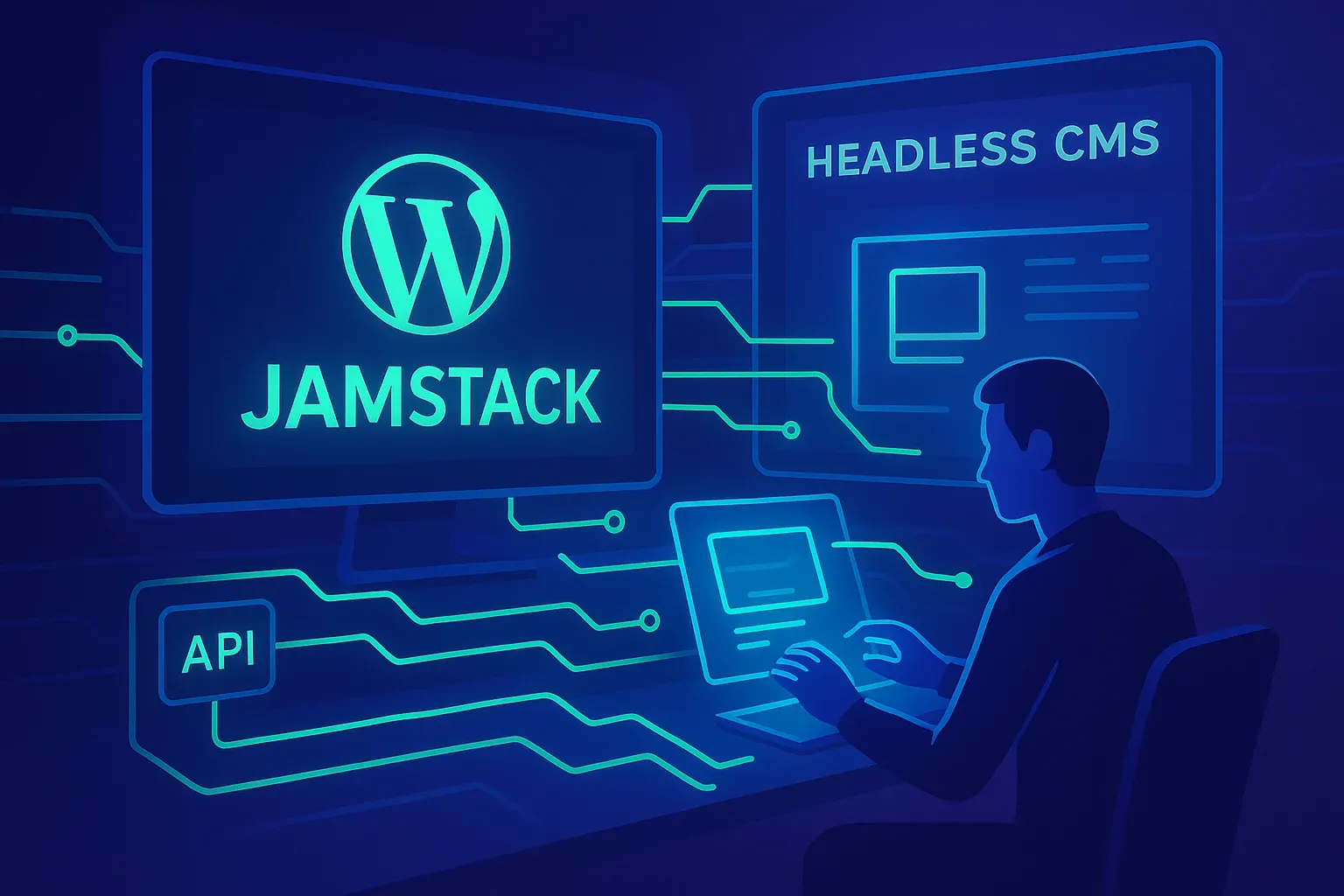
The world of web development has undergone major transformations in the last decade. From the rise of mobile-first design to the integration of AI-driven workflows, every few years brings a new way of building and delivering online experiences. One of the most profound shifts of the 2020s has been the evolution of Jamstack and the rise of the headless web.
What started as a movement for faster, static-first sites has now grown into a mainstream architecture powering some of the world’s largest platforms. By 2025, Jamstack has matured beyond its roots, offering developers more scalability, flexibility, and integration possibilities than ever before. But what exactly makes Jamstack and headless development so appealing, and why are developers embracing it over traditional web architectures?
This blog explores the evolution of Jamstack, its benefits, real-world use cases, and what it means for the future of modern web development.
What Is Jamstack?
Jamstack is a modern web architecture built on three key principles:
- JavaScript for dynamic functionalities
- APIs for server-side operations
- Markup (pre-rendered HTML) for delivering content
Unlike traditional monolithic applications, Jamstack separates the frontend from the backend, enabling developers to use static site generators, APIs, and microservices to create faster, more secure, and more scalable applications.
The Headless Web: Breaking Away From the Monolith
The term headless web refers to decoupling the frontend presentation layer from the backend content management system (CMS). Instead of relying on a tightly integrated stack like WordPress, a headless CMS allows content to be stored in one place and delivered to any frontend — websites, apps, smart devices, or even AR/VR platforms.
By combining Jamstack principles with a headless approach, developers gain:
- More freedom in design and frameworks
- Faster performance thanks to static rendering and CDN delivery
- Improved scalability for global audiences
- A future-proof approach that works across platforms
Why Developers Are Embracing Jamstack in 2025
1. Speed and Performance
Performance remains a top priority in web development. Jamstack sites leverage pre-rendered static pages and CDNs, reducing load times drastically. In a world where Google’s Core Web Vitals play a significant role in rankings, speed is a critical advantage.
2. Scalability Without the Hassle
Traditional servers struggle during high-traffic spikes, but Jamstack scales effortlessly by distributing static assets globally via CDNs. For e-commerce and content-heavy sites, this means reliable uptime even during peak events.
3. Flexibility With APIs and Microservices
Developers no longer need to be locked into a single ecosystem. With Jamstack, any service — payments, authentication, search, analytics — can be integrated via APIs, enabling plug-and-play architecture.
4. Improved Security
Since Jamstack sites reduce reliance on server-side operations, the attack surface is much smaller compared to traditional monolithic setups. Without direct database connections, the risk of breaches is reduced significantly.
5. Developer Productivity
Jamstack allows teams to work in parallel — frontend developers can build interfaces while backend engineers focus on APIs. This speeds up development cycles and fosters collaboration.
6. Future-Ready for Omnichannel
With headless CMS powering Jamstack builds, content can be delivered not just to websites, but also to mobile apps, smart devices, and immersive environments. This makes it ideal for brands expanding beyond traditional web.
Jamstack vs Traditional Web Development
Traditional development often couples the frontend and backend, making it harder to adapt to modern demands. Here’s how Jamstack compares:
- Traditional: Monolithic, server-rendered, reliant on databases.
- Jamstack: Decoupled, static-first, API-driven, and CDN-delivered.
For developers, this means moving away from server maintenance and complexity toward faster, more modular workflows.
Key Technologies Driving Jamstack Evolution
1. Static Site Generators (SSGs)
Tools like Next.js, Gatsby, and Hugo allow developers to build lightning-fast static sites that integrate dynamic elements via APIs.
2. Headless CMS Platforms
Contentful, Strapi, Sanity, and Storyblok give content teams full control without being tied to a specific frontend framework.
3. Serverless Functions
Platforms like AWS Lambda, Netlify Functions, and Vercel empower developers to handle backend processes (e.g., form submissions, authentication) without running traditional servers.
4. CDNs and Edge Computing
Modern Jamstack heavily relies on edge delivery, ensuring that content is served closer to users worldwide, reducing latency.
Real-World Use Cases for Jamstack
- E-commerce – Platforms like Shopify headless and BigCommerce integrate with Jamstack to provide fast, scalable online shopping experiences.
- Publishing and Media – News outlets and content-heavy sites use Jamstack for rapid load times and better SEO.
- Enterprise Applications – Companies adopt Jamstack for intranets, dashboards, and portals, benefiting from security and scalability.
- Startups – Smaller teams use Jamstack to move quickly and scale affordably without complex infrastructure.
Challenges of Jamstack Adoption
While Jamstack offers massive benefits, it isn’t without hurdles:
- Complex Integrations: Managing multiple APIs can increase complexity.
- Learning Curve: Developers need to adapt to new workflows and tools.
- Dynamic Needs: Real-time apps (like chat or live dashboards) require more advanced setups.
- Costs of APIs: Over-reliance on third-party services may increase expenses.
The Future of Jamstack and the Headless Web
By 2025, Jamstack is no longer just a developer trend — it’s a mainstream architecture shaping how the modern web operates. The next phase will likely include:
- More AI Integration: Automating content personalization and optimization.
- Deeper Edge Computing: Bringing logic and computation closer to users.
- Stronger Developer Tools: Simplified platforms for managing APIs and headless content.
- Sustainability Focus: Jamstack’s lightweight, static-first approach aligns with green computing initiatives.
Why This Matters for Developers and Businesses
For developers, embracing Jamstack means future-proofing their skills. For businesses, it offers faster sites, better SEO, stronger security, and a competitive edge in delivering digital experiences.
In an age where user expectations are higher than ever, Jamstack provides the foundation for scalable, omnichannel-ready applications that can adapt to emerging technologies.
Conclusion
The evolution of Jamstack and the rise of the headless web signal a fundamental shift in how the internet is built and delivered. By decoupling content from presentation, leveraging APIs, and harnessing the power of CDNs, Jamstack has given developers a framework that balances speed, scalability, and security.
In 2025, Jamstack isn’t just an option — it’s a best practice for teams seeking agility and performance. Developers embracing this architecture are not only keeping up with the present but actively shaping the future of web development.