When people think about SEO, they usually focus on keywords, backlinks, or content.
Internal linking often gets overlooked.
But here’s the reality.
Internal links quietly play a huge role in how search engines understand your website, how authority flows between pages, and how users navigate your content.
In many cases, improving your internal linking strategy alone can lead to better rankings without creating new content.
Let’s break it down in a way that actually makes sense.
What Is Internal Linking in SEO
Internal linking refers to linking one page of your website to another page on the same domain.
For example:
- linking a blog post to another related article
- connecting a service page to a supporting guide
- guiding users from one topic to a deeper topic
Search engines like Google Search use these links to discover pages, understand relationships, and determine importance.
At the same time, users rely on these links to navigate your site.
So internal linking serves both search engines and real people.
Why Internal Linking Is Important for SEO
Internal links do more than just connect pages.
They influence how your website performs in search results.
Helps Search Engines Crawl Your Website
Search engines use links to find pages.
If a page has no internal links, it may not get indexed properly.
Distributes Link Equity
When one page gains authority, internal links help pass that value to other pages.
This improves overall ranking potential.
Improves User Experience
Good internal links guide users to relevant content.
This keeps them on your site longer.
Defines Site Structure
Internal linking creates a clear hierarchy.
It shows which pages are most important.
Supports Keyword Relevance
Anchor text helps search engines understand what a page is about.
Understanding Site Structure and SEO Architecture
Before building links, it’s important to understand structure.
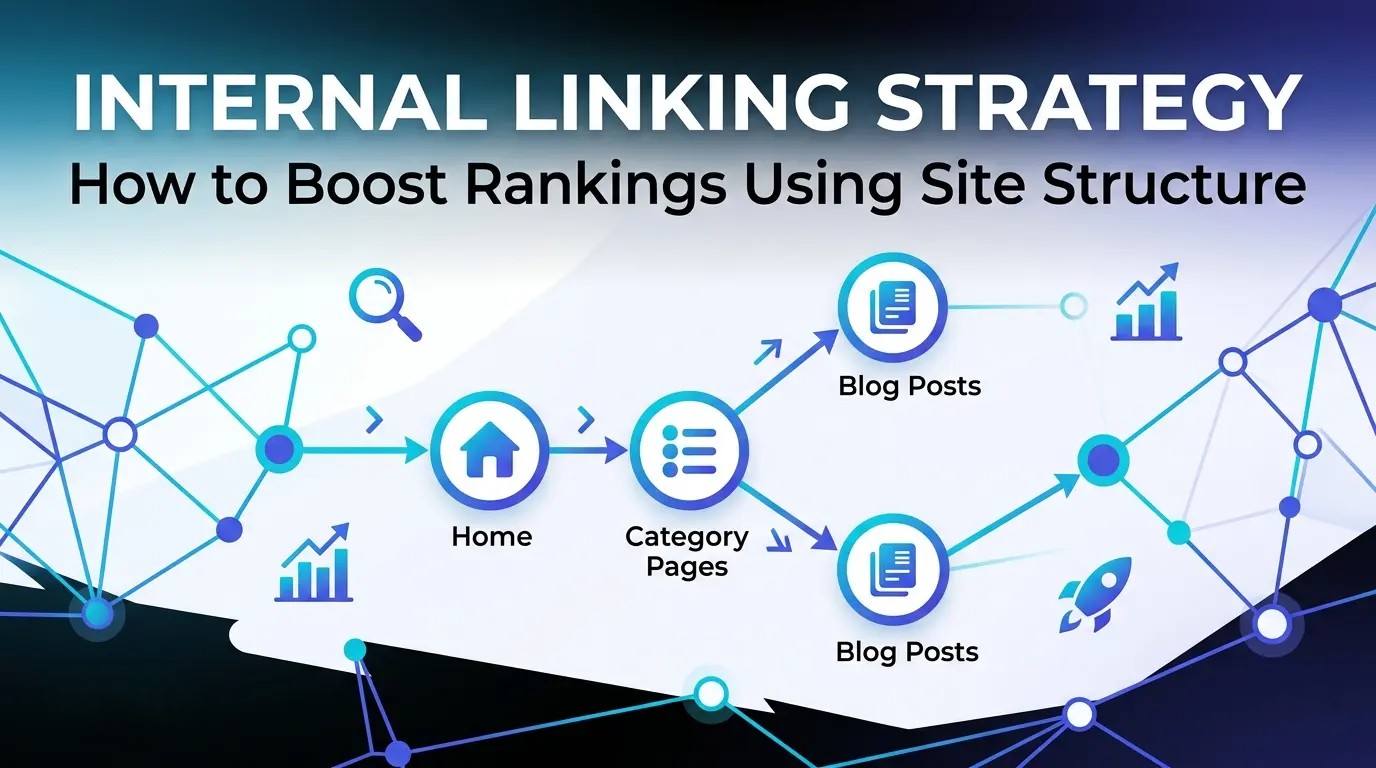
A well-structured website usually follows a hierarchy:
- homepage
- category pages
- subcategory or service pages
- blog posts or supporting content
Think of it like a pyramid.
Your most important pages should receive the most internal links.
This helps search engines identify priority pages.
Types of Internal Links You Should Use
Not all internal links are the same.
Using a mix of different types improves SEO.
Navigational Links
These are found in menus, headers, and footers.
They help users move across your site easily.
Contextual Links
These are links placed within content.
They are the most powerful because they provide context.
Footer Links
These connect important pages like contact, services, and policies.
Related Content Links
These guide users to similar or supporting articles.
How to Build an Effective Internal Linking Strategy
A strong strategy doesn’t happen randomly.
It’s planned.
Start with Your Core Pages
Identify your most important pages.
These could be:
- main services
- pillar blog posts
- high-converting landing pages
These pages should receive the most internal links.
Use Topic Clusters
Group related content together.
For example:
- one main guide (pillar content)
- multiple supporting articles (cluster content)
Link all cluster content back to the main page.
Link New Content to Existing Pages
Every time you publish a new article, link it to relevant older content.
Also update older posts to link to new ones.
Keep Links Natural
Links should fit naturally within sentences.
Avoid forcing them.
Limit Unnecessary Links
Too many links can confuse both users and search engines.
Focus on relevance.
Anchor Text Best Practices
Anchor text is the clickable part of a link.
It plays a big role in SEO.
Use Descriptive Text
Instead of “click here,” use meaningful phrases.
Example:
- better: learn more about keyword research
- not ideal: click here
Avoid Over-Optimization
Don’t repeat the exact keyword in every link.
Keep it natural.
Match User Intent
Anchor text should clearly indicate what the user will find.
Common Internal Linking Mistakes to Avoid
Even small mistakes can affect your SEO.
Avoid:
- orphan pages with no internal links
- overusing exact match anchor text
- linking to irrelevant pages
- using too many links on one page
- ignoring important pages
Fixing these issues can improve your rankings.
How to Audit Your Internal Links
You don’t need advanced tools to start.
But tools like Screaming Frog SEO Spider can help analyze your structure.
Check for:
- broken links
- pages with few or no internal links
- overlinked pages
- anchor text patterns
Regular audits keep your site healthy.
How Internal Linking Supports SEO Growth
Internal linking connects everything together.
It supports:
- better indexing and crawling
- improved keyword rankings
- stronger page authority
- better user engagement
It’s one of the few SEO strategies you fully control.
How It Fits Into Your Overall SEO Strategy
Internal linking works alongside:
- content creation
- keyword research
- technical SEO
- backlink building
It strengthens everything else you do.
If you want to understand how all these elements work together, this beginner-friendly SEO guide explains the bigger picture clearly.
Final Thoughts
Internal linking might not look exciting at first.
But it’s one of the most powerful SEO techniques you can use.
It doesn’t require a budget. Just a thoughtful approach.
Start by connecting your content in a meaningful way.
Help users navigate your site. Help search engines understand your pages.
Over time, these small improvements can lead to significant growth.
If you’re looking to apply these strategies in real-world scenarios, Milaaj Digital Academy focuses on practical learning that helps connect ideas with execution.
That’s where real progress happens.
FAQs
What is internal linking in SEO
It is the process of linking pages within the same website.
Why is internal linking important
It helps with crawling, ranking, and user navigation.
How many internal links should a page have
There is no fixed number, but links should be relevant and useful.
What is anchor text
It is the clickable text used in a hyperlink.
Can internal links improve rankings
Yes, they help distribute authority and improve visibility.