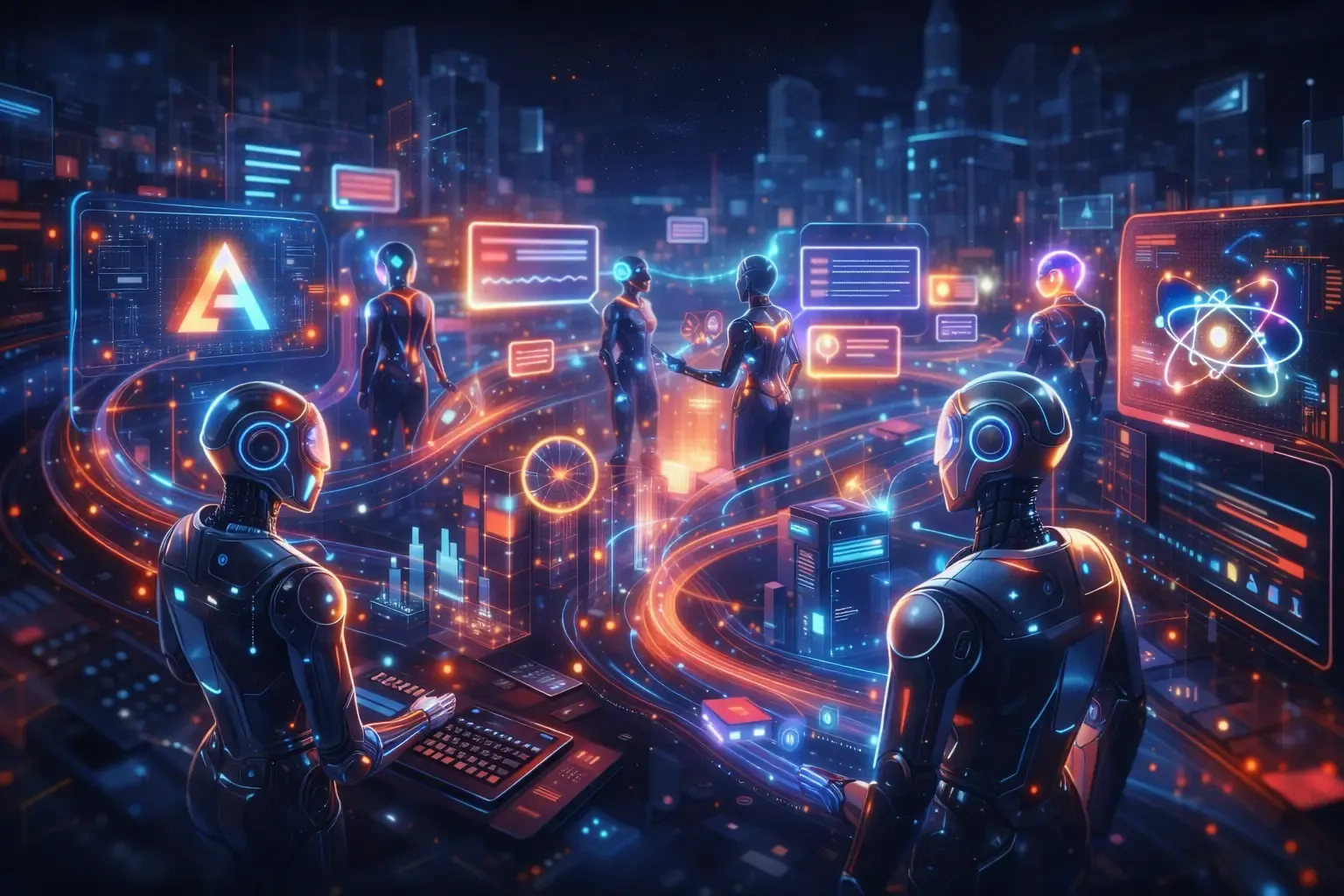
Artificial intelligence research is moving fast, but one idea is changing how scientists train machines. Instead of relying only on static datasets, researchers are now building living digital environments where agents learn through experience.
That is where LingBot World comes in.
LingBot World is designed as a dynamic simulation where multiple AI agents interact, explore, communicate, and adapt over time. Rather than following fixed instructions, these agents develop behaviors through observation, trial and error, and collaboration.
In this guide, you will learn:
- What LingBot World is
- How the environment works
- Why living simulations matter
- What makes it different from classic AI training
- Real world use cases
- Future possibilities
- Common questions answered in an SEO friendly FAQ
Let us step inside this evolving ecosystem.
What Is LingBot World
LingBot World is a virtual AI environment built to simulate complex, real time interactions between autonomous agents. Instead of running one isolated model, the system hosts many agents at once, each with its own goals, memory, perception tools, and decision logic.
The core purpose of LingBot World is to study how intelligence emerges when systems:
- Share space
- Compete or cooperate
- Exchange information
- Adapt to changing conditions
- Learn from consequences
Researchers use LingBot World to explore communication strategies, planning, social reasoning, and long term learning.
Unlike scripted games or static benchmarks, the environment keeps evolving. Weather, resources, tasks, and social structures can shift, forcing agents to rethink strategies rather than memorize patterns.
Why Living AI Environments Matter
Traditional AI training often relies on labeled datasets and fixed evaluation tests. That approach works well for classification tasks, but it struggles to create flexible systems that operate in open ended situations.
Living environments such as LingBot World introduce continuous experience.
Instead of learning once and stopping, agents:
- Observe changes
- Take actions
- Receive feedback
- Update internal models
- Try new approaches
- Build longer memories
This mirrors how humans and animals learn in the physical world.
How LingBot World Works
LingBot World blends simulation engines, reinforcement learning systems, language models, and multi agent coordination frameworks.
Core Components of the Environment
LingBot World typically includes:
- A spatial map or virtual terrain
- Interactive objects
- Renewable or limited resources
- Communication channels
- Task generators
- Reward systems
- Time progression
Each element can change, which prevents agents from overfitting to static layouts.
How AI Agents Operate
Each agent inside LingBot World usually contains:
- Perception modules
- Memory systems
- Planning algorithms
- Language models
- Policy networks
- Learning loops
Agents observe their surroundings, decide what to do next, act, and then update their internal parameters based on the outcome.
Interaction Is the Key
What makes LingBot World special is agent to agent interaction.
Agents might:
- Share discoveries
- Negotiate over resources
- Compete for goals
- Coordinate tasks
- Teach each other
- Deceive or mislead
These social dynamics create complex behavior that rarely appears in single model experiments.
How LingBot World Differs From Traditional AI Benchmarks
Many popular benchmarks focus on narrow objectives such as answering questions or recognizing images. LingBot World expands the scope dramatically.
Static vs Living Worlds
Classic benchmarks rely on:
- Fixed datasets
- Repeated tasks
- Clear answers
- No long term memory
LingBot World focuses on:
- Evolving terrain
- Open ended goals
- Partial information
- Long time horizons
- Social dynamics
Single Agent vs Multi Agent Systems
Traditional setups usually train one model at a time.
LingBot World supports:
- Dozens or hundreds of agents
- Shared environments
- Group objectives
- Emergent cooperation
- Competitive scenarios
Short Term Rewards vs Long Term Strategy
In LingBot World, success often requires:
- Saving resources
- Building alliances
- Learning patterns
- Planning many steps ahead
- Adapting to new rules
Research Areas Powered by LingBot World
LingBot World can support many branches of artificial intelligence research.
Language and Communication
Researchers test how agents:
- Develop shared vocabularies
- Explain plans
- Ask for help
- Resolve conflicts
- Coordinate tasks
Social Intelligence
The platform enables studies around:
- Trust building
- Reputation systems
- Cooperation strategies
- Group formation
- Negotiation tactics
Reinforcement Learning at Scale
LingBot World provides a testbed for:
- Exploration strategies
- Sparse rewards
- Curriculum learning
- Multi objective optimization
- Transfer learning
Safety and Alignment
Living environments also let researchers examine:
- Resource hoarding
- Deceptive communication
- Unintended strategies
- Reward hacking
- Collusion
Real World Applications Inspired by LingBot World
Although LingBot World itself is a research platform, the ideas behind it influence practical technology.
Robotics Training
Simulated worlds help robots learn:
- Navigation
- Object manipulation
- Collaboration with humans
- Task planning
- Error recovery
Autonomous Systems
Self driving systems and drone fleets benefit from:
- Multi agent coordination
- Traffic negotiation
- Shared perception
- Dynamic route planning
Game Development and Virtual Worlds
Developers can build:
- Smarter characters
- Adaptive storylines
- Evolving economies
- Social simulations
Enterprise AI
Future business agents may:
- Negotiate contracts
- Manage logistics
- Monitor supply chains
- Coordinate departments
Why LingBot World Excites Researchers
LingBot World stands out because it:
- Supports long term learning
- Encourages emergent behavior
- Reveals weaknesses early
- Scales across many agents
- Blends language and action
- Mirrors real world complexity
Challenges and Open Questions
Despite its promise, LingBot World raises technical and research challenges.
Computational Cost
Large scale simulations require:
- Heavy compute resources
- Efficient memory systems
- Fast physics engines
- Distributed training pipelines
Evaluation Metrics
Researchers still debate:
- What defines intelligence
- How to measure cooperation
- How to track progress
- Which behaviors matter most
Controlling Emergence
Designers must watch for:
- Exploitation of loopholes
- Harmful strategies
- Feedback loops
- Unstable group dynamics
The Future of LingBot World
Future versions of LingBot World may include:
- Richer physics
- Emotional modeling
- Cultural evolution
- Persistent societies
- Long term memory
- Human guided learning
LingBot World represents a step toward ecosystems where artificial agents grow through experience rather than simple instruction.
Frequently Asked Questions About LingBot World
What is LingBot World in simple terms
LingBot World is a simulated digital environment where many AI agents live, interact, and learn over time.
Why do researchers use LingBot World
Researchers use LingBot World to study social behavior, communication, planning, and emergent intelligence.
Is LingBot World a game
No. LingBot World is a research platform, not an entertainment product.
How is LingBot World different from traditional AI training
Traditional training relies on datasets. LingBot World places agents in changing environments where experience drives learning.
Can LingBot World help real robots
Yes. Insights from LingBot World can transfer to robotics and autonomous systems.
Does LingBot World include language models
Most implementations integrate language systems so agents can communicate and coordinate.
Is LingBot World open source
That depends on the research team. Some versions may be public while others remain internal.
Final Thoughts
LingBot World highlights how AI research is shifting from static benchmarks to vibrant digital ecosystems.
By placing intelligent systems inside evolving worlds filled with uncertainty and long term consequences, researchers can unlock new forms of learning and cooperation.
As these platforms mature, LingBot World may become a central testing ground for the next generation of adaptive artificial intelligence.