If you’ve ever seen an ad pop up while scrolling or received a promotional message out of nowhere, you’ve experienced outbound marketing.
And if you’ve searched for something, found a helpful blog, and ended up trusting that brand, that’s inbound marketing.
Both approaches are everywhere. Both can work.
But they work in very different ways.
The real question isn’t just which one is better. It’s which one works best today, especially in a world where users have more control over what they see and engage with.
Let’s break it down in a simple, practical way.
What Is Inbound Marketing and How It Works
Inbound marketing is about attracting people to your brand instead of reaching out to them directly.
You create valuable content that answers questions, solves problems, or provides insights. Over time, people discover you naturally.
Common inbound marketing channels include:
- blog content and SEO
- social media content
- videos and educational resources
- email newsletters
The idea is simple. Instead of interrupting users, you meet them where they already are.
What Is Outbound Marketing and How It Works
Outbound marketing is the traditional approach.
You actively reach out to potential customers, whether they are looking for you or not.
Examples include:
- paid ads and display advertising
- cold emails and calls
- TV, radio, and print ads
- direct promotional campaigns
It’s more direct and often faster in generating visibility.
But it can also feel intrusive if not done well.
Key Differences Between Inbound and Outbound Marketing
Understanding the difference helps you choose the right strategy.
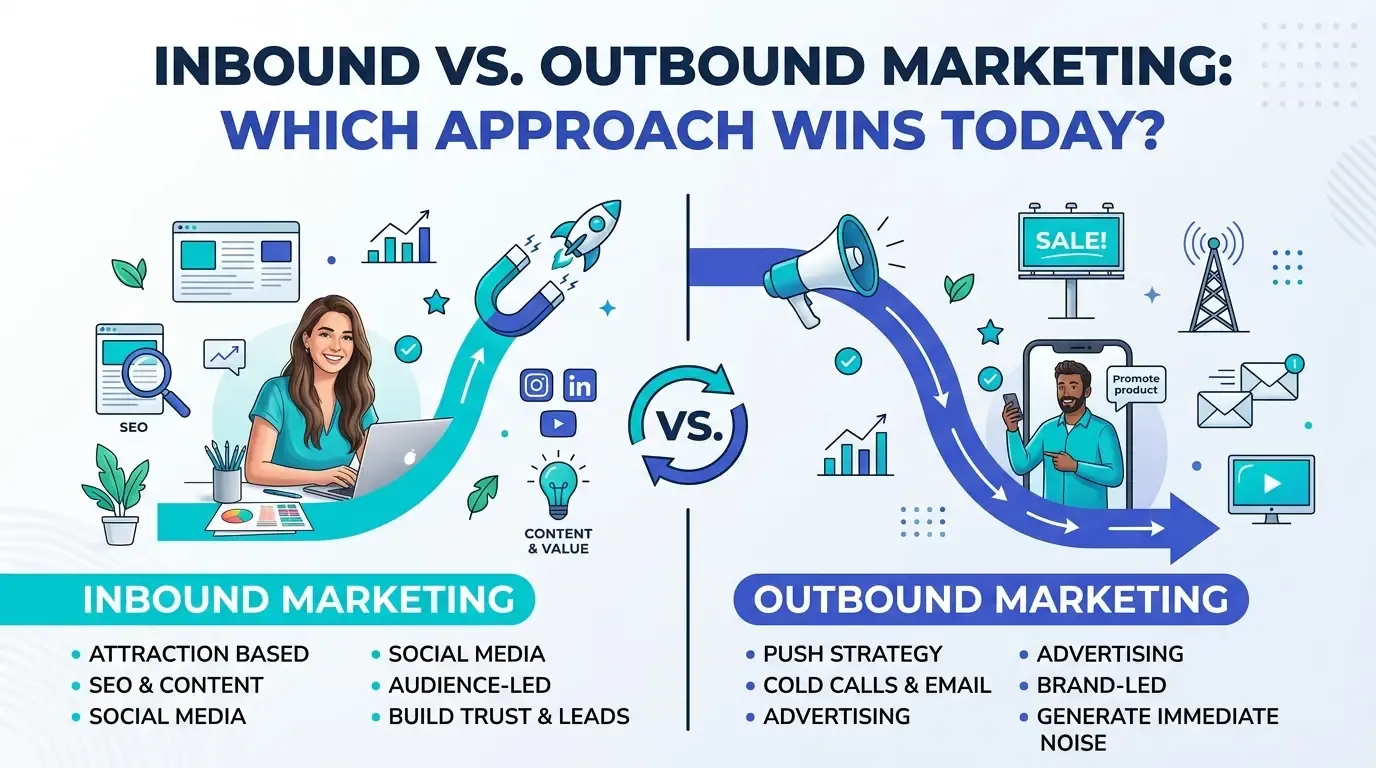
Inbound Marketing
- attracts users organically
- focuses on value and trust
- long-term results
- lower cost over time
- builds brand authority
Outbound Marketing
- pushes message to users
- focuses on immediate reach
- faster results
- requires ongoing budget
- works well for quick campaigns
Both have strengths. The difference lies in how they engage users.
Why Inbound Marketing Is Gaining More Importance
User behavior has changed.
People don’t like interruptions. They skip ads, ignore cold emails, and prefer finding information on their own.
Inbound marketing works because:
- it aligns with user intent
- it builds trust before selling
- it feels natural, not forced
- it creates long-term visibility
When someone finds your content and learns from it, they’re more likely to trust you.
Why Outbound Marketing Still Works
Even though inbound is growing, outbound isn’t outdated.
It still plays an important role, especially for:
- quick product launches
- time-sensitive campaigns
- reaching new audiences fast
- retargeting potential customers
Paid ads, for example, can bring immediate traffic while inbound strategies take time to build.
Inbound vs Outbound Marketing: Which Is Better in 2026?
There’s no single answer.
It depends on your goals.
Choose Inbound Marketing if you want:
- long-term organic growth
- strong brand authority
- consistent traffic over time
- lower long-term costs
Choose Outbound Marketing if you want:
- immediate visibility
- fast results
- quick testing of ideas
- targeted campaigns
In reality, most successful strategies use both.
How to Combine Inbound and Outbound for Better Results
Instead of choosing one, combine both strategically.
Here’s how:
- use inbound content to build trust
- use outbound ads to amplify reach
- retarget users who engaged with your content
- use email marketing to nurture leads
This creates a balanced approach.
Inbound brings people in. Outbound pushes growth further.
Real-World Example of Combined Strategy
Imagine this:
- someone finds your blog through search (inbound)
- they visit your website but don’t take action
- later, they see your ad on social media (outbound)
- they return and convert
This is how modern marketing works.
Multiple touchpoints. One journey.
Common Mistakes to Avoid
Many businesses struggle because they misuse these strategies.
Avoid:
- relying only on ads without building content
- expecting instant results from inbound marketing
- targeting the wrong audience
- ignoring user experience
- not tracking performance
Balance and consistency matter more than choosing one side.
How This Fits into a Digital Marketing Strategy
Inbound and outbound are not separate worlds.
They are parts of the same system.
- SEO and content bring traffic
- social media builds awareness
- ads amplify reach
- email nurtures leads
If you want to understand how all these channels work together, this beginner-friendly guide to digital marketing explains it in a simple and practical way.
Final Thoughts
Inbound vs outbound marketing isn’t about choosing a winner.
It’s about understanding when to use each one.
Inbound builds trust and long-term growth.
Outbound brings speed and visibility.
Together, they create a stronger, more balanced strategy.
If you’re just starting out, focus on learning the basics of both. Test what works for your audience. Adjust as you go.
Over time, you’ll find the right mix.
And if you’re looking to apply these strategies in real-world scenarios, Milaaj Digital Academy focuses on practical learning that helps connect ideas with execution.
FAQs
What is the main difference between inbound and outbound marketing?
Inbound attracts users through content, while outbound reaches out directly through ads and promotions.
Which is more effective today?
Inbound is more sustainable long-term, while outbound delivers faster short-term results.
Is outbound marketing outdated?
No, it still works well for quick visibility and targeted campaigns.
Can I use both strategies together?
Yes, combining both often produces the best results.
Which is better for beginners?
Start with inbound for learning and add outbound as you grow.