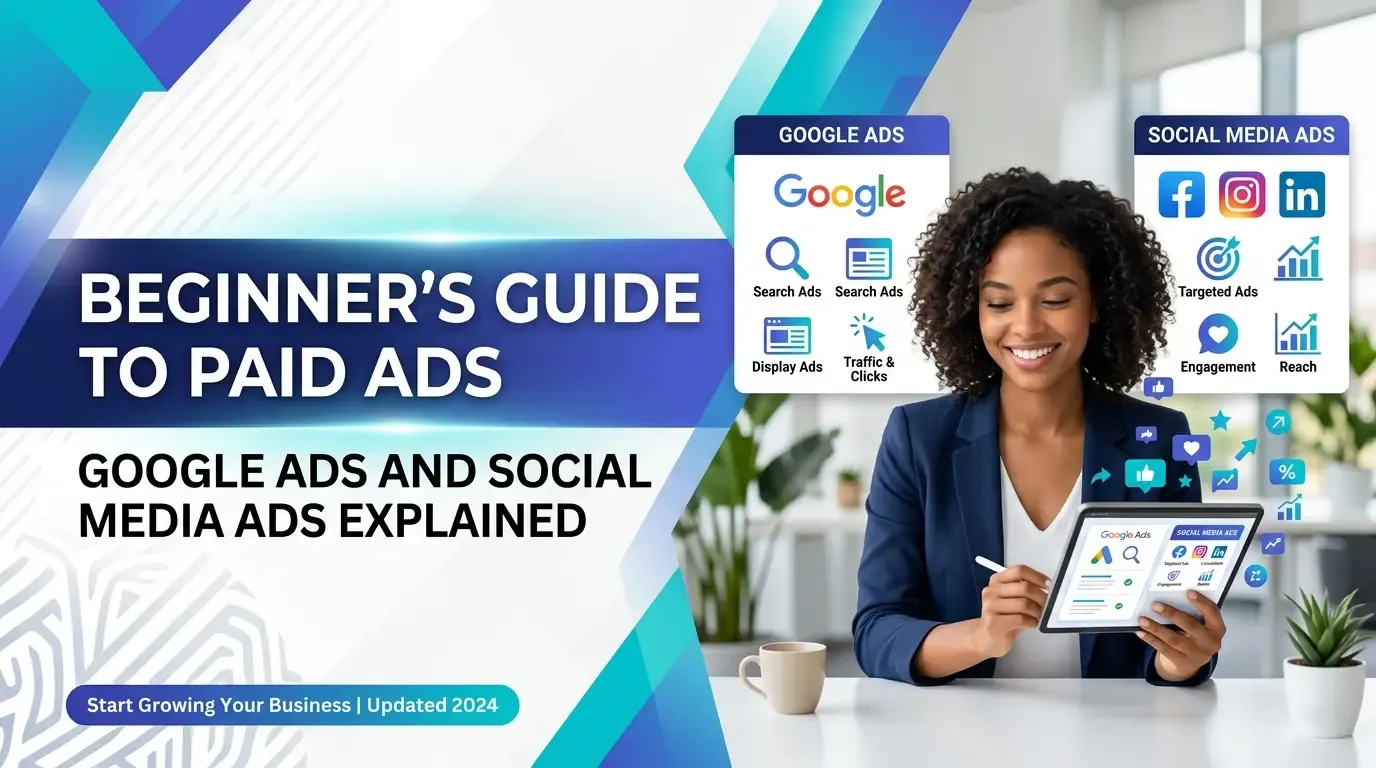
If you’ve ever searched for something online and clicked one of the top results marked “Ad,” you’ve already experienced paid advertising.
Or maybe you’ve noticed sponsored posts while scrolling through social media. That’s paid ads too.
They’re everywhere.
But for beginners, paid advertising can feel confusing. There are platforms, budgets, targeting options, and metrics to think about. It’s easy to feel like you need to know everything before you even start.
You don’t.
Once you understand the basics, it becomes much simpler. And when used correctly, paid ads can bring fast, measurable results.
Let’s break it down step by step.
What Are Paid Ads and How Do They Work
Paid ads, also known as pay-per-click (PPC) advertising, are a way to promote your business by paying to show your content to a targeted audience.
Instead of waiting for organic traffic, you can:
- appear at the top of search results
- reach users on social media
- drive traffic instantly to your website
You usually pay when someone clicks your ad, which is why it’s called pay-per-click.
The key advantage is speed. You don’t have to wait months to see results.
Why Paid Advertising Is Important in Digital Marketing
Paid ads play a crucial role in modern digital marketing strategies.
Here’s why:
- immediate visibility and traffic
- precise audience targeting
- measurable results and performance tracking
- scalability based on budget
- supports SEO and organic efforts
While SEO builds long-term growth, paid ads help you get quick results and test ideas faster.
Types of Paid Ads You Should Know
Before choosing a platform, it helps to understand the main types of ads available.
Search Ads
These appear on search engines when users look for something specific.
Example: ads on Google Ads.
They target users with high intent, which often leads to better conversions.
Display Ads
These are visual ads shown on websites, apps, and platforms.
They are useful for brand awareness and retargeting.
Social Media Ads
Platforms like Facebook, Instagram, and LinkedIn allow businesses to run highly targeted ads.
These are great for reaching specific audiences based on interests and behavior.
Video Ads
Video ads are popular on platforms like YouTube and social media.
They are effective for storytelling and engagement.
Google Ads for Beginners: How It Works
Google Ads is one of the most powerful advertising platforms.
It allows you to show ads when people actively search for products or services.
Key concepts to understand
- keywords: what users search for
- bids: how much you’re willing to pay
- ad rank: position of your ad
- quality score: relevance of your ad and landing page
Why Google Ads works well
- targets high-intent users
- drives immediate traffic
- measurable results
If someone searches for something, they’re already interested. That’s what makes search ads powerful.
Social Media Ads Explained for Beginners
Social media ads work differently from search ads.
Instead of targeting what people search, you target who they are.
Platforms like Instagram and Facebook allow targeting based on:
- interests
- behavior
- demographics
- location
Why social media ads work
- strong visual engagement
- precise audience targeting
- effective for brand awareness and retargeting
You’re not waiting for users to search. You’re reaching them where they already spend time.
Google Ads vs Social Media Ads: Key Differences
Understanding the difference helps you choose the right platform.
Google Ads:
- intent-based (users are searching)
- higher conversion potential
- ideal for immediate demand
Social Media Ads:
- interest-based (users are browsing)
- better for awareness and engagement
- ideal for building brand presence
Both are powerful. The best strategy often combines both.
How to Start Your First Paid Ad Campaign
Starting your first campaign doesn’t have to be complicated.
Step 1: Set a Clear Goal
Decide what you want:
- website traffic
- leads
- sales
- brand awareness
Your goal defines your campaign structure.
Step 2: Define Your Target Audience
Understand who you want to reach.
- age, location, interests
- problems they face
- what they are looking for
Better targeting leads to better results.
Step 3: Choose the Right Platform
- Google Ads for search intent
- social media for audience targeting
Start with one platform and learn it well.
Step 4: Create Simple, Clear Ads
Focus on:
- strong headline
- clear message
- relevant visuals
- simple call to action
Don’t overcomplicate it.
Step 5: Set a Budget and Start Small
You don’t need a big budget.
Start small, test, and scale what works.
Budgeting and Bidding Basics for Beginners
Budgeting is one of the biggest concerns for beginners.
Here’s a simple approach:
- start with a daily budget you’re comfortable with
- test different ads and audiences
- increase budget only when you see results
Avoid spending too much too early.
Key Metrics to Track in Paid Advertising
To improve your campaigns, track performance.
Focus on:
- click-through rate (CTR)
- cost per click (CPC)
- conversion rate
- return on ad spend (ROAS)
These metrics help you understand what’s working.
Common Paid Ads Mistakes Beginners Should Avoid
Many beginners waste money due to simple mistakes.
Avoid these:
- targeting too broad an audience
- ignoring ad copy quality
- not testing different variations
- sending traffic to poor landing pages
- stopping campaigns too early
Paid ads require testing and patience.
How Paid Ads Fit into a Digital Marketing Strategy
Paid ads are just one part of a larger strategy.
They work best when combined with:
- SEO for long-term traffic
- content marketing for value
- social media for engagement
If you’re trying to understand how all these channels connect, this beginner-friendly guide to digital marketing helps you see the complete picture.
Final Thoughts
Paid advertising might feel overwhelming at first.
But once you understand the basics, it becomes one of the most effective ways to grow quickly.
Start small. Test consistently. Learn from your data.
Some campaigns will work. Some won’t. That’s part of the process.
Over time, you’ll understand what works for your audience.
If you’re looking to build practical skills and apply these strategies in real scenarios, Milaaj Digital Academy focuses on hands-on learning that helps connect theory with execution.
And that’s where real growth starts.
FAQs
What are paid ads?
Paid ads are advertisements where you pay to promote content and drive traffic to your website.
Are Google Ads better than social media ads?
It depends on your goal. Google Ads target intent, while social ads target audience behavior.
How much should I spend on ads as a beginner?
Start small, test campaigns, and increase budget based on performance.
Do paid ads work instantly?
They can drive traffic quickly, but optimization is needed for consistent results.
Can I run ads without a website?
Yes, but having a landing page improves conversions significantly.