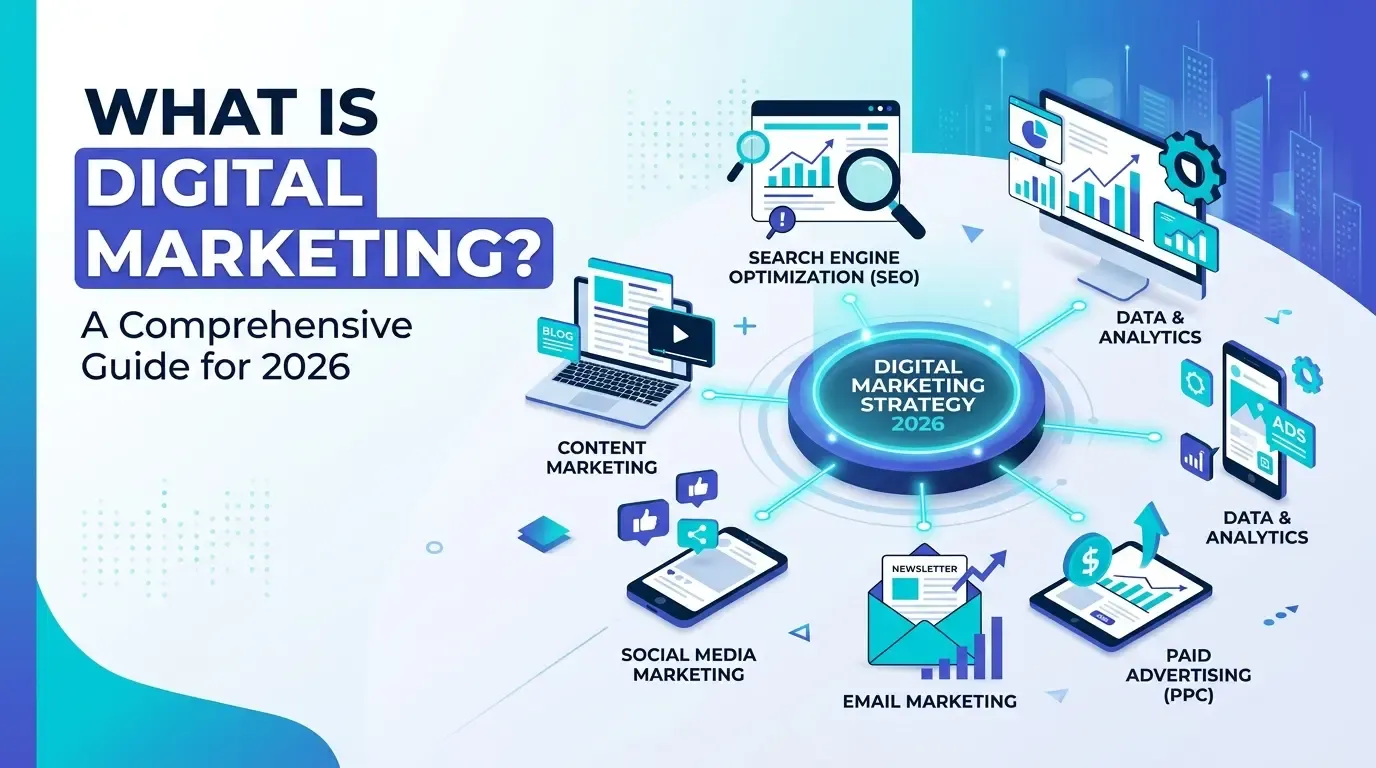
If you’re trying to grow a business, build a career, or simply understand how brands reach people online, digital marketing is where everything begins.
In 2026, almost every customer journey starts online. People search, compare, watch, read, and decide before making a purchase. Platforms like Google, Instagram, and YouTube are now part of daily decision-making.
That’s exactly what digital marketing is about. It helps businesses connect with the right audience, at the right time, using the right channels.
This guide breaks everything down in a simple, practical way so you can understand not just what digital marketing is, but how it actually works.
What is Digital Marketing?
Digital marketing is the promotion of products, services, or brands using online channels and digital technologies.
Instead of relying on traditional methods like print ads or billboards, businesses use digital platforms to reach their audience.
In simple terms
Digital marketing means using the internet to:
- attract potential customers
- engage them with useful content
- convert them into leads or buyers
- build long-term relationships
It combines creativity, data, and technology to drive measurable results.
Why Digital Marketing is Important in 2026
Consumer behavior has completely shifted.
People no longer rely only on ads. They:
- search before buying
- read reviews and comparisons
- watch videos before making decisions
- interact with brands online
Digital marketing helps businesses stay visible during this entire journey.
Key benefits
- reaches a global and local audience
- targets specific users based on behavior and intent
- provides measurable results
- costs less than traditional marketing
- supports long-term growth
Without digital marketing, businesses struggle to stay competitive.
How Digital Marketing Works
Digital marketing is not a single activity. It is a system of different strategies working together.
Here’s a simple flow:
- attract users through search engines, social media, or ads
- engage them with valuable content
- convert them into leads or customers
- retain them through follow-ups and relationship building
Each step is powered by different digital marketing channels.
Core Components of Digital Marketing
To understand digital marketing fully, you need to know its main areas.
1. Search Engine Optimization (SEO)
SEO is the process of improving your website so it ranks higher on search engines like Google.
It focuses on:
- keyword research
- content optimization
- technical improvements
- backlinks and authority
SEO helps bring organic (free) traffic over time.
2. Search Engine Marketing (SEM)
SEM refers to paid advertising on search engines.
Platforms like Google Ads allow businesses to appear at the top of search results instantly.
It is useful for:
- quick visibility
- lead generation
- product promotions
3. Social Media Marketing (SMM)
Social media platforms help brands connect and engage with audiences.
Popular platforms include:
This channel focuses on:
- content creation
- engagement and community building
- brand awareness
4. Content Marketing
Content marketing is about creating valuable and relevant content.
This includes:
- blog posts
- videos
- guides
- infographics
Good content builds trust and supports SEO, social media, and email marketing.
5. Email Marketing
Email marketing helps businesses stay connected with their audience.
It is used for:
- newsletters
- promotions
- nurturing leads
- customer retention
It remains one of the highest ROI channels.
6. Affiliate and Influencer Marketing
This involves partnering with others to promote your brand.
- affiliates earn commissions for referrals
- influencers promote products to their audience
Platforms like Instagram and YouTube play a major role here.
7. Pay-Per-Click Advertising (PPC)
PPC is a model where you pay for each click on your ad.
It includes:
- search ads
- display ads
- social media ads
This method is fast and measurable.
8. Analytics and Data Tracking
Digital marketing is powered by data.
Tools like Google Analytics help track:
- traffic
- user behavior
- conversions
This allows businesses to improve strategies based on real insights.
Types of Digital Marketing Channels
Digital marketing channels can be grouped into three main categories:
Owned Media
Your website, blog, and email list
Earned Media
Organic reach like SEO rankings, shares, and mentions
Paid Media
Ads on platforms like search engines and social media
A strong strategy uses all three together.
Key Digital Marketing Skills You Need
To succeed in digital marketing, you need a mix of skills.
Technical Skills
- SEO and keyword research
- analytics and data interpretation
- ad campaign management
- basic website understanding
Creative Skills
- content writing
- video creation
- design basics
- storytelling
Strategic Skills
- understanding user intent
- planning campaigns
- optimizing funnels
Digital Marketing Trends in 2026
The digital landscape is evolving fast.
Here are the most important trends:
- AI-powered marketing and automation
- voice and conversational search
- short-form video content
- personalization using data
- focus on first-party data
- answer engine optimization (AEO)
Search engines now prioritize helpful, human-focused content over keyword-heavy pages.
Common Mistakes Beginners Make
Many beginners struggle because of these mistakes:
- focusing on tools instead of strategy
- ignoring SEO basics
- creating content without understanding audience
- expecting quick results
- not tracking performance
Avoiding these can save a lot of time and effort.
How to Start Learning Digital Marketing
Getting started can feel overwhelming, but it does not have to be.
Simple roadmap
- understand the basics (SEO, content, social media)
- practice by creating your own content
- learn tools gradually
- analyze results and improve
Consistency matters more than perfection.
Career Opportunities in Digital Marketing
Digital marketing offers a wide range of career paths.
Some popular roles include:
- SEO specialist
- social media manager
- content marketer
- performance marketer
- digital marketing strategist
With businesses moving online, demand for these roles continues to grow.
Final Thoughts
Digital marketing is no longer optional. It is a core part of how businesses grow, connect, and compete.
The key is not just learning tools, but understanding how everything works together. Once you grasp the fundamentals, you can apply them to almost any industry.
If you’re exploring how digital marketing is applied in real-world scenarios, you can see how Milaaj Digital Academy approaches practical, hands-on learning through its programs.
If you want to go deeper into specific areas, structured learning through a dedicated digital marketing program can help connect concepts with real implementation.
And if you’re just getting started, don’t worry about learning everything at once. Focus on understanding the basics and try things out as you go. Over time, it all starts to make sense, and you’ll find your own way of using digital marketing in a way that actually works for you.
FAQs
What is digital marketing?
Digital marketing is the use of online platforms to promote products, services, or brands.
Why is digital marketing important?
It helps businesses reach targeted audiences, increase visibility, and grow online.
What are the main types of digital marketing?
SEO, social media marketing, content marketing, email marketing, and paid advertising.
Is digital marketing a good career?
Yes. It offers high demand, diverse roles, and strong growth opportunities.
How long does it take to learn digital marketing?
Basics can be learned in a few months, but mastering it takes continuous practice.