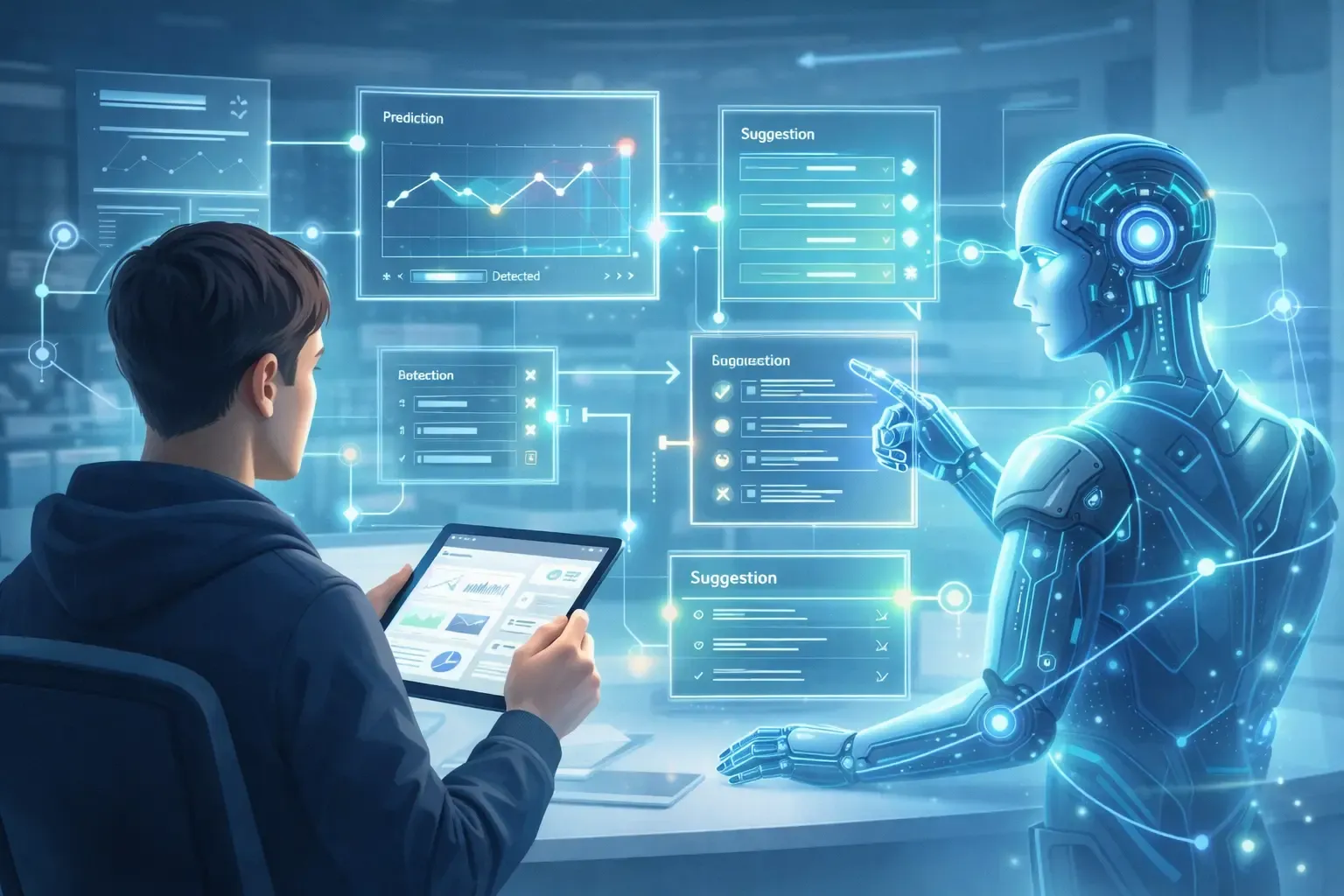
In the modern world of AI, humans are no longer working alone in complex decision-making processes. Hybrid cognition is an emerging approach that combines human intelligence with the unique reasoning capabilities of AI systems. Instead of replacing human thought, this collaboration enhances decision-making, problem-solving, and creative processes.
By leveraging the complementary strengths of humans and machines, hybrid cognition opens new possibilities for organizations, researchers, and innovators. This blog explores how it works, why it matters, and the real-world applications transforming industries today.
What Is Hybrid Cognition?
Hybrid cognition refers to systems where humans and AI work together to process information, solve problems, and make decisions. Unlike traditional AI, which operates independently, hybrid cognition relies on collaborative reasoning. The AI may analyze large datasets, detect patterns, or generate suggestions, while humans apply contextual understanding, intuition, and ethical judgment.
Key aspects of hybrid cognition include:
- Complementary reasoning: Machines handle complexity, speed, and scale, while humans contribute judgment, creativity, and ethics.
- Interactive feedback loops: Humans can refine AI output, and AI adapts based on human input.
- Augmented decision-making: The combination allows decisions that are faster, more accurate, and better informed.
How Hybrid Cognition Works
Hybrid cognition operates through structured collaboration between humans and AI systems. Here’s a breakdown of how it functions:
1. Data Analysis by AI
AI systems excel at:
- Processing large datasets quickly
- Detecting trends and anomalies
- Generating probabilistic predictions
- Performing pattern recognition tasks
2. Human Insight
Humans contribute:
- Contextual understanding of complex scenarios
- Ethical and cultural considerations
- Creative problem-solving
- Decision-making under uncertainty
3. Interactive Feedback
- Humans review AI outputs and provide adjustments
- AI adapts predictions based on human corrections
- Continuous learning improves accuracy and collaboration over time
Key Features of Hybrid Cognition Systems
Hybrid cognition systems combine the best of both worlds:
- Scalable intelligence: AI processes vast amounts of information efficiently.
- Contextual reasoning: Humans provide domain knowledge that AI cannot inherently infer.
- Adaptive learning: Feedback loops allow systems to improve collaboratively.
- Enhanced decision quality: Decisions consider both data-driven insights and human judgment.
This blend of machine speed and human wisdom is what sets hybrid cognition apart from traditional AI implementations.
Benefits of Hybrid Cognition
Organizations adopting hybrid cognition experience several advantages:
- Improved accuracy: AI identifies patterns, humans verify context.
- Faster problem-solving: Machines reduce analysis time, humans accelerate decision-making.
- Greater innovation: Human creativity combined with AI’s insights drives novel solutions.
- Ethical and responsible AI use: Humans ensure outputs align with values and ethics.
- Flexibility: Hybrid cognition adapts to changing scenarios better than AI alone.
By embracing collaboration instead of replacement, hybrid cognition allows both humans and AI to perform at their highest potential.
Practical Applications
1. Healthcare
- AI analyzes medical images and patient data
- Doctors apply clinical judgment to confirm diagnosis
- Together, they improve accuracy and reduce errors
2. Finance
- AI predicts market trends and risk patterns
- Analysts assess ethical implications and strategic decisions
- Hybrid cognition supports smarter investment strategies
3. Research and Development
- AI models generate hypotheses or simulate experiments
- Researchers interpret results, refine models, and plan next steps
- Accelerates discovery and innovation
4. Crisis Management
- AI monitors real-time data (weather, traffic, social media)
- Human operators interpret insights and make emergency decisions
- Enables rapid, informed responses in dynamic situations
Challenges and Considerations
While hybrid cognition offers many benefits, there are challenges to address:
- Data quality: AI output depends on high-quality, unbiased data
- Trust: Humans must understand AI reasoning to effectively collaborate
- System complexity: Designing intuitive feedback loops requires careful planning
- Ethical concerns: Decisions involving humans and AI require oversight to prevent misuse
Organizations must plan carefully to maximize the benefits while mitigating potential risks.
FAQ: Hybrid Cognition
What is hybrid cognition?
Hybrid cognition is the collaboration between humans and AI systems, combining machine analysis with human insight for better decision-making.
How does it differ from traditional AI?
Traditional AI operates independently, while hybrid cognition integrates human feedback and reasoning to enhance outputs.
Which industries use hybrid cognition?
Healthcare, finance, research, crisis management, and any sector where data-driven insights benefit from human judgment.
How does feedback improve hybrid cognition?
Humans review AI outputs, provide corrections, and the AI learns from these adjustments to improve future predictions.
Why is hybrid cognition important?
It allows humans and machines to leverage their complementary strengths, resulting in faster, more accurate, and more ethical decision-making.
Final Thoughts
Hybrid Cognition is more than a futuristic concept, it is becoming a practical strategy across industries. By combining human intuition and ethical reasoning with AI speed and pattern recognition, organizations can make better decisions, solve complex problems faster, and innovate with confidence.
As AI continues to evolve, hybrid cognition may become the standard approach for maximizing both human and machine potential in real-world applications.