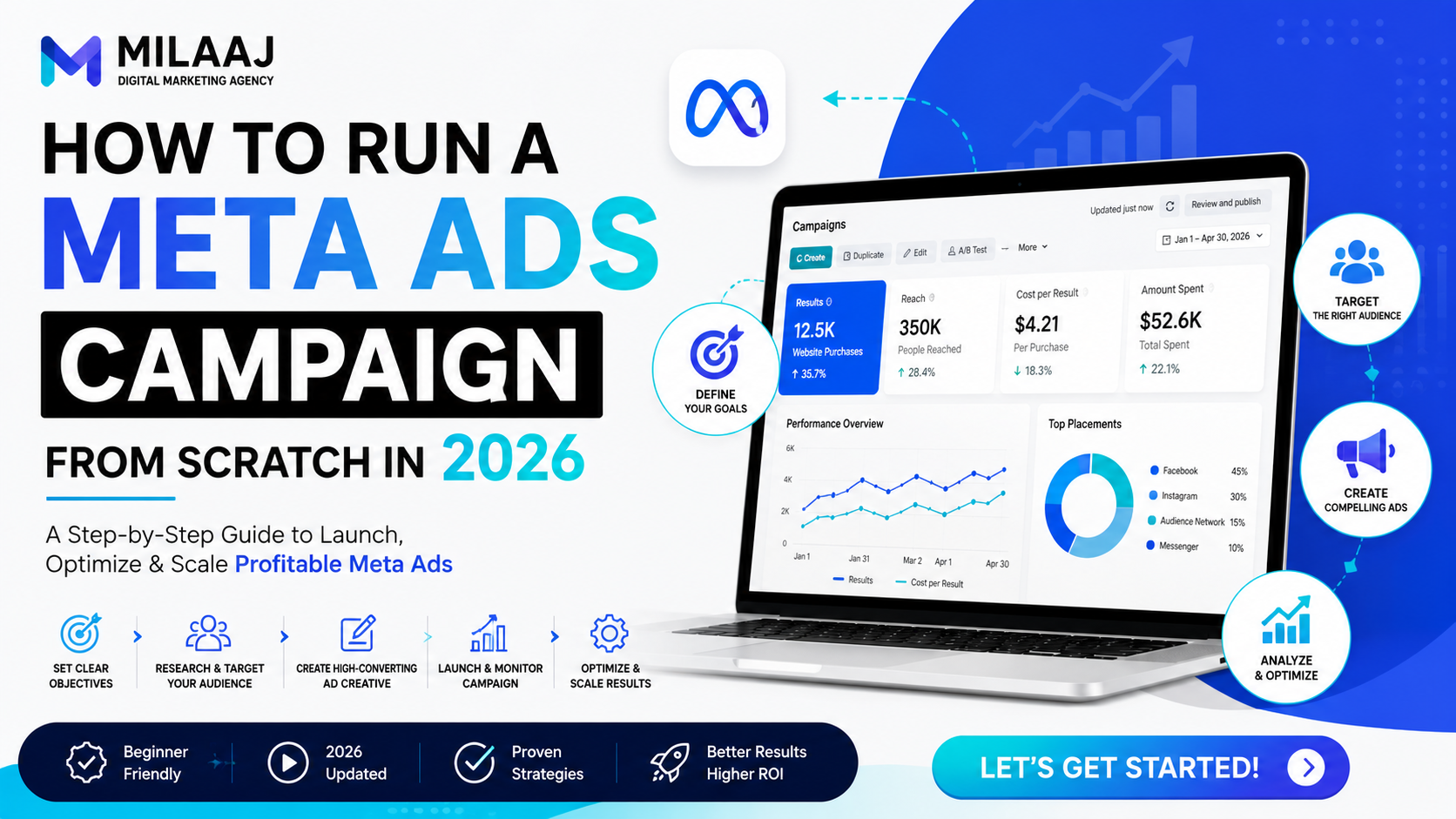
If you log into Meta Ads Manager today expecting the platform to work the same way it did a few years ago, you are in for an expensive surprise. The era of manual hyper-targeting, micro-budget ad sets, and intricate interest stacking is officially dead.
Digital advertising has undergone a massive digital business transformation. Driven by privacy shifts and machine learning breakthroughs, Meta’s ecosystem now functions almost entirely on automated predictive systems.
[Traditional Ads Approach] ──► Heavy manual targeting, micro-budgets, complex interest stacks[Modern 2026 Meta Ads] ──► AI-driven optimization, consolidated budgets, creative-based targeting
Today, success relies on giving the algorithm clear data, structured budgets, and powerful creative assets. Whether you want to build high-income digital skills for your resume or scale your business, this comprehensive step-by-step guide covers exactly how to run a Meta Ads campaign from scratch in 2026.
Understanding the Landscape: The New Rules of Meta Ads
Before clicking a single button, you must understand the rules governing the current AI-driven marketplace. The way the platform interprets data has fundamentally changed in three distinct areas:
- Creative Is Your Targeting: Meta’s delivery system actively reads your ad visuals and copy as the primary audience signal. The algorithm analyzes your assets and displays them to the users most likely to engage.
- Consolidated Campaign Frameworks: Spreading your budget across dozens of small ad sets hurts performance. Modern best practices favor broader, consolidated budget pools so the machine engine can learn efficiently.
- Honest Click Attribution: Meta tracks click-through metrics based only on actual link interactions. Passive engagements like likes, comments, and shares are logged separately under "engage-through attribution," giving you a clearer picture of true conversions.
Understanding these platform behaviors is a key asset for anyone exploring global online career opportunities or looking to lead remote workforce strategies in the modern marketing sector.
The Step-by-Step Blueprint to Launching Your First Campaign
Setting up a scalable infrastructure requires precision. Follow this detailed procedural path to ensure your campaign launches with a strong competitive advantage:
1.Configure Your Business Manager and Privacy-First Tracking:Prerequisites.
Set up your Business Manager account, create a dedicated Facebook Page, and assign your ad accounts. Next, deploy the AI-powered Meta Pixel alongside the 1-click Conversions API. Relying purely on basic browser pixels will lead to inaccurate data tracking.
2.Select Your Objective and Set Budgets:Campaign Level.
Click the "Create" button inside Ads Manager. Choose a core objective such as "Sales" for e-commerce or "Leads" for services. Turn on the Advantage+ Campaign Budget feature. This allows Meta’s algorithm to dynamically distribute your money across ad sets in real time based on conversion probability.
3.Define the Parameters and Trust Broad Targeting:Ad Set Level.
Select your conversion location (like your website) and target your geographic market. Avoid adding restrictive layers of interest keywords. Instead, use the "Describe Your Audience" tool to provide a simple, plain-text description of your ideal customer. Let Meta's machine learning handle the precise targeting matching.
4.Upload Native Assets and Write Direct Copy:Ad Creative Level.
Upload your visual media assets. Write compelling, clear headlines and select your target Call to Action (CTA) button. Ensure you upload a mix of formats such as static images and native vertical Reels to allow the system to personalize ad delivery.
Designing Creative That Converts
Because creative assets do the heavy targeting lifting, you must build media elements that immediately catch a user's attention in the feed. High-production, commercial-looking ads often trigger a "scroll reflex," causing users to skip them entirely. Focus instead on native styles that look organic to the platform.
High-Converting Hook Structures for 2026
To maximize your retention rates, structure your video and static creatives around these proven formats:
- The Problem-First Opening: State a specific problem immediately. For example: "You are burning 40% of your ad budget on outdated placements."
- The Mid-Conversation Drop: Open your ad mid-sentence as if the user stepped into a live conversation. This narrative tension naturally pulls the viewer forward.
- The Lo-Fi Authentic Review: Use user-generated content (UGC) styles, such as a casual mobile phone video. Simple, authentic peer recommendations lower the psychological friction that corporate branded ads often carry.
If you want to master the art of developing ad concepts, understanding user behavior, and scaling digital brands, exploring the strategic guides on our dedicated Digital Marketing Course Hub is a great next step.
Optimizing and Scaling the System
Once your campaign goes live, resist the urge to constantly adjust its settings. Making frequent edits forces the ad sets back into the learning phase, raising your overall acquisition costs.
When you find a winning creative asset that consistently delivers a low Cost Per Acquisition (CPA), scale your budget systematically by 15% to 20% every three days. This controlled scaling approach keeps the delivery system stable while expanding your market reach.
Securing Long-Term Marketing Success
The modern future of work belongs to professionals who can combine technical execution with creative strategy. Because advertising platforms evolve quickly, staying ahead of algorithm changes requires a reliable continuous learning platform.
If you want to transform your technical marketing knowledge into a market-ready professional asset, consider joining the structured paths over at the Milaaj Digital Academy. Gaining hands-on experience with live data and real ad budgets gives you the practical edge needed to run high-ROI campaigns confidently.
Frequently Asked Questions (FAQs)
What is the minimum daily budget needed to start a Meta Ads campaign?
While you can start with as little as $5 per day, industry benchmarks suggest allocation settings above $50 per day give the consolidated algorithm enough data to optimize efficiently.
Should I choose Advantage+ campaigns or manual setups?
For beginners and standard e-commerce projects, Advantage+ Shopping and automated budget setups generally outperform manual structures by leveraging real-time predictive data. Use manual setups only when you need strict placement constraints or have highly specific target variables.
Why is my cost per click (CPC) rising while conversions stay flat?
This usually points to creative fatigue. If you run the exact same image or video assets to the same audience for weeks, the click-through rates will drop and platform costs will climb. Refresh your ad visuals to lower your costs.
How do I accurately measure campaign success with privacy changes?
Ensure your Conversions API is fully activated alongside your Pixel. Combine Meta's internal attribution dashboard metrics with your site's server analytics data to get a reliable, clear view of your overall conversion rates.
Ready to Dominate the Digital Space?
Learning how to run a Meta Ads campaign from scratch gives you an incredibly valuable business skill. By aligning your strategy with Meta's automated systems, building authentic ad creatives, and relying on real data, you can build campaigns that scale consistently.
Take your time setting up your tracking infrastructure, plan your creative variations carefully, and let the platform's machine learning engine grow your business. If you want structured support along the way, explore our advanced modules at Milaaj Digital Academy to build your career in the digital space.