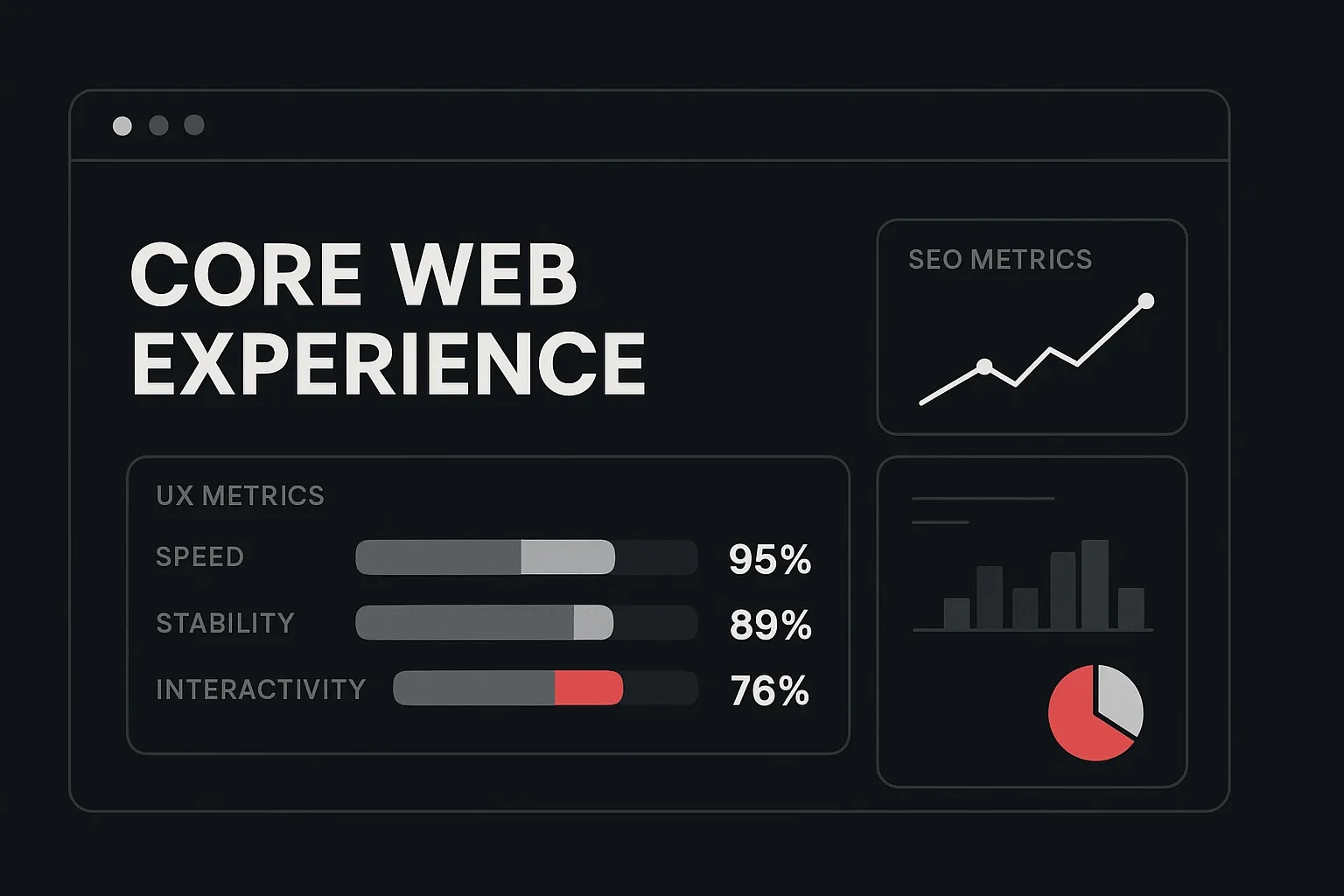
Search engine optimization has changed dramatically over the years. What once revolved around keywords and backlinks now centers on how users actually experience your website. Today, the Core Web Experience, which combines design, performance, and usability, is becoming one of the most powerful SEO factors.
This post explains how UX metrics like speed, stability, and interactivity now play a huge role in rankings, why Google is prioritizing them, and what you can do to improve both user satisfaction and search performance.
The Shift From SEO Tricks to User-Centered Signals
Old-school SEO relied heavily on technical tricks like keyword stuffing, link trading, and metadata tweaks. Those days are gone. Search engines are much smarter now and focus on how real users engage with your website.
That is where the Core Web Experience comes in. It measures how people perceive your site when they interact with it. Google looks at data such as how fast a page loads, how stable it feels while loading, and how quickly users can click or scroll. These factors directly affect your rankings because they represent actual user satisfaction.
If your website feels smooth and effortless, search engines notice — and reward it.
What Is the Core Web Experience?
The term Core Web Experience evolved from Google’s earlier concept known as Core Web Vitals. While Core Web Vitals focus on speed and stability, Core Web Experience takes a more complete view of how your site behaves and feels to the user.
Core Web Vitals measure:
- Largest Contentful Paint (LCP): How quickly the main content appears.
- First Input Delay (FID): How fast the site reacts to a click or tap.
- Cumulative Layout Shift (CLS): How stable the layout remains during loading.
But the modern Core Web Experience includes more than that. It also considers visual smoothness, accessibility, clarity of design, and how natural interactions feel. When users stay longer, engage more, and bounce less, Google sees your content as valuable.
Why UX Metrics Now Matter for SEO
Google’s main goal has always been to serve the best possible result for users. That means sites that load quickly, respond smoothly, and feel stable now perform better in search results.
Engagement Beats Keywords
A fast and smooth site keeps visitors reading and exploring. When users stay longer and bounce less, Google interprets that as a sign of quality.
Speed Equals Satisfaction
Even a one-second delay can hurt conversions and frustrate users. Sites that load within 2.5 seconds tend to rank higher and retain more visitors.
Interactivity Builds Trust
If a button takes too long to respond or a form freezes, users lose patience. Google tracks that too. Sites with faster response times perform better.
Visual Stability Prevents Frustration
When content shifts unexpectedly while loading, it creates a poor user experience. A stable design makes users feel more comfortable and in control.
The Business Impact of Great UX
Good UX is not just about rankings — it directly affects business performance. A site that loads quickly and feels intuitive can dramatically increase conversions and brand trust.
- E-commerce: Smoother checkout experiences can raise conversions by 30% or more.
- B2B: Clean and fast interfaces make lead generation easier.
- Blogs and media: A comfortable reading experience increases time on page and ad engagement.
When people enjoy your site, they return more often, which strengthens your visibility and credibility online.
How to Measure Your Core Web Experience
Several free tools make it easy to measure and improve your site’s UX metrics:
- Google PageSpeed Insights for performance data and optimization tips.
- Lighthouse for detailed audits directly in Chrome DevTools.
- Search Console to monitor your Core Web Vitals report.
- WebPageTest.org for real-world load tests on different devices.
Since most web traffic now comes from smartphones, focus on how your site performs on mobile first.
Optimizing for a Better Core Web Experience
Improving your UX metrics doesn’t require a complete redesign. Small, consistent changes can have a huge impact.
Improve Page Load Speed
Compress images, enable caching, and use a CDN to deliver content faster. Every millisecond matters.
Prioritize Above-the-Fold Content
Make sure key visuals and headlines appear first. It reassures users the page is loading properly.
Enhance Responsiveness
Minimize scripts and keep your design lightweight so every click and scroll feels instant.
Keep Layouts Stable
Reserve space for ads and media so nothing jumps around while loading.
Simplify Your Design
Less clutter means faster loads and clearer focus. Clean layouts are easier to use and maintain.
Make It Accessible
Use readable fonts, alt text for images, and color contrasts that meet accessibility standards. Accessible design benefits everyone — including search engines.
UX, AI, and the Future of Search
Search is becoming more intelligent and intent-driven. Google’s Search Generative Experience (SGE) uses AI to understand not only the words on a page but also how useful that page is to real people.
This means SEO is merging with experience optimization. AI-based ranking systems now evaluate whether a site truly satisfies user intent. That’s why improving your Core Web Experience is also a form of AI optimization.
When your pages load quickly, feel stable, and solve user needs clearly, Google’s AI recognizes your site as a high-quality match.
How Core Web Experience Affects Voice and Visual Search
As users shift to voice commands and image-based queries, UX becomes even more critical.
- Voice Search: Fast-loading, structured pages are more likely to appear as featured snippets — the answers voice assistants read aloud.
- Visual Search: High-quality images with descriptive alt text improve your visibility in image and product searches.
Both depend on strong UX principles like speed, accessibility, and clarity.
Core Web Experience and Content Strategy
A fast site with poor content still fails. That’s why content strategy and user experience must work together.
When creating new content:
- Use headings that make scanning easy.
- Keep paragraphs short.
- Add relevant visuals that load quickly.
- Place CTAs naturally within reading flow.
Every word, image, and click should feel intentional and seamless.
The Future: From SEO to SXO (Search Experience Optimization)
The next phase of optimization is SXO, or Search Experience Optimization. It combines SEO, UX, and behavioral psychology.
Instead of focusing only on search engines, SXO focuses on humans. It asks questions like:
- Does this page load quickly?
- Does it answer the user’s question instantly?
- Does it look credible and trustworthy?
- Do people want to come back?
When your site satisfies users, rankings follow naturally.
Steps to Future-Proof Your Website
To stay competitive, keep improving your Core Web Experience regularly:
- Audit UX monthly using Lighthouse and Search Console.
- Adopt fast, modern frameworks like Next.js or Astro.
- Combine technical and content audits to maintain balance.
- Monitor performance after every major update.
- Keep your design minimal and focused on clarity.
Search algorithms will keep evolving, but great user experiences never go out of style.
The Bottom Line: UX Is SEO Now
The days of manipulating algorithms are over. The websites that win today are the ones that feel human — fast, stable, and enjoyable.
Core Web Experience is not just a technical metric. It’s how real people experience your brand online. When your website feels effortless, both users and algorithms recognize its value.
Focus on clarity, comfort, and performance, and you’ll find that your UX becomes your SEO.