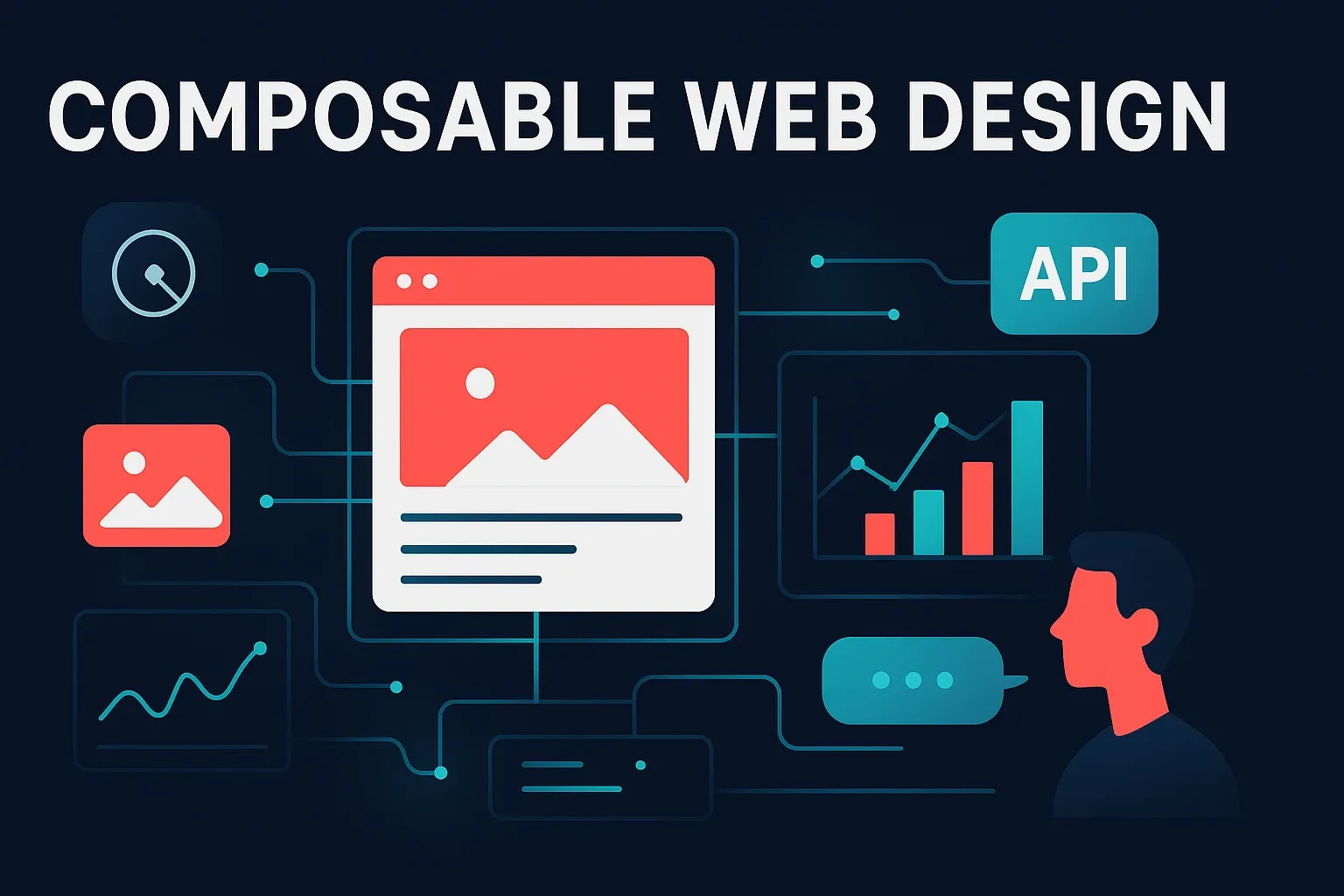
The digital world is evolving faster than ever. Businesses no longer settle for static, rigid websites—they need platforms that are flexible, scalable, and adaptable. This is where composable web design comes in, a modern approach to website development that leverages modular components, APIs, and best-of-breed technologies to create dynamic and future-ready digital experiences.
In this article, we’ll cover everything you need to know about composable web design, why it’s becoming the future of web development, how it differs from traditional and headless CMS, and how businesses can adopt it effectively.
Introduction to Composable Web Design
Traditional CMS platforms often tie together content, presentation, and integrations into a single system. While this may work for smaller websites, it becomes restrictive as businesses grow or digital strategies evolve.
Composable web design addresses these limitations by breaking websites into independent, reusable modules. Each component can operate on its own, but together, they form a cohesive, seamless user experience.
This approach is API-driven, meaning components communicate through APIs with external services such as analytics, payment gateways, or marketing automation tools. The outcome is a website that is faster, more flexible, and easier to maintain, offering an agile solution for businesses that need to respond quickly to market demands.
What is Composable Web Design?
Composable web design is a method of building websites that focuses on modularity, flexibility, and interoperability. Unlike traditional monolithic CMS platforms, which consolidate all functionality into a single system, composable architecture lets businesses select the best technology for each aspect of the website.
Instead of a single, rigid system, composable websites are like LEGO blocks—each component is functional alone, but together they build a complete digital experience. This makes updates, experiments, or redesigns faster and more cost-effective.
Key Features of Composable Web Design
- Modularity: Every component, from blogs to product listings, is independent and reusable across multiple pages or sites.
- API-First: Components communicate with each other and third-party services via APIs, allowing seamless integrations.
- Flexibility: Swap or upgrade components without affecting the entire website, making experimentation simple.
- Performance: Decoupled components reduce load times and dependency on a single backend, improving speed and UX.
Composable design is not only a technical improvement—it’s a strategic approach for businesses looking to stay competitive in a fast-changing digital environment.
Why Businesses Are Moving Toward Composable Web Design
In today’s fast-paced digital economy, businesses need websites that are nimble, scalable, and responsive. Traditional CMS solutions often struggle to meet these needs, but composable web design offers several advantages:
- Faster Time-to-Market: Launch new campaigns, features, or products without waiting for extensive development cycles.
- Omnichannel Experiences: Reuse the same components across websites, mobile apps, and IoT devices for consistent user experiences.
- Reduced Vendor Lock-In: Combine best-of-breed tools instead of relying on a single platform.
- Future-Proof Architecture: Integrate new technologies like AI personalization, serverless architecture, or progressive web apps without full redesigns.
By adopting a composable approach, businesses can adapt quickly, deliver engaging experiences, and maintain a competitive edge.
Composable vs Headless CMS vs Traditional CMS
While traditional CMS platforms are monolithic, and headless CMS separates content from presentation, composable web design goes further. It emphasizes component modularity, reusability, and API-driven integration.
- Traditional CMS: Combines content management, templates, and functionality into one system. While easy to set up, flexibility is low, and scaling can be difficult.
- Headless CMS: Decouples content from the front-end, offering more flexibility. It allows content delivery to multiple platforms but still has limitations in component reusability and integration flexibility.
- Composable Web Design: Uses independent modules connected via APIs. Components can be reused, upgraded, or replaced without affecting the entire system. Integration with best-of-breed tools is seamless, and scaling is effortless.
This makes composable design ideal for enterprise websites, e-commerce platforms, and any business prioritizing digital agility.
Core Components of a Composable Website
A composable website consists of multiple layers that work independently yet seamlessly:
Front-End Presentation Layer
Modern frameworks like React, Vue, or Svelte allow developers to build interactive, dynamic interfaces. Each UI component, such as a product listing, blog card, or contact form, is modular and reusable, allowing for quick updates.
Content Services (Headless CMS)
Headless CMS platforms like Contentful, Sanity, or Strapi manage structured content independently of the front-end. This allows content to be delivered via APIs to multiple channels, ensuring consistency across web, mobile, and other digital platforms.
Commerce & Payment Integration
E-commerce functionalities are modular as well. Tools like Shopify, BigCommerce, or custom APIs can handle product catalogs, inventory, and payments without tying them to the entire website architecture.
Marketing Automation & Analytics
Composable websites easily connect with marketing tools (HubSpot, Klaviyo) and analytics platforms (Google Analytics, Datadog). This enables real-time campaigns, engagement tracking, and personalized content delivery.
Benefits of Composable Web Design
Adopting a composable approach brings several advantages to businesses:
- Agility: Launch new campaigns or features faster.
- Scalability: Add components or integrate new services as your business grows.
- Improved Performance: Decoupled components load faster, enhancing user experience and SEO.
- Reduced Risk: Update or swap components without affecting the entire system.
- Cost Efficiency: Avoid costly full-site redesigns when adopting new technologies.
These benefits make composable web design ideal for companies seeking flexibility, speed, and adaptability in a constantly changing digital world.
Challenges of Composable Web Design
Despite its many benefits, composable architecture comes with challenges:
- Complexity: Managing multiple APIs and services requires experienced developers.
- Governance: Maintaining consistent design and user experience across components can be challenging.
- Costs: Subscription fees for multiple best-of-breed services can add up.
- Maintenance: Ensuring compatibility between all components over time requires careful planning.
Even so, for companies prioritizing digital innovation and growth, the long-term benefits far outweigh these challenges.
Real-World Examples of Composable Websites
Several major brands have embraced composable web design successfully:
- Nike: Integrates modular e-commerce components with personalized marketing tools to deliver dynamic user experiences.
- Tesla: Uses API-driven components to manage content updates seamlessly across web and mobile platforms.
- Amazon: Employs a microservices architecture with modular front-end layers to support scalability and performance.
These examples demonstrate how composable architecture enables rapid innovation, personalization, and consistent user experiences.
Future Trends in Composable Web Design
Composable web design is poised to dominate web development trends. Future developments include:
- AI-Driven Personalization: Delivering highly targeted content and product recommendations using modular components.
- Serverless Architecture: Reducing backend overhead and improving scalability.
- Progressive Web Apps (PWAs): Creating app-like experiences directly in the browser.
- Omnichannel Expansion: Using the same components across web, mobile, voice assistants, and IoT devices.
These trends confirm that composable architecture is more than a trend—it’s a strategy for future-ready websites.
How to Implement Composable Web Design in Your Business
Transitioning to a composable web architecture involves several steps:
- Audit Your Existing Website: Identify which components can be modularized.
- Choose the Right Tools: Select headless CMS, front-end frameworks, and third-party integrations suited to your business goals.
- Develop Modular Components: Build reusable elements for content, e-commerce, marketing, and analytics.
- Integrate via APIs: Ensure smooth communication between all components and services.
- Test and Optimize: Monitor performance, UX, and SEO continuously for improvements.
By following these steps, businesses can adopt a flexible, scalable, and future-proof website architecture.
Conclusion
Composable web design is the next phase of modular, API-driven websites. By combining modular components, APIs, and best-of-breed services, businesses can create websites that are fast, scalable, and adaptable.
For developers, marketers, and business owners alike, adopting a composable approach ensures your website can evolve with technology, deliver superior user experiences, and maintain a competitive edge.
In today’s digital-first world, composable web design is not just an option—it’s a necessity.