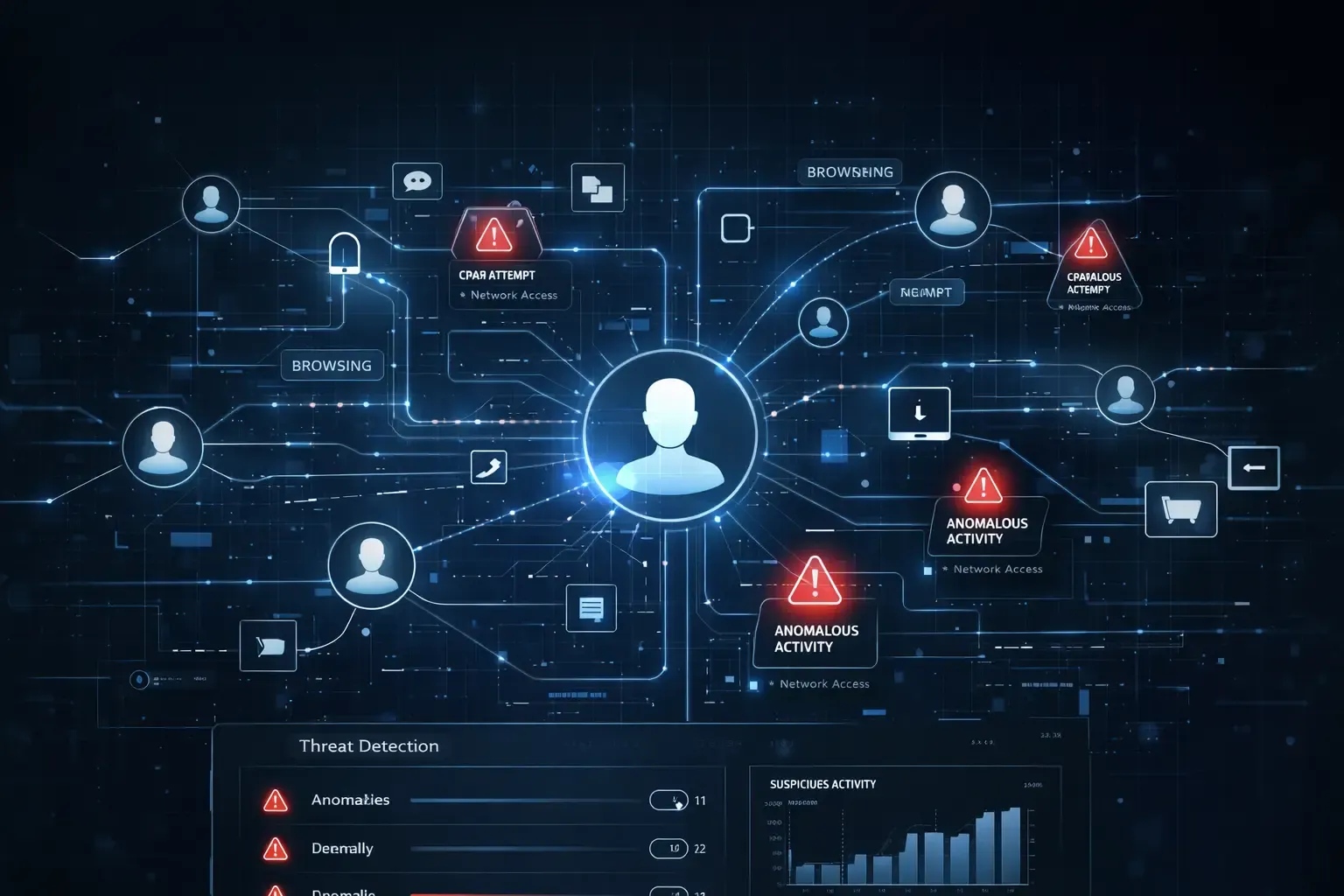
For decades, cybersecurity has focused on software vulnerabilities, malware signatures, and network perimeter defenses. Firewalls were built thicker. Antivirus tools became smarter. Password policies became stricter.
Yet across all industries, one uncomfortable truth keeps rising to the surface.The greatest cybersecurity threat is not a sophisticated hacker on the outside.It is the everyday human sitting inside the network.
Employees reuse passwords.Customers click malicious links.Partners mishandle privileged access.Administrators accidentally open pathways they do not notice.
In a world where the attack surface is exploding, behavioral cybersecurity is emerging as one of the most important areas of innovation. AI systems are now learning to recognize user actions, detect risks, and respond before damage happens.
This is cybersecurity built around human behavior, not just code.
Why Traditional Cybersecurity Is Falling Behind
Legacy security tools expect threats to behave predictably.They scan files for known signatures, block traffic coming from blacklisted addresses, or enforce static rules.
The problem is that modern attacks do not behave that way.They follow human patterns.
Cyber attackers now:
• Mimic employee behavior• Log in with valid credentials• Move laterally using familiar tools• Exploit human tendencies rather than technical errors
Once a malicious actor blends into normal patterns, rule based systems fall silent.That is why phishing, credential theft, and social engineering remain the dominant methods of entry.
Behavioral cybersecurity steps into this blind spot.
What Behavioral Cybersecurity Really Means
Instead of scanning for malicious files, behavioral cybersecurity monitors how people act.AI models observe:
• Login times and locations• Typing speed and mouse movement• Which files are opened and how often• Email send patterns• System commands used• Privilege escalation attempts
The goal is not to punish deviation.It is to flag unusual activity, especially actions that do not fit a user’s long term baseline.
If someone who normally works nine to five suddenly transfers gigabytes of data at 3 a.m., the AI notices.If an employee with limited access begins exploring internal systems, a warning triggers.
The technology identifies behavior first, then evaluates intent.
The Rise of Security Built on Human Patterns
Human behavior is incredibly unique and surprisingly consistent.Over time, each user develops a predictable digital rhythm.
Behavioral cybersecurity systems turn these patterns into protection.
These tools continuously model what is normal, including:
• The devices a user prefers• The cadence of their workflow• The domains they interact with• The speed at which they navigate• Their usual commands and habits
Once a baseline is established, any deviation becomes meaningful data.
This adaptive modeling makes it much harder for attackers to hide.
Detecting Insider Threats Before They Spread
Not all attacks come from outside the firewall.Insider threats represent a complex category that traditional defenses struggle to detect because the activity often looks legitimate.
Insider risk takes many forms:
• Disgruntled employees deciding to leak data• Negligent workers making critical mistakes• Compromised accounts being used as stepping stones• Contractors abusing temporary privileges
Behavioral AI recognizes when actions do not align with past intent.It can alert security teams early, often at the very first sign of drifting behavior.
This turns reactive defense into proactive protection.
Stopping Attacks That Look Like Normal Traffic
A modern threat actor rarely smashes down the digital doors.Instead, they slip in quietly and move methodically.
Common attack sequences include:
• Logging in with stolen passwords• Slowly escalating privileges• Copying small amounts of data at a time• Using command line tools that blend in with IT workflows
Behavioral cybersecurity is designed specifically to surface this subtle activity.If someone behaves like an imposter, the model senses it, even when credentials appear valid.
This moves detection from what the attacker uses to how they behave.
Reducing Human Error That Leads to Breaches
Accidental mistakes account for a large percentage of breaches.Misconfigurations, weak passwords, and incorrect settings often invite attackers in.
Behavior based systems can guide users away from risky actions, including:
• Warning before submitting credentials to suspicious forms• Alerting employees about potential phishing indicators• Blocking high risk commands until verified• Suggesting safer alternatives when patterns show confusion
Instead of waiting for audits, cybersecurity becomes embedded at the moment of decision.
Continuous Learning Makes Defense Smarter
Static policies grow stale fast.Behavioral AI models continuously evolve as users evolve.
When someone changes roles or takes on a new responsibility, models adapt gradually.They do not trigger panic simply because access patterns shift.
This creates fluid security that stays aligned with business without requiring constant manual oversight.
Privacy and Ethical Balance
Monitoring user behavior can raise concerns, especially when tied to surveillance.Modern behavioral cybersecurity platforms increasingly use privacy preserving strategies such as:
• Anonymized data• Pattern based detection instead of personal profiling• Clear data retention limits• Local processing at the edge where possible
The focus is not on watching individuals.It is on protecting systems through patterns and deviation tracking.
Done responsibly, this gives organizations high security without sacrificing trust.
How Organizations Can Adopt Behavioral Cybersecurity
Teams do not need to rip out their existing controls.Behavioral systems work best when integrated into broader security layers.
Steps to get started include:
- Identify high value data or privileged accounts
- Deploy AI driven anomaly monitoring on access points
- Connect alerts to identity and access management tools
- Train staff on how to interpret behavioral alerts
- Tune thresholds based on business context
The result is a system where alarms trigger only when meaningful changes occur.
The Future To Expect
Behavioral cybersecurity will move from being an add on feature to a foundational requirement.
Expect widespread adoption across:
• Enterprise identity platforms• Cloud access gateways• Email security tools• Finance and e commerce systems• Operational technology and IoT ecosystems
Attackers are already using AI.Organizations are beginning to counter with AI that understands human rhythm, unpredictability, and nuance.
Cybersecurity will no longer rely on guarding walls.It will rely on watching for footsteps.
FAQ Section
What is behavioral cybersecurity?Behavioral cybersecurity is a method of security that tracks human actions and usage patterns to identify risks, detect anomalies, and prevent data breaches.
How does AI monitor human behavior without spying?AI does not need to track personal identity or content. It analyzes pattern changes such as login habits or file access and flags suspicious deviations.
Can behavioral cybersecurity stop insider threats?Yes. By creating user baselines and comparing them against live activity, AI can isolate early signs of misuse, negligence, or unauthorized access.
Why are humans the biggest cybersecurity vulnerability?Mistakes, social engineering, and credential reuse create the majority of entry points for attackers, making human behavior more exploitable than code flaws.
Is behavioral cybersecurity replacing traditional security?No. It strengthens existing layers such as firewalls and antivirus by adding protection against threats tied to user behavior rather than malicious code.