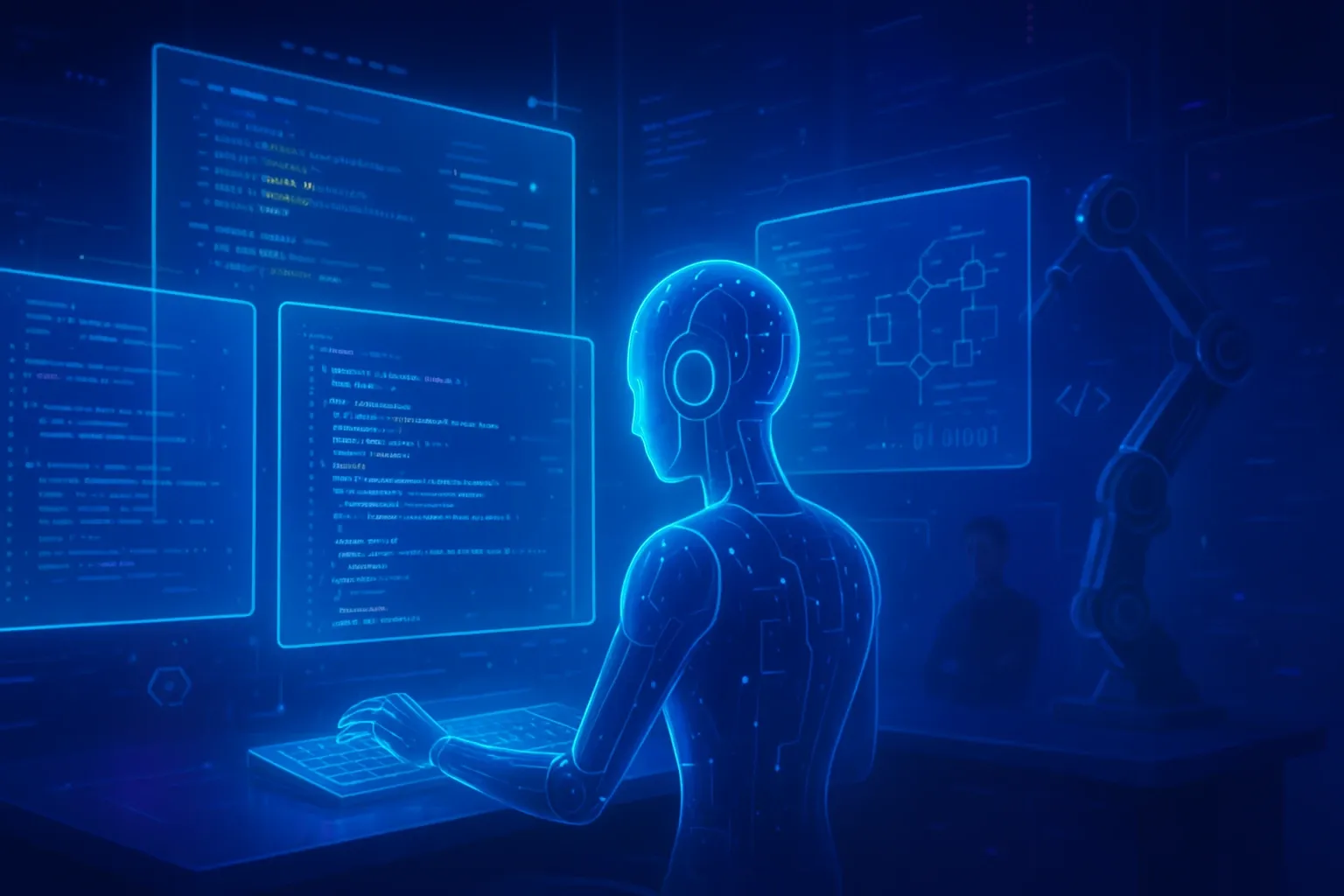
The world of software development is undergoing a transformation unlike anything seen before. What began as AI-assisted coding with tools like GitHub Copilot and ChatGPT has evolved into a new frontier: autonomous coding — where AI agents can design, write, test, and deploy software with minimal or no human oversight.
As 2025 unfolds, developers are asking a critical question: Can AI truly replace human programmers, or is this another wave of automation that will redefine—not eliminate—our roles?
The Birth of Autonomous Coding
Just a few years ago, AI coding tools were limited to suggesting lines of code or debugging errors. But the rise of multi-agent AI systems — like Devin (the world’s first AI software engineer), Cognition AI, and OpenDevin — has changed the game.
These systems can:
- Read and understand natural language project briefs.
- Write end-to-end applications in multiple languages.
- Fix bugs and run tests independently.
- Collaborate with other AI tools in real-time.
This new wave of autonomous developers represents a seismic leap forward — one where AI no longer just assists, but creates.
How It Works
Autonomous coding agents combine multiple technologies to function like self-sufficient programmers:
- Natural Language Processing (NLP): Understands human instructions.
- Code Synthesis Models: Generate and structure code from prompts.
- Reinforcement Learning: Improves code quality and logic through iterative testing.
- DevOps Integration: Automates build, deployment, and debugging cycles.
Essentially, these systems mimic the software engineering lifecycle, from planning to release — at machine speed.
Advantages of Autonomous Coding
- Speed & Efficiency: AI can produce code exponentially faster, turning days of development into hours.
- Cost Reduction: Automation reduces labor costs and allows small startups to scale like large tech firms.
- 24/7 Development: AI never rests — it continuously refines and optimizes projects.
- Error Reduction: Machine learning models learn from billions of past code samples, reducing human oversight errors.
Challenges & Limitations
Despite its potential, fully autonomous coding faces significant challenges:
- Context Understanding: AI often misinterprets ambiguous instructions.
- Security Risks: Automatically generated code can include vulnerabilities.
- Ethical Concerns: Who owns AI-generated software — the user, the AI, or the company behind it?
- Lack of Creativity: While AI excels at logic, it still struggles with design intuition and innovative architecture.
These issues highlight why human oversight remains essential, especially in mission-critical or user-facing systems.
Human-AI Collaboration: The Real Future
Rather than replacing developers, autonomous coding tools are likely to augment them.Future programmers will become AI orchestrators, guiding autonomous systems, reviewing logic, and ensuring ethical standards.
As AI handles the heavy lifting, developers can focus on architecture, strategy, and user experience — the human elements that machines can’t yet replicate.
What This Means for the Software Industry
- Startups: Faster product launches with leaner teams.
- Enterprises: Reduced backlog and continuous software delivery.
- Education: Programming education will evolve from syntax learning to AI tool management and system design.
The coding world is entering a hybrid era — part automation, part human creativity — where understanding AI workflows may soon be more valuable than knowing multiple programming languages.
Conclusion
Autonomous coding isn’t about AI replacing developers — it’s about redefining what development means.As technology matures, coding may shift from manual creation to strategic supervision, where human judgment meets machine precision.
The developers of tomorrow won’t just write code — they’ll manage intelligence.