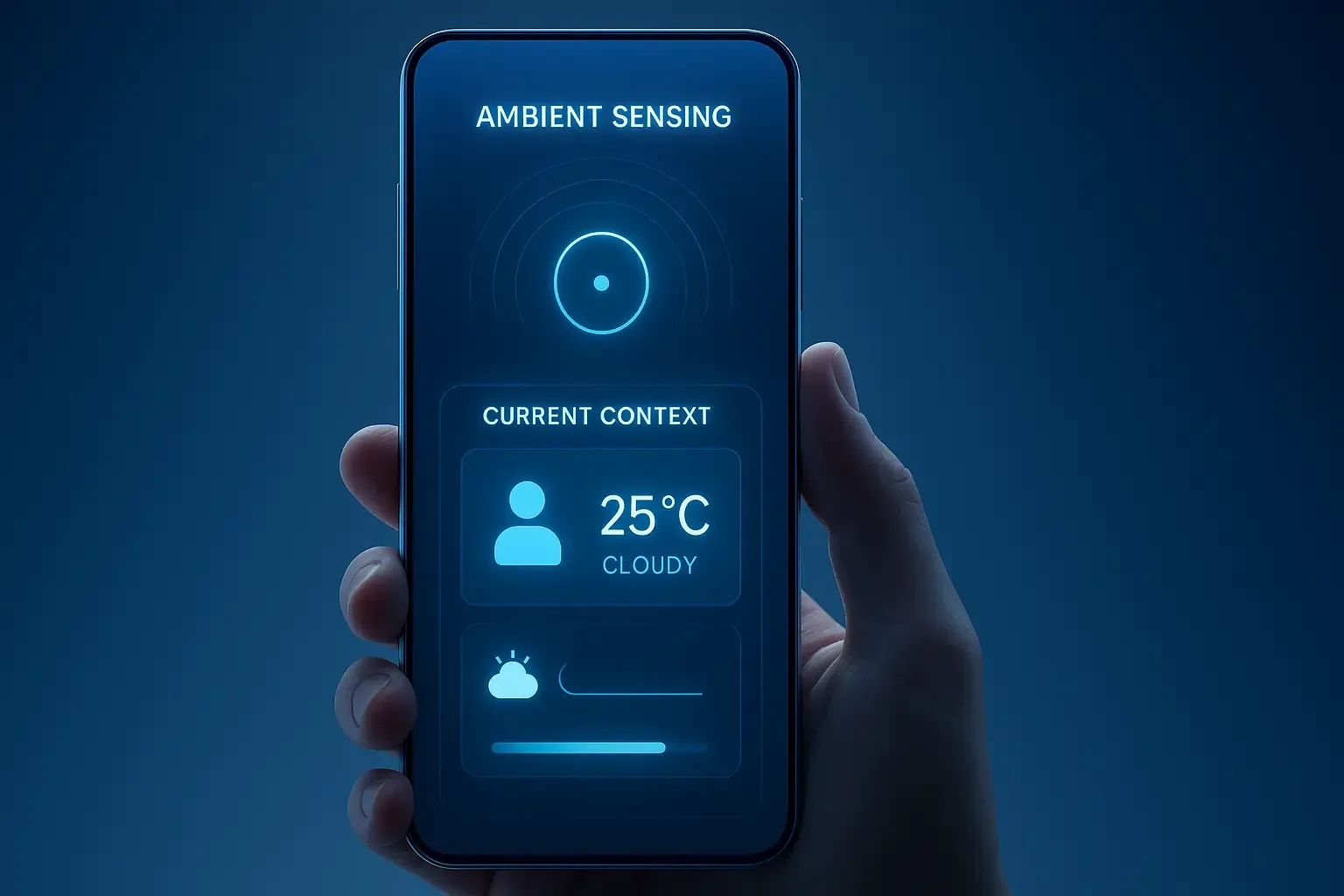
Mobile devices have become extensions of ourselves. Beyond calling, texting, and browsing, phones now track health, location, preferences, and even user behavior. The next evolution of mobile design focuses on ambient UX, where smartphones anticipate needs and respond automatically to context. This approach reduces friction, improves usability, and creates a truly intelligent user experience.
Ambient mobile UX is more than adaptive layouts or notifications. It’s about context-aware systems that understand a user’s environment, habits, and intent, delivering functionality proactively. This blog explores what ambient UX is, why it matters, its applications, and how it’s shaping the future of mobile technology.
What Is Ambient Mobile UX?
Ambient mobile UX refers to user experiences that adapt in real time based on the surrounding context without requiring explicit user input. The phone interprets signals such as:
- Location
- Time of day
- Activity or movement
- Connected devices
- App usage patterns
- Environmental factors (light, sound, temperature)
For example, a phone might automatically switch to silent mode when entering a meeting room, suggest a playlist during your morning run, or adjust screen brightness based on ambient light. The goal is to predict needs and act seamlessly.
Why Ambient UX Matters
Traditional mobile interfaces rely heavily on user actions: tapping, swiping, and typing. Ambient UX flips this model by making devices proactive. Key benefits include:
1. Reduced cognitive loadUsers no longer need to remember to change settings or open apps. The device anticipates needs.
2. Improved efficiencyTasks are completed faster because the phone acts in the moment.
3. Enhanced personalizationContext-aware responses make the device feel smart and tailored to individual habits.
4. Better user satisfactionSeamless experiences reduce frustration and increase engagement.
5. Increased accessibilityUsers with limited mobility or vision impairments benefit from automated adjustments.
As more apps and devices become context-aware, ambient UX will be central to user expectations.
How Ambient Mobile UX Works
Several key technologies enable ambient UX:
1. Sensors and Wearables
Modern smartphones include accelerometers, gyroscopes, GPS, ambient light sensors, microphones, and proximity sensors. Wearables add heart rate, steps, sleep patterns, and more. These sensors provide raw data for understanding context.
2. AI and Machine Learning
AI algorithms detect patterns in user behavior. For example:
- Noticing that a user opens a meditation app at 9 PM
- Recognizing repeated late-night notifications from specific apps
- Predicting when a user will leave home for work based on movement
Machine learning models continuously improve predictions and recommendations.
3. Contextual APIs
Platforms like iOS and Android provide APIs for contextual triggers. Developers can build apps that respond to location changes, connected devices, or environmental shifts.
4. Proactive App Design
Apps can suggest actions, automate routines, or trigger workflows based on context. Examples include:
- Suggesting messages when you arrive at a frequent location
- Auto-adjusting audio volume during workouts
- Recommending navigation routes based on traffic conditions
5. Edge Computing and Privacy
Processing context data locally ensures faster responses and protects user privacy. Modern phones can process ambient signals without sending sensitive data to cloud servers.
Real-World Applications of Ambient Mobile UX
Smart Notifications
Context-aware notifications deliver relevant information without overwhelming the user. For example, a phone might delay non-urgent notifications during a meeting or automatically highlight reminders when you arrive at a specific location.
Adaptive Interfaces
Apps can rearrange menus, shortcuts, or toolbars based on how and when users interact. This reduces taps and improves usability.
Energy Management
Phones adjust power usage automatically. Ambient UX can dim screens, close background apps, or switch to low-power modes when battery is low or when the user is in low-activity situations.
Health and Fitness
Devices detect activity, heart rate, and sleep patterns, proactively providing suggestions for exercise, hydration, or rest.
Seamless Connectivity
Phones automatically connect to trusted Wi-Fi networks, Bluetooth devices, or car systems, providing a frictionless experience.
Challenges in Ambient Mobile UX
While promising, ambient UX is not without hurdles:
1. Privacy ConcernsCollecting and analyzing contextual data can raise user privacy issues. Transparent policies and edge processing are essential.
2. Over-AutomationExcessive automation may frustrate users who feel a loss of control. Systems must balance proactive assistance with user consent.
3. Device LimitationsOlder devices may lack the sensors, processing power, or battery efficiency needed for complex ambient experiences.
4. Complexity for DevelopersBuilding context-aware apps requires integrating multiple data sources, AI models, and adaptive UI components.
Despite these challenges, innovation is accelerating rapidly, and the benefits of ambient UX outweigh the risks for forward-looking mobile platforms.
The Future of Ambient Mobile UX
The next decade will likely see ambient mobile UX become the default. Trends include:
- Cross-device intelligence: Phones, wearables, smart home devices, and cars working together to respond to context seamlessly.
- Emotion-aware UX: Devices interpreting mood via tone, typing patterns, or biometrics to provide empathetic responses.
- Proactive task management: Phones automatically performing repetitive actions like sending reminders, booking appointments, or prioritizing messages.
- Augmented reality integration: Context-aware AR overlays enhancing navigation, shopping, and real-world tasks.
- Privacy-first context sensing: Advanced edge AI ensures data never leaves the device while still delivering intelligent services.
Ambient mobile UX will make smartphones not just smart, but intuitive, adaptive, and human-centric.
Conclusion
Ambient mobile UX represents the next frontier in mobile technology. By understanding context and responding proactively, phones can provide seamless, intelligent experiences that reduce friction, enhance personalization, and improve daily life. As AI, sensors, and edge computing evolve, ambient UX will redefine expectations for mobile usability and convenience.
Developers, designers, and product teams who embrace context-aware design today will lead the future of mobile innovation.