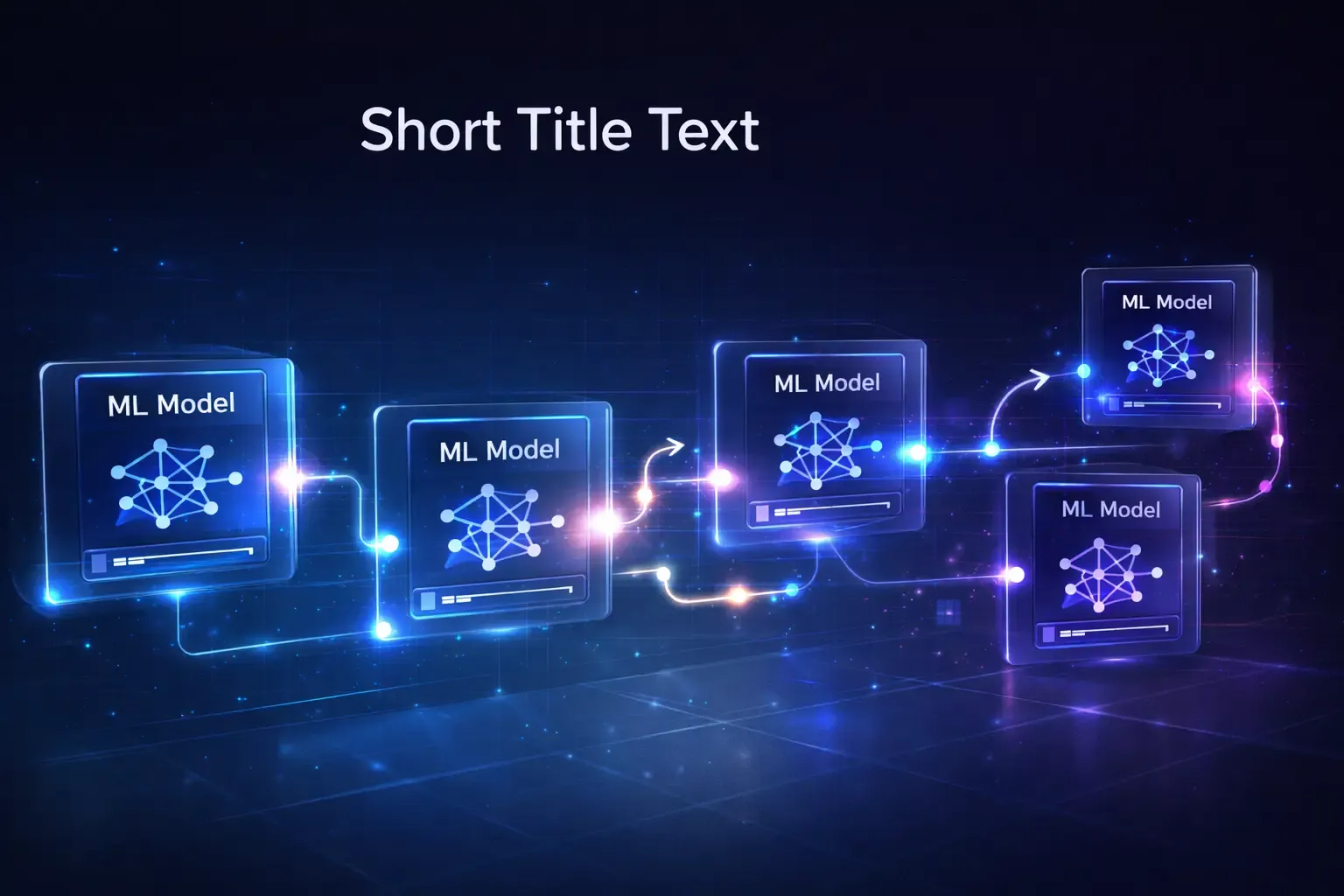
Artificial intelligence has evolved from single tasks performed by single models to complex systems where multiple models collaborate. The emerging discipline supporting this shift is AI workflow orchestration. Instead of humans manually deciding which tool to run and when, AI models are now coordinating other models, handling decisions, sequencing tasks, and autonomously adjusting workflows.
This shift represents one of the biggest conceptual leaps in modern AI development. It moves machine learning from something businesses operate to something that operates itself.
In this article, we explore why orchestration matters, how it works, and the opportunities and risks behind models that manage models.
What Is AI Workflow Orchestration
AI workflow orchestration refers to the automatic coordination and management of AI models and tasks in a pipeline. Instead of running a single algorithm in isolation, orchestration connects multiple models that pass outputs, share context, and support each other.
A workflow can involve:
- Data ingestion models
- Data cleaning or transformation models
- Large language models
- Predictive or classification models
- Validation or auditing models
- Policy enforcement systems
- Human approval stages
Orchestration ensures the right model is triggered at the right time with the right information.
In short, AI workflow orchestration is the conductor of the AI orchestra.
Why AI Needs Orchestration Now
Modern businesses rely on AI for countless tasks. A single model can no longer handle everything required for a consistent user experience. As workflows scale, organizations face challenges like fragmentation, duplicated effort, and inconsistent results.
Several megatrends are accelerating the need for orchestration.
1. Proliferation of Specialized Models
Businesses now use:
- Models for forecasting
- Models for insight extraction
- Models for summarizing text
- Models for risk scoring
Orchestration unifies them.
2. Context Switching Requires Automation
Different models are good at different stages of decision making. Handing off tasks is slow and inefficient if done manually.
3. Real-Time Decision Making Is Becoming Essential
Streaming data demands systems that can act instantly, without waiting for human direction.
4. AI Is Moving From Analytics to Action
Instead of recommending a next step, AI systems increasingly execute actions inside software and workflows.
In this environment, orchestration is less a feature and more a requirement.
How AI Controls Other Models
AI-driven orchestration typically follows a layered structure.
Input Understanding
An AI agent interprets a request or incoming data and determines what needs to happen next.
Model Selection
The system evaluates:
- Which model is best suited for the task
- Whether multiple models should collaborate
- Whether decisions require human-in-the-loop validation
Task Delegation
The orchestrator routes the work to one model or several in parallel.
Feedback and Monitoring
Generated output is evaluated to ensure:
- Quality
- Accuracy
- Risk compliance
If something fails, it triggers correction steps.
Self Adjustment
Over time, the orchestrator learns which models perform best in which situations and optimizes routing automatically.
This creates a feedback loop where model selection becomes smarter with every execution.
Real Business Use Cases
AI workflow orchestration is already appearing in high-impact environments.
Customer Support Automation
One model classifies the requestAnother retrieves policy informationAnother drafts the answerA final verification model checks tone and compliance
The user sees a single response. Multiple models worked behind the scenes.
Fraud Prevention in Finance
Models ingest signals from transactions, behavior, location, and historyRisk is scored dynamically and flagged if necessarySecondary models evaluate context and escalate
No human intervention is required unless the system detects anomalies.
Predictive Maintenance in Manufacturing
Models analyze real-time sensor dataPredict failuresSchedule maintenance ticketsTrigger automated orderingNotify teams only when intervention is needed
Complex operational chains operate autonomously.
Why Orchestration Drives AI ROI
Many business leaders wonder why their AI investments deliver limited results. The problem is rarely the model and almost always the workflow.
Orchestration unlocks value by:
- Eliminating manual bottlenecks
- Reducing duplicate workflows
- Increasing decision speed
- Improving consistency and quality
- Making AI scalable across departments
- Reusing models instead of rebuilding them
Instead of a series of disconnected projects, organizations build intelligent systems that grow over time.
AI Orchestration and Multi Agent Systems
The next evolution involves multi agent architectures. In these systems, individual models behave like agents, each responsible for a defined skill. A separate system coordinates their collaboration.
This structure mirrors human teamwork:
- Each agent is good at a specialty
- The orchestrator acts like a project manager
- Output is the combined intelligence of the team
The result is AI that is more adaptive, collaborative, and context aware.
Challenges to Watch Out For
Although the benefits are immense, orchestration is not a perfect solution yet.
Key challenges include:
- Complexity of pipeline setup
- Lack of standardization across companies
- Data governance requirements
- Hidden costs of monitoring and auditing multiple models
- Risks of automation without oversight
- Potential error propagation between models
A mistake by one model can cascade through the system unless safety checkpoints exist.
This is why human oversight remains critical, particularly in regulated sectors.
Why Orchestration Will Define the Next Era of AI
As organizations adopt more specialized models, orchestration will determine whether AI remains useful or becomes overwhelming.
Future AI will not be defined by how powerful a single model is, but by how well systems combine multiple models, tools, and decisions in a coordinated way.
AI workflow orchestration creates:
- More intelligent business processes
- Faster and more confident decision making
- Self improving automation
- AI that behaves less like a tool and more like an adaptable system
In the same way operating systems run applications without user interference, AI orchestration will run models silently behind the scenes.
Conclusion
AI workflow orchestration marks the transition from standalone machine learning solutions to collaborative intelligence. Models no longer operate in isolation. They pass knowledge, correct each other, and coordinate toward shared outcomes.
This evolution opens the door to truly autonomous systems. Businesses that embrace orchestration will gain compounding advantages. Those that cling to manual control will fall behind.
The future of AI is not one model ruling them all. It is many models working together under intelligent orchestration that feels seamless, invisible, and transformational.