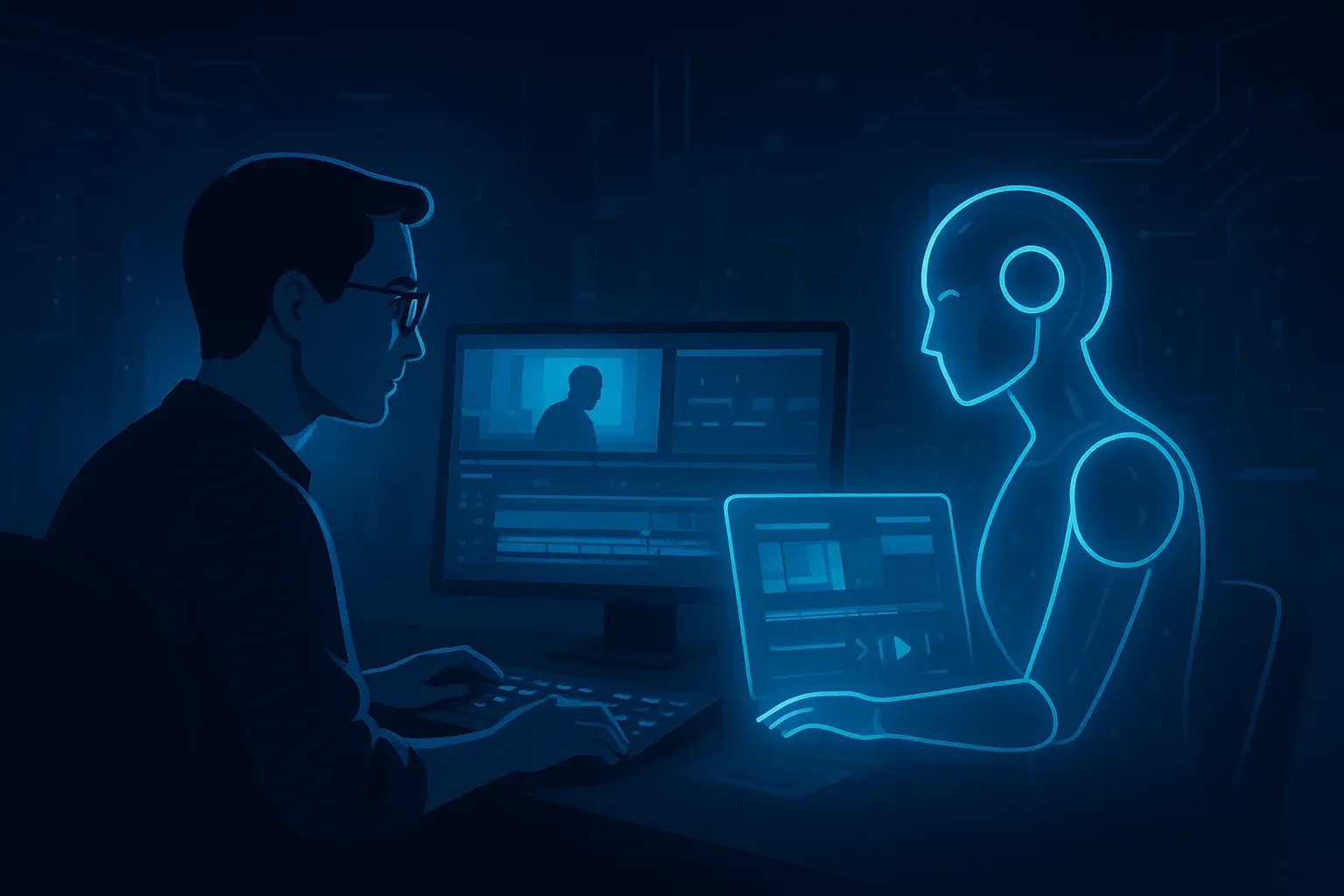
In the past decade, the media industry has undergone a digital revolution — from the rise of streaming platforms to the explosion of social video content. But in 2025, a new wave of disruption is reshaping how videos are created: AI-powered video editing tools.
Once considered experimental, AI editors can now automatically cut, color-grade, sync audio, add effects, and even suggest narrative structures. Platforms like Runway, Adobe Firefly, Descript, and Pika Labs are pushing automation to new heights. The question is no longer if AI can assist in media production — but whether human editors risk becoming obsolete.
This article examines the opportunities, risks, and future outlook for AI in video editing, exploring how the creative balance between humans and machines may evolve.
What Are AI Video Editing Tools?
AI-powered video editing tools use machine learning, computer vision, and natural language processing to automate parts of the editing workflow. Their capabilities include:
- Auto-cutting and trimming based on scene detection
- Speech-to-text transcription for subtitle generation
- Voice cloning and audio cleanup
- Color correction and grading with style matching
- Automatic highlight reels for sports or events
- Generative video — creating new scenes, backgrounds, or animations from prompts
What makes these tools revolutionary is their ability to reduce editing time drastically. Tasks that once required hours or days can now be performed in minutes, making video production more accessible and cost-effective.
The Growth of AI in Media Production
The rise of short-form platforms like TikTok, Instagram Reels, and YouTube Shorts has created demand for fast, scalable video content. AI is stepping in to meet that demand:
- Runway’s Gen-2 enables text-to-video generation.
- Adobe Premiere Pro integrates AI for automated cuts and effects.
- Descript allows “word-based editing,” letting creators edit video by editing a transcript.
- Canva’s video suite brings AI editing to non-professionals.
This democratization means that brands, influencers, and small businesses can produce professional-quality videos without hiring a full production team.
Opportunities of AI Video Editing
1. Speed and Efficiency
AI tools can cut editing time by as much as 80%. Editors can process bulk content, such as podcasts or livestreams, in record time.
2. Accessibility
For non-professionals, AI lowers the barrier to entry. A startup or solo creator can now produce polished content without a film school background.
3. Cost Savings
By automating repetitive tasks, companies can reduce production budgets, making high-quality video content affordable even for small businesses.
4. Creativity Boost
Ironically, automation can increase creativity by freeing editors from tedious work like syncing, cutting, or rendering, allowing them to focus on storytelling.
5. Scalability for Businesses
Brands that need mass video campaigns across multiple regions and languages can leverage AI for translations, subtitles, and localized edits at scale.
The Risks and Limitations of AI Editors
1. Loss of Human Creativity
Storytelling is not just about cutting clips; it’s about emotional pacing, tone, and intuition. AI can recognize patterns but lacks the empathy and artistic judgment of a human editor.
2. Job Displacement
The fear of AI replacing human editors is real. Entry-level editing roles, such as cutting reels or preparing drafts, may become automated — potentially reducing career opportunities for newcomers.
3. Quality Control
AI tools often make mistakes: cutting at awkward moments, mistranslating subtitles, or creating uncanny visuals. Human oversight remains crucial.
4. Ethical Concerns
Deepfake and generative AI raise concerns about authenticity. Who is responsible when AI edits are used to mislead audiences?
5. Dependence on Data and Platforms
AI’s performance depends on training data and platform updates. Editors risk losing creative autonomy if locked into proprietary ecosystems.
Case Studies: AI in Action
🎬 Hollywood and AI Editing
While major film studios experiment with AI for dailies and rough cuts, final edits still require human directors and editors. AI acts as an assistant, not a replacement.
📱 Social Media Creators
Influencers now use AI editing apps to batch-produce short videos. For them, AI is a game-changer, helping maintain content schedules.
📰 News Media
Newsrooms are adopting AI for auto-clipping interviews and generating social media snippets. Yet, final publication still requires editorial judgment.
The Future of AI in Video Editing
1. Hybrid Workflows
The most likely future is AI-human collaboration. AI handles technical tasks, while humans refine the creative layer.
2. Generative Storyboarding
AI may soon create entire storyboards from a script, giving editors a draft to work with before shooting even begins.
3. Real-Time Editing
Live events could benefit from AI editing highlights in real-time for instant sharing across platforms.
4. Custom AI Models for Creators
Creators may train AI editors to learn their unique style, creating a personalized editing assistant.
5. Ethical & Legal Frameworks
As AI takes on greater roles, expect regulations on content authenticity, deepfake use, and creative ownership.
Expert Insights
Industry professionals emphasize that AI is a tool, not a replacement:
- “AI cuts time, but creativity is still human.” – Senior editor, Netflix
- “Automated editing helps with volume, but storytelling is about human experience.” – Creative director, ad agency
- “AI will replace tasks, not editors.” – Media technology researcher
These insights align with a growing consensus: the future editor is a human-AI hybrid.
Conclusion
AI-powered video editing tools are reshaping media production, offering speed, accessibility, and affordability. Yet, they also raise questions about creativity, ethics, and job displacement.
The real future of editing lies in partnership, not replacement. AI can handle repetitive tasks and generate ideas, but humans provide the emotional intelligence, cultural awareness, and creative spark that define great storytelling.
In 2025, editors who embrace AI as a co-creator will thrive. Rather than making humans obsolete, AI may unlock a new golden age of video storytelling — one where machines empower human imagination instead of replacing it.