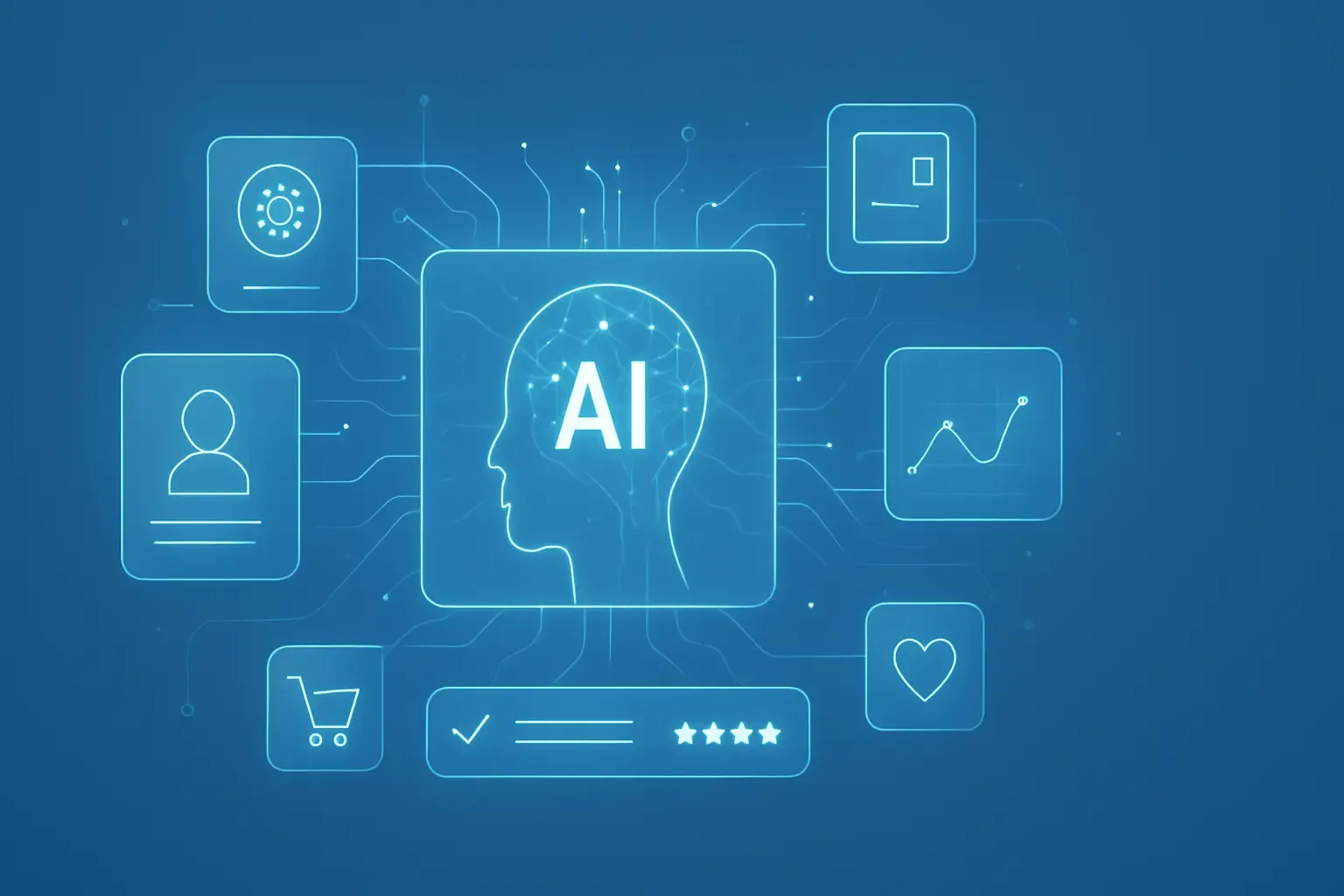
Artificial intelligence is moving deeper into our devices. What once lived inside isolated apps is now becoming part of the operating system itself. This shift marks the beginning of the post app era, a future where AI becomes a system layer that understands context, takes action autonomously, and acts as the primary interface between users and technology.
Instead of opening separate apps for messaging, notes, navigation, and tasks, AI will sit at the center of the OS and handle everything through natural language, intent recognition, and autonomous execution. This change will redefine how software is built, how users interact with devices, and how digital ecosystems evolve.
This blog explores what AI as an OS layer really means, how it works, why it matters, and how it will reshape the future of computing.
What Is an AI Operating System Layer?
An AI OS layer is an intelligent, system level component that sits between the user and the device. It doesn’t replace the operating system, but enhances it by becoming the primary interface.
Instead of relying on apps as the core experience, AI becomes:
- The orchestrator of tasks
- The interpreter of user intent
- The connector between services
- The decision maker for workflows
- The engine that understands context
In short, the OS becomes AI-first, not app-first.
An AI OS layer is built on three capabilities:
- Understanding what the user wants
- Finding the best way to achieve it
- Executing the task across multiple apps or services
This represents a major leap from app centric design toward intent centric interaction.
Why the Post App Era Is Emerging
The rise of AI OS layers is happening for several reasons.
1. Users prefer natural interactions
People want to speak or type intent and get a result without navigating screens or menus. AI makes this possible.
Example:“I’m traveling next week. Book a hotel and organize my calendar.”
The OS handles everything.
2. Apps are becoming bloated
Each app carries its own UI, data model, and isolated ecosystem. Users are overwhelmed. AI layers simplify the experience.
3. AI agents need system level control
Autonomous AI agents can’t function effectively inside silos. They need access to system resources, permissions, and cross app communication.
4. OS companies are shifting the model
Platforms like Apple, Google, OpenAI, and Microsoft are building AI into the core of their systems, not just into apps.
5. Developer ecosystems are evolving
Modern dev tools allow AI to coordinate APIs, workflows, and device functions from a unified layer.
These changes mark the start of an era where users rely on AI, not apps, to get things done.
How an AI OS Layer Works
The AI layer acts as a meta platform that sits above apps and system functions. It interprets context and chooses the best path to achieve the user's goal.
1. Intent Understanding
AI models detect meaning, tone, urgency, and hidden goals. For example:
“I need to focus right now.”
The OS can:
- Enable focus mode
- Silence notifications
- Adjust brightness
- Suggest productivity apps
2. Context Awareness
AI uses signals like location, time, device activity, and habits to respond proactively.
3. Autonomous Task Execution
The AI layer can perform multi step tasks automatically.Example:“Plan my trip” triggers flight search, hotel booking, packing reminders, and expense tracking.
4. API Orchestration
Instead of opening apps, AI connects services directly through their APIs.
5. Continuous Learning
The system learns from past behavior to refine predictions and recommendations.
This creates a personalized digital companion built into the OS itself.
Examples of AI as a System Layer
Voice OS Assistants Evolving Into AI Layers
Tools like Siri, Assistant, and Copilot are becoming system agents capable of deeper reasoning and multi step execution.
AI Powered Action Frameworks
Apple Intelligence, Google’s AI overlays, and OpenAI’s system integrations are early examples of AI that can manipulate apps on behalf of the user.
AI as a Universal App Interface
Instead of tapping icons, users type or speak requests that the OS breaks into actions.
AI Driven System Automation
Phones automatically adjust settings, manage notifications, organize files, and optimize battery based on behavior.
These shifts show how AI is gradually becoming the real interface, not apps.
What the Post App Era Looks Like
The post app era doesn’t mean apps vanish, but they move into the background. Interfaces become invisible. AI becomes the main entry point.
1. Apps Become Capabilities, Not Destinations
Users no longer open apps. They request tasks. Apps provide functions through AI.
Example:Instead of opening a camera app, you say:“Capture a photo and brighten it.”
2. Universal AI Workspace
All content and actions flow through a unified AI space.
3. Multi Agent Systems
Different AI agents handle travel, work, health, finances, and more, collaborating behind the scenes.
4. Cross Platform Continuity
The AI layer follows users across phone, laptop, smart home, and car.
5. Zero UI Experiences
Interfaces shrink as AI handles more operations automatically.
The result is faster, more intuitive computing.
Benefits of AI as an OS Layer
AI brings several advantages to both users and developers.
For Users
- Less time navigating apps
- More automation and proactive suggestions
- A personalized experience
- Fewer repetitive tasks
- Cleaner, simpler interfaces
For Developers
- No need to build full UIs
- Ability to expose capabilities through AI actions
- Reduced development maintenance
- Enhanced discoverability of features
- More direct integration with OS level AI models
For Device Makers
- Stronger platform lock in
- More powerful ecosystem control
- Better cross device intelligence
Challenges Ahead
Despite the benefits, several challenges remain.
Privacy Concerns
AI needs access to personal data to operate intelligently. Secure, on device processing is critical.
Permission Models
AI needs new permission frameworks that balance automation with user control.
Reliability
Automation must be predictable and avoid errors, especially with high stakes actions.
Developer Adoption
Developers must rethink how their apps expose functionality.
User Trust
People must trust AI to act correctly on their behalf.
These challenges will shape how fast the post app era becomes mainstream.
The Future of AI as an OS Layer
We are heading toward a world where:
- AI is the primary interface for all digital tasks
- Apps behave more like plugins feeding the AI layer
- Personal agents replace traditional multitasking
- On device AI becomes standard
- Operating systems focus on intelligence over icons
The OS will evolve from a grid of apps to a fluid, intelligent environment that understands what the user wants and acts instantly.
This is the beginning of a computing era where intent replaces interaction.
Conclusion
AI as an operating system layer signals a major shift in how humans interact with technology. The post app era will simplify tasks, remove friction, and create a more intuitive relationship between people and their devices.
As AI becomes the central layer that interprets intent, automates tasks, and orchestrates services, the entire digital ecosystem will reshape itself around intelligence, not interfaces.
We are moving into a world where the OS is not just a system but a partner that understands context, adapts dynamically, and helps users accomplish more with less effort.