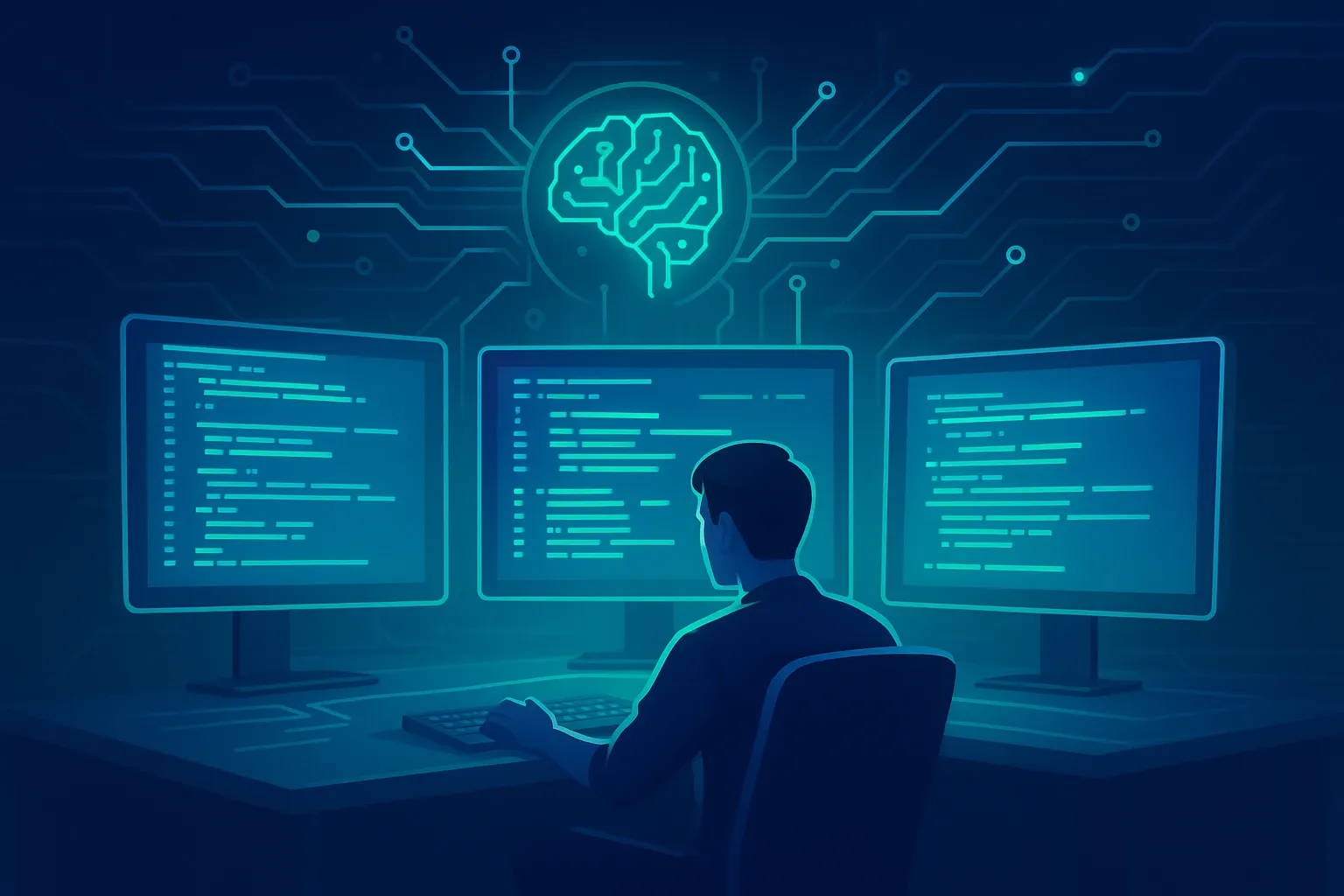
In the past, web development was a process that required hours of manual coding, testing, and debugging. From setting up environments to deploying projects, developers handled each step with little to no automation. Fast forward to 2025, and artificial intelligence is revolutionizing how websites and applications are built.
AI is no longer just a productivity enhancer — it’s becoming a core partner in automating web development workflows. From generating code snippets and running tests to predicting user behavior and optimizing performance, AI tools are reshaping the very foundation of the development process.
This article explores how AI is streamlining workflows, what it means for developers, and why automation is both a challenge and an opportunity in the web development ecosystem.
The Rise of AI in Web Development
Artificial intelligence has been quietly shaping web development for years. Early iterations included auto-complete in code editors and template-driven website builders. However, the real leap forward began with the integration of machine learning models and natural language processing tools into development workflows.
Today, AI can:
- Generate production-ready code from natural language prompts.
- Automate testing and identify vulnerabilities.
- Optimize websites for speed, accessibility, and SEO in real time.
- Assist with UI/UX design by predicting user interactions.
- Deploy updates and rollbacks with minimal human intervention.
This evolution highlights a shift from developers doing everything manually to AI-assisted workflows where repetitive and time-consuming tasks are largely automated.
Key Areas Where AI Automates Web Development
1. Code Generation and Assistance
Tools like GitHub Copilot, ChatGPT Code Interpreter, and TabNine provide AI-driven code suggestions based on project context. Developers can now write entire functions or modules with a simple prompt.
- Benefits: Faster prototyping, fewer syntax errors, and productivity boosts.
- Risks: Over-reliance on AI may lead to “black-box code” where developers don’t fully understand what’s generated.
2. Automated Testing and Debugging
Traditionally, testing required writing separate scripts for unit, integration, and regression testing. AI now automates much of this:
- AI-powered tools detect patterns in code and suggest test cases.
- Bugs are identified in real time, with recommendations for fixes.
- Predictive analysis identifies potential breaking points before deployment.
This means developers spend less time chasing errors and more time building new features.
3. Workflow Automation with AI Agents
AI-powered workflow automation tools can handle routine tasks such as:
- Setting up development environments.
- Running builds and deployments automatically.
- Managing CI/CD pipelines without manual configurations.
For example, AI agents can decide when to trigger deployment based on code stability, reducing downtime and human intervention.
4. AI in UI/UX Design
AI design assistants like Uizard and Figma AI are revolutionizing how designers and developers collaborate. These tools can:
- Convert wireframes into code automatically.
- Predict user behavior using pattern recognition.
- Suggest layout optimizations for better user engagement.
Instead of trial-and-error, AI enables data-driven design decisions.
5. SEO & Performance Optimization
AI doesn’t stop at development — it continues into performance monitoring and SEO optimization.
- Page speed analysis is automated with AI-driven recommendations.
- Accessibility audits (contrast ratios, alt text suggestions) are handled in real time.
- AI ensures websites align with Google’s Core Web Vitals.
This saves time and keeps websites aligned with evolving SEO and UX standards.
6. Security & Threat Detection
Cybersecurity is one of the most critical aspects of web development. AI tools can:
- Monitor traffic in real time to detect anomalous behavior.
- Identify vulnerabilities in code before exploitation.
- Patch common security flaws automatically.
As cyberattacks become more sophisticated, AI-driven security measures are no longer optional — they are essential.
Benefits of AI-Driven Web Development Automation
- Increased Speed and Productivity
- Consistency in Quality
- Reduced Human Error
- Scalability
- Focus on Innovation
Challenges and Risks of AI in Web Development
- Over-Reliance on AI
- Code Explainability
- Bias in AI Models
- Job Displacement Fears
- Security Risks
The Future of AI in Web Development Workflows
Looking ahead, AI’s role will only expand. Here’s what we can expect:
- AI-First Development Environments: IDEs will be powered primarily by AI, with humans guiding rather than manually coding.
- Low-Code/No-Code Evolution: Platforms will combine AI with drag-and-drop simplicity, allowing even non-developers to create functional applications.
- AI-Driven Collaboration: Teams will use AI not just for coding but also for project management, bug triaging, and documentation.
- Continuous Learning Systems: AI will adapt to a project’s style, learning from past decisions to become smarter over time.
In essence, developers will transition from writing code to curating and supervising AI-driven development workflows.
How Developers Can Adapt
The rise of AI doesn’t mean developers are obsolete. Instead, it shifts their roles:
- Learn to Supervise AI: Understand how to review and refine AI-generated code.
- Focus on Problem-Solving: Creativity and critical thinking remain uniquely human strengths.
- Upskill in AI Tools: Familiarity with AI-driven platforms will become a core job requirement.
- Strengthen Fundamentals: Strong coding knowledge is essential for catching AI errors.
Those who embrace AI as a collaborator rather than a competitor will thrive.
Conclusion
AI is no longer just assisting web developers — it’s restructuring entire workflows. From coding and testing to UI/UX design and deployment, AI ensures faster, more efficient, and more secure development processes.
However, automation doesn’t eliminate the need for human developers. Instead, it redefines their role from manual coders to strategic supervisors and innovators.
In 2025 and beyond, the most successful developers will be those who harness AI effectively, balancing automation with creativity, ethics, and problem-solving.