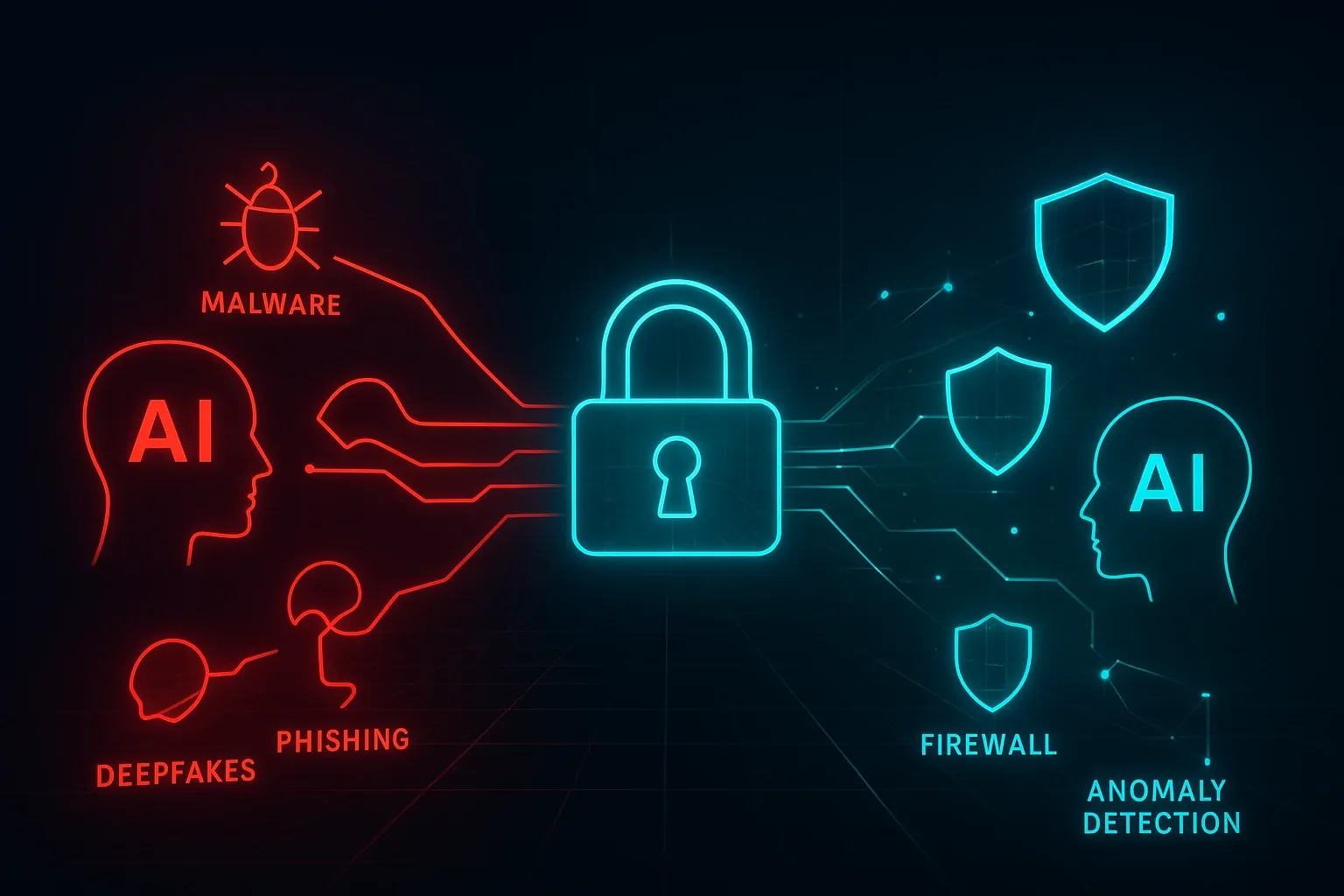
Artificial Intelligence (AI) has already transformed industries ranging from healthcare to finance, but in 2025, its impact on cybersecurity is arguably one of the most critical. AI is now a double-edged sword: on one side, it fuels sophisticated cyberattacks capable of bypassing traditional defenses; on the other, it powers defensive systems that detect, predict, and neutralize threats faster than humans ever could.
This blog explores how AI is reshaping the cybersecurity landscape, highlighting both the dangers of AI-enabled attacks and the emergence of defensive AI as the frontline protector of digital infrastructure.
The Rise of AI-Enabled Cyber Attacks
Cybercriminals have always evolved with technology, and AI gives them a new arsenal of tools. Unlike traditional hacking methods, AI-enabled attacks are faster, adaptive, and harder to detect.
Types of AI-Powered Attacks in 2025:
- Automated Phishing CampaignsAI now generates hyper-personalized phishing emails using natural language models. These messages mimic writing styles, context, and even tone, making them nearly indistinguishable from genuine communication.
- Deepfake & Voice SpoofingCybercriminals use AI to clone voices and faces, enabling scams that trick employees, customers, or even CEOs into transferring funds or sharing sensitive information.
- Intelligent MalwareMalware powered by AI can adapt in real time, learning how a target system behaves and altering its tactics to avoid detection.
- Adversarial AttacksHackers exploit vulnerabilities in AI itself by feeding manipulated data to mislead defensive systems, such as facial recognition or fraud detection models.
- AI-Driven BotnetsBotnets are no longer just brute-force tools. AI allows botnets to coordinate attacks dynamically, identifying weak spots in networks and adjusting strategies instantly.
The speed and scale of these threats mean traditional security methods alone are no longer enough.
Why Traditional Cybersecurity Is No Longer Enough
Cybersecurity once relied heavily on signature-based detection (matching threats to known patterns). But AI-powered attacks evolve too quickly for these static defenses.
- Volume of Data: Millions of alerts overwhelm human analysts.
- Sophistication: Attacks adapt in real time, outpacing manual defenses.
- Scale: Global connectivity means attacks spread faster than patching cycles.
This is why the cybersecurity industry is turning to defensive AI—AI systems designed not only to detect but also to respond autonomously to threats.
The Rise of Defensive AI
If AI is fueling smarter attacks, it is also creating smarter defenses. Defensive AI uses machine learning, anomaly detection, and predictive analytics to strengthen digital resilience.
How Defensive AI Protects Systems:
- Real-Time Threat DetectionDefensive AI analyzes billions of data points per second, spotting unusual patterns that indicate breaches before they escalate.
- Automated Incident ResponseInstead of waiting for human intervention, AI systems can isolate infected devices, shut down malicious traffic, and patch vulnerabilities instantly.
- Predictive SecurityBy learning from historical data, AI predicts attack vectors before they’re exploited, giving companies a chance to fix weaknesses in advance.
- Adaptive LearningDefensive AI evolves with new threats, updating its knowledge base faster than traditional security tools.
- User Behavior Analytics (UBA)AI monitors how users normally interact with systems. Any abnormal activity—like unusual login times or large file transfers—triggers alerts or automatic defenses.
This shift marks a paradigm change: cybersecurity is no longer just reactive, it’s proactive and autonomous.
AI vs AI: The New Cybersecurity Battlefield
2025 has introduced a new battleground—AI vs AI. Hackers deploy offensive AI to launch attacks, while organizations counter with defensive AI to neutralize them.
- Offensive AI: Learns, adapts, and hides within systems.
- Defensive AI: Detects anomalies, predicts vulnerabilities, and responds at scale.
This “AI arms race” raises critical questions about who will stay ahead: cybercriminals or defenders. The answer depends on innovation, investment, and global cooperation.
Opportunities & Benefits of Defensive AI
Despite the risks, defensive AI brings powerful advantages:
- Faster Response Times – milliseconds instead of hours.
- Reduced Human Error – AI augments analysts by handling repetitive monitoring tasks.
- Cost Efficiency – Preventing breaches saves millions compared to post-attack recovery.
- Scalable Protection – AI can secure entire enterprise systems simultaneously.
- Enhanced Compliance – Automated monitoring helps organizations meet strict data protection laws.
The result is a safer digital ecosystem that evolves alongside emerging threats.
Challenges & Ethical Concerns
While defensive AI offers huge potential, it is not without challenges.
- False Positives: AI may misinterpret normal activity as threats, disrupting workflows.
- Data Privacy: Defensive systems require vast amounts of sensitive data.
- Bias & Vulnerability: If poorly trained, AI may overlook certain attack types or create security blind spots.
- Arms Race Escalation: As defenders improve AI, attackers will too—leading to a never-ending cycle.
Balancing innovation with responsibility and transparency will be key to ensuring AI strengthens cybersecurity rather than creating new risks.
The Future of Cybersecurity in the Age of AI
Looking ahead, AI will become the default layer of cybersecurity. Organizations that fail to adopt defensive AI risk being outpaced by AI-enabled attackers.
The future will likely include:
- Zero-Trust Security enhanced by AI-driven identity verification.
- AI Governance Frameworks to regulate ethical use in cybersecurity.
- Cross-Industry AI Sharing to build collective defenses against large-scale threats.
- Hybrid AI + Human Defense Teams for maximum resilience.
Cybersecurity in 2025 is not about eliminating risk entirely—it’s about staying one step ahead in the AI-powered arms race.
Final Thoughts
AI is no longer just another tool in cybersecurity—it is the defining factor of how digital systems are attacked and defended. As cybercriminals weaponize AI to launch sophisticated, adaptive attacks, defensive AI emerges as the guardian of the digital frontier.
The stakes are high: data, privacy, and critical infrastructure are on the line. But with proactive adoption, ethical design, and global collaboration, AI can help build a safer, more resilient digital future.