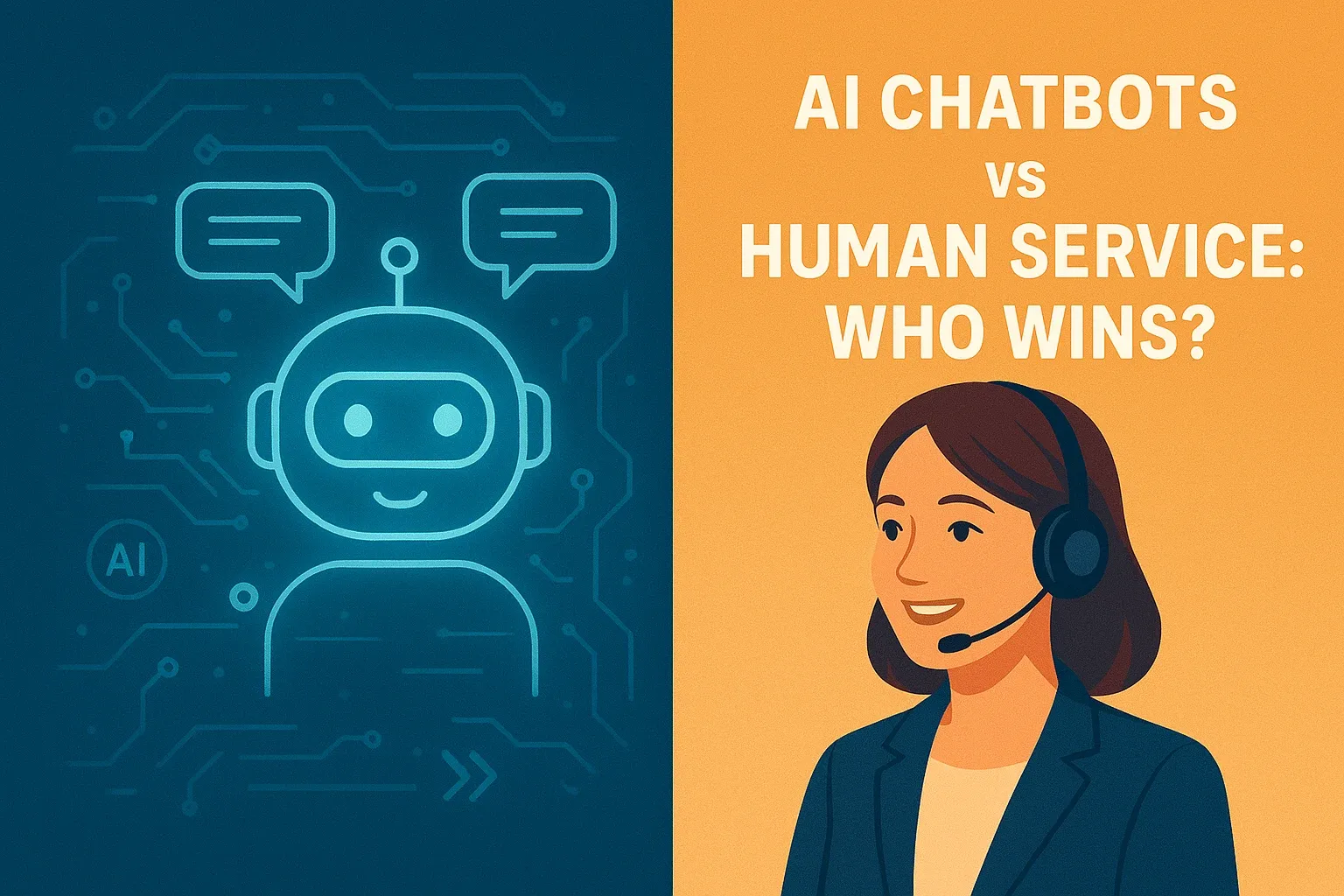
Customer service is at the heart of every successful business. But in 2025, the question isn’t just about providing good service—it’s about deciding who (or what) provides it best: AI-powered chatbots or human agents.
As artificial intelligence continues to evolve, chatbots have become faster, smarter, and capable of handling complex queries. At the same time, human agents bring empathy, creativity, and problem-solving skills that machines can’t easily replicate. So, who wins in the battle of AI chatbots vs human customer service? Let’s explore.
The Rise of AI-Powered Chatbots
Chatbots have come a long way from scripted, robotic responses. Thanks to advances in natural language processing (NLP) and machine learning, today’s chatbots can:
- Answer FAQs instantly
- Guide users through purchases
- Handle multiple conversations at once
- Offer 24/7 availability
- Continuously learn from interactions
Companies use chatbots to cut costs, speed up response times, and deliver consistent support across platforms.
Benefits of AI Chatbots
- Availability – They work around the clock without breaks.
- Scalability – Can manage thousands of queries at the same time.
- Cost-Effectiveness – Reduce the need for large customer service teams.
- Consistency – Provide standardized, accurate answers every time.
The Human Advantage in Customer Service
Despite the rise of chatbots, human agents remain indispensable. Unlike machines, people can adapt, improvise, and respond to emotions.
Strengths of Human Customer Service
- Empathy & Emotional Intelligence – Humans can read frustration, calm customers, and offer reassurance.
- Complex Problem-Solving – Some issues require creative, case-specific solutions.
- Personalized Service – Humans can build relationships and brand loyalty.
- Trust Factor – Many customers still prefer “talking to a real person.”
For industries like healthcare, travel, and finance, human service often provides the peace of mind that chatbots cannot fully match.
Where Chatbots Fall Short
While chatbots excel in speed and efficiency, they struggle with:
- Nuanced or emotional conversations
- Unpredictable problems
- Highly specialized or technical issues
- Situations requiring negotiation or discretion
Even the most advanced AI may misinterpret tone, cultural context, or sarcasm, frustrating customers instead of helping them.
Hybrid Approach: The Best of Both Worlds
The real winner might not be chatbots or humans alone—but a hybrid system that combines both.
- Chatbots handle routine questions (order tracking, FAQs, simple troubleshooting).
- Humans step in for complex or emotional cases (refund disputes, personalized recommendations, urgent issues).
This partnership ensures speed + empathy, giving businesses the efficiency of AI without sacrificing the human touch.
Future Outlook: Will Chatbots Replace Humans?
It’s unlikely. While chatbots will continue to get smarter with AI, machine learning, and voice technology, human service will remain crucial for:
- Customer loyalty
- Crisis management
- High-value transactions
- Building long-term relationships
Instead of replacement, expect collaboration—with humans focusing on empathy-driven tasks and AI covering the repetitive workload.
Conclusion
So, who wins—AI chatbots or human customer service?
The truth is, both have their strengths. Chatbots win on speed, cost, and availability, while humans win on empathy, trust, and complex problem-solving. The future belongs to businesses that integrate both seamlessly, offering customers the efficiency of AI and the warmth of human interaction.
FAQs
Q1: Can AI chatbots fully replace human customer service?No. Chatbots are excellent for routine queries but humans remain vital for complex, emotional, or high-stakes interactions.
Q2: What industries benefit most from AI chatbots?E-commerce, banking, telecom, and retail see huge efficiency gains from chatbots.
Q3: Are customers satisfied with chatbot support?Yes, for simple queries. But many prefer human agents for personal or complicated issues.
Q4: How can businesses balance chatbots and humans?By using a hybrid model where chatbots handle volume and humans step in for specialized support.
Q5: What is the future of chatbots in customer service?Smarter AI, voice-enabled bots, and seamless integration with human agents will dominate the future.