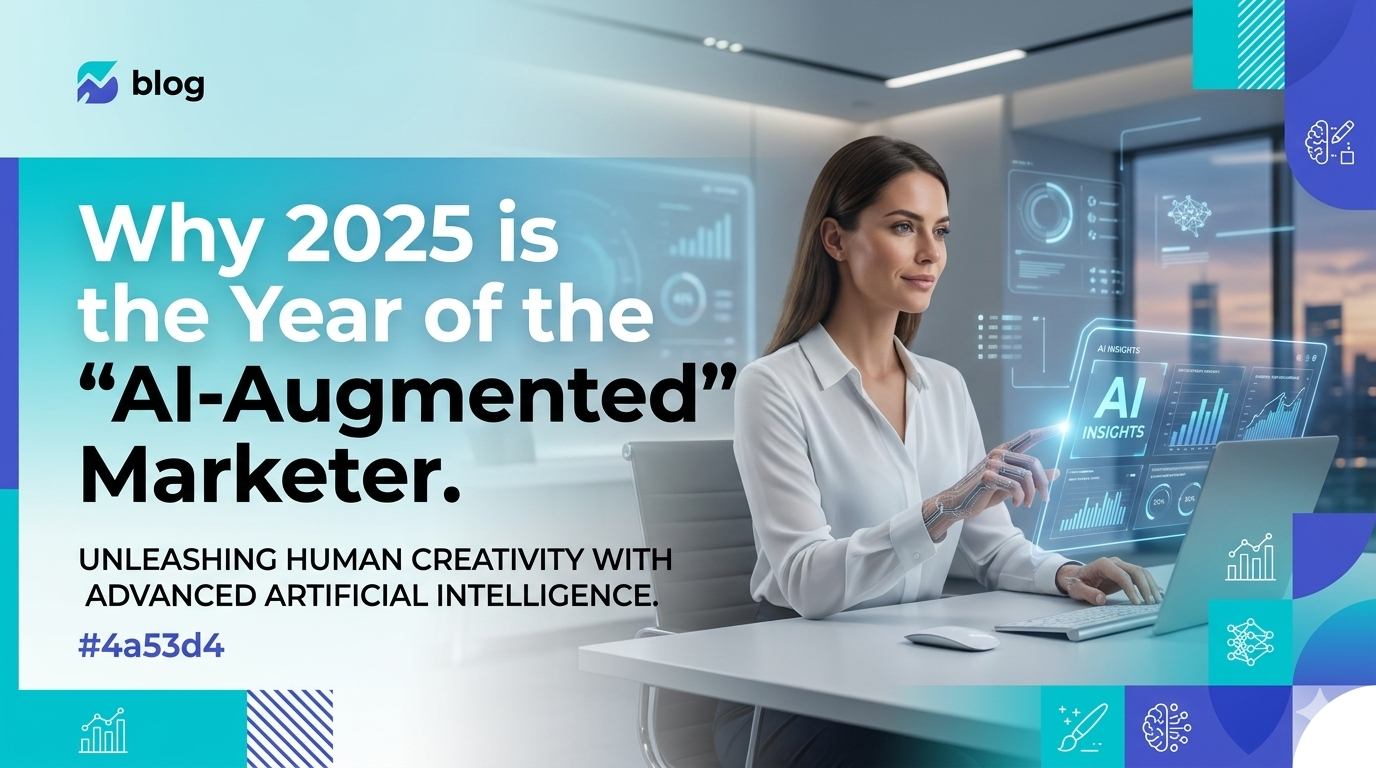
The digital landscape has officially crossed a threshold. If the previous two years were defined by the chaotic "gold rush" of generative AI, 2025 stands as the era of structured integration. We have moved beyond simple chatbots; we have entered the age of the AI-augmented marketer.
In 2025, the most successful professionals aren't trying to beat the machine they are becoming the architect of it. This synergy between human intuition and machine precision is no longer optional; it is the fundamental requirement for staying relevant in a competitive global market.
The Evolution: From AI-Driven to AI-Augmented
To understand why 2025 is the definitive year of the AI-augmented marketer, we must look at the shift in workflow. Traditional marketing relied on manual data analysis and broad-stroke creative. AI-driven marketing (the 2024 model) often resulted in "uncanny valley" content that felt robotic and disconnected.
The AI-augmented approach is different. It uses agentic AI systems capable of autonomous multi-step execution while keeping the human expert at the helm for strategic oversight.
Why 2025 is Different
- Sophisticated Agentic AI: AI can now plan, execute, and optimize entire campaigns across channels without needing a prompt for every single step.
- Matured Consumer Expectations: Users can now spot "lazy" AI content instantly. They demand the speed of AI with the soul of a human storyteller.
- Workforce Reskilling: Professionals are no longer "learning AI" they are using it as a secondary brain to handle technical debt in Digital Marketing and SEO.
1. Hyper-Personalization Through Customer Intelligence
The AI-augmented marketer in 2025 uses predictive analytics to move beyond simple segmentation. Instead of targeting "Males 25-34," we are now targeting "the specific user who is currently researching eco-friendly home offices and prefers video content over text."
The Power of Predictive Data
By utilizing advanced customer intelligence platforms, marketers can anticipate user intent before a search is even performed. This allows for:
- Dynamic Landing Pages: Using full-stack development principles integrated with AI to rewrite headers and change hero images in real-time based on visitor history.
- Sentiment Tracking: Understanding the emotional "temperature" of a customer base to pivot messaging instantly.
2. SEO in 2025: Beyond Keywords to GEO and AEO
The role of the AI-augmented marketer has drastically changed in the search realm. We are no longer just optimizing for Google’s blue links; we are optimizing for Generative Engine Optimization (GEO) and Answer Engine Optimization (AEO).
Semantic SEO and E-E-A-T
Search engines like Google now prioritize "Experience, Expertise, Authoritativeness, and Trustworthiness" (E-E-A-T) more than ever. The augmented marketer uses AI to identify content gaps and LSI keyword clusters but uses their own professional experience to provide the "Expertise" that AI lacks.
- Topic Clusters: Moving away from single keywords to broad semantic authority.
- Structured Data: Using AI to generate complex Schema markups that help crawlers understand the context of Full-Stack Developing or complex technical services.
3. The Bridge Between Marketing and Full-Stack Development
One of the most exciting trends in 2025 is the blurring of lines between the marketer and the developer. The modern AI-augmented marketer often possesses a "low-code" or "no-code" proficiency that allows them to interact directly with the technical side of a business.
Why Marketers are Learning Development Logic
AI-augmented tools allow marketers to troubleshoot code or design API integrations without needing a dedicated engineering team for every minor change.
- Faster Deployment: Launching custom tools or interactive calculators on a site is now a matter of hours, not weeks.
- Integrated Tech Stacks: Using AI to bridge the gap between a CRM and a custom-built website interface.
For those looking to dive deeper into the technical architecture of modern business, exploring Full-Stack Developing pathways can provide the foundational knowledge needed to lead these AI-augmented teams.
4. ROI Optimization and Agentic Workflows
Efficiency is the heartbeat of 2025. The AI-augmented marketer uses autonomous agents to handle the "grunt work" of digital advertising.
Autonomous Media Buying
Imagine a system that monitors your ad spend 24/7. When it notices a specific demographic in a specific city is converting at a 20% higher rate, it automatically reallocates budget from underperforming areas. This isn't just automation; it’s an agentic workflow that acts as a 24/7 junior media buyer.
- 10-30% Revenue Growth: Recent McKinsey data suggests that hyper-personalized, AI-augmented workflows can drive significant topline growth.
- Reduced Operational Friction: Marketers spend less time on spreadsheets and more time on high-level Digital Marketing strategy.
5. The Ethical Mandate: Trust as a Brand Differentiator
As AI-generated content floods the internet, trust has become the rarest currency. The AI-augmented marketer knows that just because an AI can write something doesn't mean it should.
Human-Centric AI
The goal is "Human-AI synergy." In 2025, transparency about AI usage is a hallmark of premium brands.
- Authenticity: Using AI for the skeleton, but human writers for the flesh and blood of a story.
- Privacy: Ensuring all AI tools are compliant with modern data laws, protecting the "Customer Intelligence" that fuels the system.
Conclusion: The Era of the Augmented Professional
The "AI-Augmented" marketer is the definitive winner of 2025. By blending the computational power of AI with the creative and ethical judgment of a human, these professionals are achieving results that were once impossible.
Whether you are focusing on [SEO & Development] to build better platforms or refining your Digital Marketing tactics to reach new audiences, the message is clear: Augment or be left behind.
FAQs
What is the difference between an AI-driven and an AI-augmented marketer?
An AI-driven marketer relies heavily on automation to make decisions, often leading to generic results. An AI-augmented marketer uses AI as a tool to enhance their own expertise, maintaining human control over strategy, tone, and ethical decisions.
Does an AI-augmented marketer need to know how to code?
While not strictly required, having a basic understanding of Full-Stack Developing logic helps. It allows the marketer to better communicate with AI agents when building technical marketing assets or troubleshooting website SEO issues.
What is GEO and why does it matter in 2025?
GEO stands for Generative Engine Optimization. It is the process of optimizing content so that AI-powered search engines (like Perplexity or Google’s Gemini) cite your brand as the primary source of truth in their generated answers.
Is AI-augmented content safe for SEO?
Yes, as long as it prioritizes the user experience. Google’s algorithms in 2026 and beyond prioritize high-value, original content. The augmented approach using AI for research and humans for final editing is the safest way to maintain high rankings.
How do I start becoming an augmented marketer?
Start by integrating one Agentic AI tool into your workflow, such as an AI SEO auditor or a predictive analytics platform. Focus on "upskilling" in data literacy and prompt engineering while maintaining your unique brand voice.