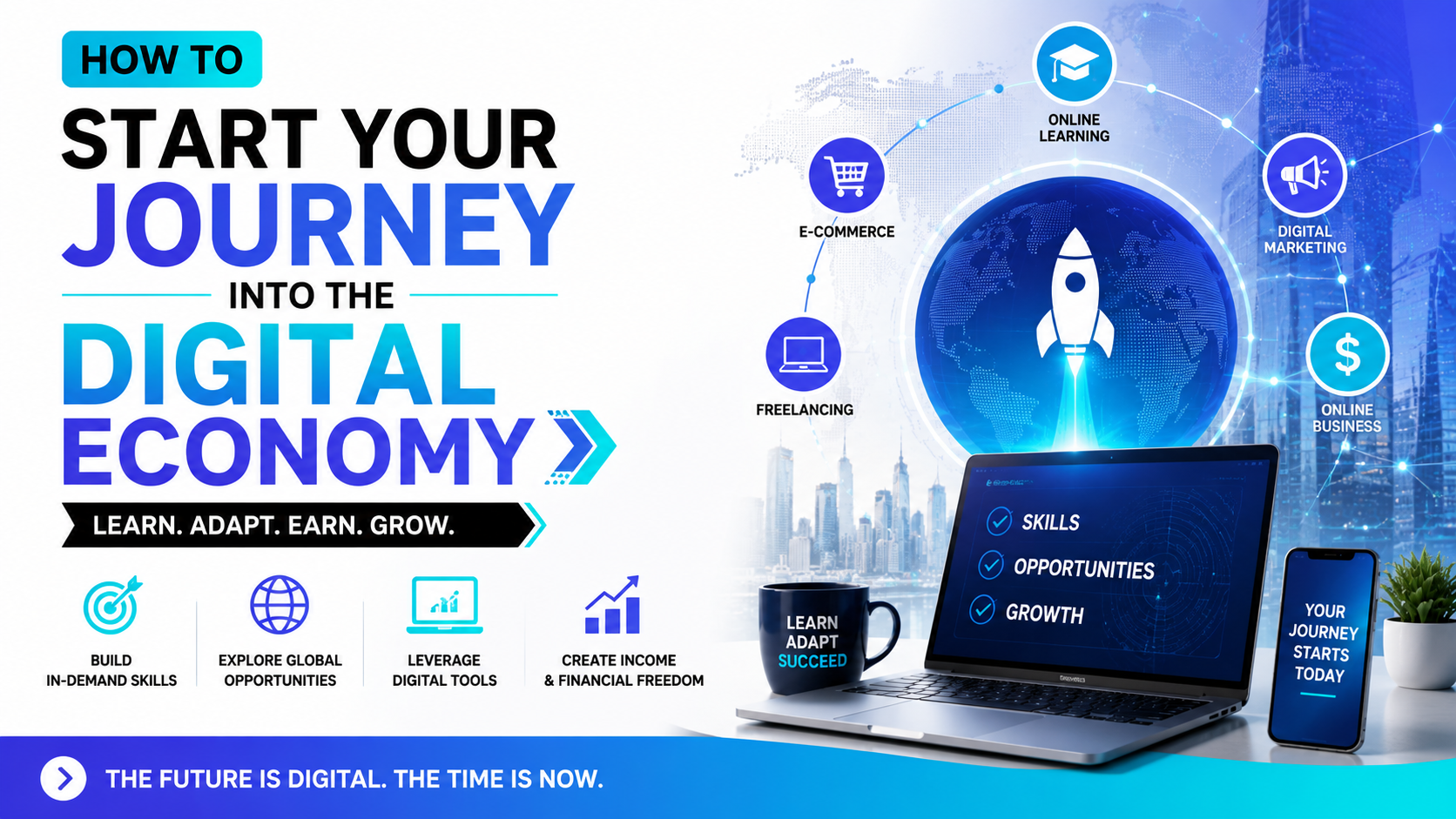
The concept of a traditional nine-to-five office job is undergoing a massive, permanent shift. Millions of professionals around the world are no longer tied to physical desks, local job markets, or rigid regional economies. Instead, they operate inside a borderless, fast-moving, and highly profitable virtual space.
Welcome to the global digital economy.
From software development and algorithmic optimization to artificial intelligence marketing integration, the modern marketplace values specialized digital knowledge above all else. If you feel stuck in a stagnant traditional career path, there has never been a better time to pivot.
But how do you take the first step when the sheer volume of tools, platforms, and terms feels overwhelming? This complete, actionable guide breaks down how to start your journey into the digital economy, cultivate high-value capabilities, and secure your place in the future of work.
Defining the Landscape: What is the Digital Economy?
Before you begin building your modern career profile, you need to understand the platform you are entering. The digital economy refers to the global network of economic activities, commercial transactions, and professional interactions enabled by information and communication technologies.
Unlike the physical, industrial-age market, this space runs on data, computing power, and digital systems. It is an ecosystem where a developer sitting in a home office in Kozhikode can design an enterprise-grade cloud application for a tech firm based in Dubai, or a marketing specialist can manage multi-channel global advertising campaigns with nothing more than a laptop and an internet connection.
Why You Must Make the Transition Now
Remaining passive in a traditional, non-technical role carries immense professional risk. As automation engines, smart software tools, and digital business transformation sweep through legacy industries, the demand for manual, repetitive labor continues to shrink rapidly.
The Benefits of a Digital Career
Making a conscious decision to shift your focus to digital business models unlocks three major career advantages:
- Unlimited Geographic Flexibility: You are no longer restricted by local employment rates. You can live anywhere you want while working for forward-thinking organizations across the globe.
- Higher Earning Potential: Employers pay premium rates for high-income digital skills that drive actual bottom-line growth, such as technical SEO, performance marketing, and software engineering.
- Future-Proof Career Security: When you understand how to build, market, and secure modern digital applications, you remain highly valuable regardless of how the economic cycle turns.
3 Core Pathways to Enter the Digital Economy
You do not need an expensive, four-year university computer science degree to build a profitable digital presence. The modern tech landscape values hands-on competence and actual project portfolios far more than academic credentials.
To kickstart your transition, focus on one of these three highly lucrative paths:
[Digital Economy Core Pathways] │ ├── 1. Digital Marketing & Analytics (Scale brand visibility & drive conversions) │ ├── 2. Software Development & AI Engineering (Build functional apps & custom agents) │ └── 3. Organic Search & Technical SEO (Optimize visibility across search platforms)
1. Performance Marketing & Analytics
Every business on Earth needs a steady stream of customers to survive. Digital marketing specialists use mathematical data models, behavioral psychological triggers, and paid advertising channels to scale brand visibility and drive conversions. If you enjoy analyzing human behavior, reviewing performance metrics, and creating persuasive messaging, this is your ideal pathway.
To build the strategic, data-driven foundation required to excel in this field, we highly recommend exploring the curated tracks within our comprehensive Digital Marketing Course. Learning how to configure tracking tags, analyze user behavior, and manage paid ad budgets gives you a major advantage in the remote job market.
2. Software Engineering and AI Customization
If you prefer building functional products, writing code, and orchestrating machine systems, consider software development. The rise of generative frameworks has created massive demand for developers who can construct clean applications, build custom APIs, and integrate complex language models into everyday business platforms.
3. Organic Optimization & Technical SEO
Paid advertising is expensive, which is why businesses value organic search traffic highly. Search engine optimization (SEO) professionals audit technical code structures, build semantic content maps, and ensure their sites rank prominently when consumers search for answers.
To master the mechanics of search engines, you can check out our advanced SEO and AI Search Optimization Course. Mastering both manual auditing techniques and modern search algorithms turns you into a highly sought-after digital growth architect.
Step-by-Step Blueprint to Launch Your Digital Career
Transitioning into a brand-new space takes consistency and a clear, focused plan of attack. Use this step-by-step roadmap to navigate your career transition efficiently:
1.Select and Master One Core Skill: Month 1.
Avoid trying to learn coding, SEO, and graphic design all at the same time. Pick one single domain that matches your natural interests, and dedicate at least two hours every day to mastering its fundamentals.
2.Build a Live Public Portfolio: Month 2 to 3.
Theoretical knowledge will not land you a job. Build actual landing pages, run trial ad campaigns for local businesses, or publish technical site audits online to prove to potential clients that you can execute real work.
3.Optimize Your Professional Digital Footprint: Month 4.
Clean up your LinkedIn profile, create a clean personal portfolio website, and frame your previous career experiences to highlight transferable skills like problem-solving, project management, and data analysis.
4.Apply to Global Remote Internships & Freelance Gigs: Month 5+.
Begin bidding on small freelance projects on digital marketplaces or applying for junior remote roles. Focus on delivering incredible value for your first few clients to build up stellar recommendations.
Overcoming the "No Experience" Trap
The biggest hurdle beginners face when applying for digital roles is the classic catch-22: "How do I get a job without experience, and how do I get experience without a job?"
The secret to bypassing this barrier is simple: create your own experience.
Instead of waiting for an agency to hire you, find a small local business, family-owned restaurant, or nonprofit organization in your neighborhood. Offer to run their social media, redesign their website, or optimize their Google Business Profile for free for one month in exchange for a glowing testimonial and permission to showcase their metrics in your professional case studies. This hands-on approach builds immediate, indisputable evidence of your skills.
The Power of a Continuous Learning Platform
The digital landscape updates constantly. Tools that are dominant today might be replaced by faster, AI-driven alternatives tomorrow. To survive and thrive over the long term, you must adopt a mindset of continuous learning.
Partnering with an educational mentor speeds up this process dramatically. If you are ready to gain practical, market-ready skills, explore the specialized career tracks available directly on the main Milaaj Digital Academy Hub. Surrounding yourself with experienced industry mentors and working on live, practical projects ensures you stay ahead of the curve as the global market changes.
Frequently Asked Questions (FAQs)
Can I enter the digital economy if I don't have a tech background?
Absolutely. Most modern digital roles such as digital marketing, content strategy, and SEO—do not require a background in advanced mathematics or computer engineering. What matters most is your willingness to learn, adapt, and build a practical portfolio of work.
How long does it take to learn a high-income digital skill?
With consistent, focused daily practice, most dedicated beginners can build hireable, entry-level proficiency in a digital discipline within 3 to 6 months.
What equipment do I need to start?
To get started, you only need a reliable computer (a basic laptop is perfectly fine) and a stable, high-speed internet connection. Most software tools used in digital marketing and web development offer free, tier-based access for learners.
Is remote work inside the digital economy highly competitive?
Yes, remote roles attract talent globally. However, you can easily stand out from the competition by building a clean personal website, displaying live project case studies, and possessing certifications that prove your hands-on abilities.
Your Future Starts with a Single Step
The global digital transition is not a temporary trend it is the structural rewriting of how humanity conducts commerce. You can either remain passive and watch your traditional career path slowly shrink, or you can actively claim your spot in the global tech ecosystem.
Mastering modern workflows, optimizing your technical skills, and building a public portfolio of work sets you up for long-term career independence. If you are ready to begin, take the first step and explore our comprehensive training paths today on the official Milaaj Digital Academy to secure your place in the future of work.