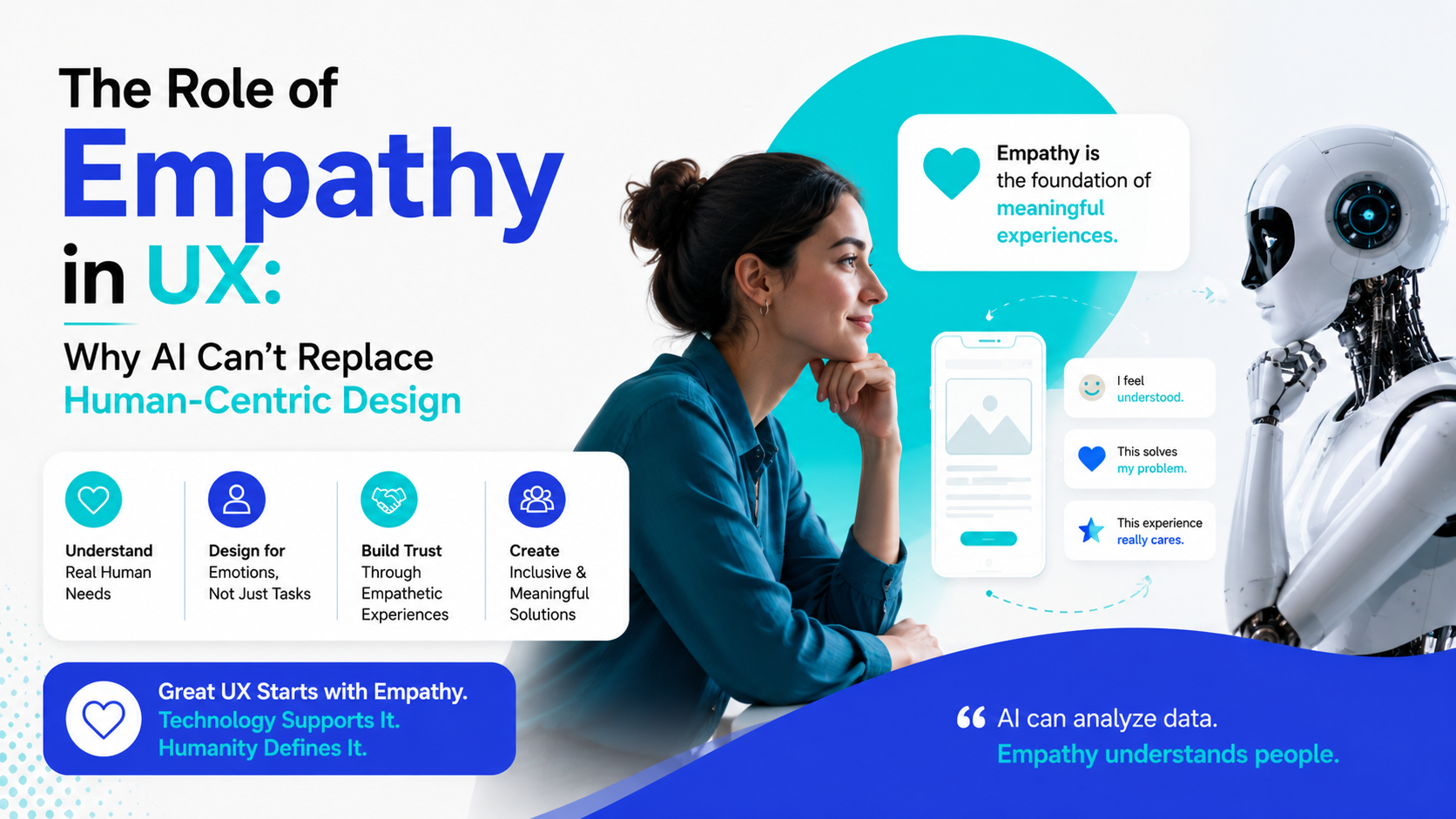
Step into any modern digital product agency today, and you will hear a familiar narrative: artificial intelligence is rewriting the rules of creation.
As we navigate 2026, generative AI models can spit out thousands of clean, functional wireframes in seconds. Automated layout utilities analyze millions of web pages to instantly arrange buttons, optimize color contrasts, and generate perfect UI code blocks. To the casual observer, it looks as though the era of the human user experience (UX) designer is drawing to a close.
But there is a critical flaw in this machine-driven vision.
AI Layout Automation: [Data Inputs] ──> [Pattern Matching] ──> [Symmetric Grid Output]Empathetic Human Design: [Human Anxiety/Desire] ──> [Emotional Calibration] ──> [Intuitive UX Architecture]
While algorithms excel at processing behavioral telemetry, recognizing structural patterns, and generating flawless symmetric grids, they lack a foundational element of human interaction: genuine emotional awareness. They can calculate what a user did on a page, but they cannot truly feel why the user felt frustrated, anxious, or delighted while doing it.
This emotional gap highlights the indispensable role of empathy in UX and explains why AI can’t replace human-centric design. Let’s explore why the future of great digital products relies on deep human understanding and how you can master these unique skills to stay ahead in an automated economy.
The Machine’s Boundary: Where Pattern Recognition Fails
To understand why human-centric design remains irreplaceable, we must look closely at how modern algorithmic systems process digital experiences.
AI-driven design tools are essentially mirrors of existing data. They scan historical layout repositories, find common design patterns, and dupli not creating an authentic connection.
The Illusion of Optimization
An algorithm can look at a user dashboard, track a high abandonment rate, and suggest moving a button to a new position based on standard behavioral telemetry. However, it cannot comprehend the complex psychological factors causing that abandonment.
Is the user confused by confusing industry jargon? Are they feeling overwhelmed by a stressful checkout process? Or are they dealing with real-world accessibility challenges that require creative solutions?
Solving these deep issues requires qualitative user discovery, context-aware observation, and a deep understanding of human behavior capabilities that cannot be condensed into a simple binary code.
Deconstructing the Empathetic UX Architecture
True human-centric design treats software as a living, emotional conversation between a business and a person. Empathy allows a designer to look beyond standard click tracking and uncover hidden user desires and pain points.
[H2: The Core Pillars of Empathetic UX] │ ┌──────────────────────────────┼──────────────────────────────┐ ▼ ▼ ▼[H3: Emotional Mapping] [H3: Cognitive Relief] [H3: Inclusive Accessibility] │ │ │ ▼ ▼ ▼(Mapping Unspoken Feelings) (Reducing Mind Strain) (Designing with Deep Care)
1. Emotional User Journey Mapping
When human designers build a user journey map, they don't just track the mechanical steps required to finish a task. They actively map the user's changing emotional states throughout the entire experience.
For instance, when designing a medical or financial application, a human designer knows that the user is likely feeling anxious or stressed. An empathetic design responds to this emotional state by using calming color choices, reassuring micro-interaction nuances, and clear, supportive messaging that makes the user feel safe and guided.
2. Identifying and Fixing Cognitive User Friction
AI systems frequently clutter interfaces with excessive features because their algorithms prioritize maximizing data exposure. Human designers, on the other hand, look for ways to protect the user's mental focus.
By applying smart psychological principles, human creators can spot moments of high mental strain, streamline confusing choices, and design clean, minimalist pathways that respect the user's limited cognitive energy.
Learning to uncover these deep human insights and translate them into great digital products is the ultimate way to stand out in the modern tech market. Explore our real-world training paths on our Milaaj Digital Academy, where we help ambitious professionals build advanced, future-proof career skills.
Why Human UX Engineers Command Premium Value in 2026
As generic generative layout templates become widely available, the commercial market value of simple, automated web pages is plummeting toward zero. Today, companies are realizing that purely algorithmic interfaces lead to dry, uninspiring digital experiences that fail to retain long-term customer loyalty.
Creating Deep Emotional Connections
The most successful modern brands don't succeed just because their apps are bug-free; they succeed because their products create strong emotional resonances with their users.
Think about the delightful animation that pops up when you hit a fitness goal, or the gentle, thoughtful tone of a meditation app's interface. These nuanced touches require deep emotional intelligence, a playful sense of humor, and a rich understanding of human nature qualities that machines simply cannot replicate.
[Algorithmic Design Layouts] ──> High Efficiency ──> Low Brand Connection[Empathetic Design Systems] ──> High Trust ──> Lasting Customer Loyalty
Human UX architects excel at translating abstract brand values into beautiful digital experiences. They ensure that every button click, page transition, and layout structure feels truly human, turning casual visitors into passionate brand advocates.
Ready to master the perfect balance of advanced tech tools and deep, human-centric design strategy? Enroll in our comprehensive Full Stack Drvelopment Course at Milaaj Digital Academy to gain hands-on experience with modern consumer psychology, conversion mechanics, and strategic growth frameworks.
Conclusion: The Empathy Advantage in an Automated World
Artificial intelligence is a powerful tool for automating repetitive tasks, running rapid design tests, and managing heavy data arrays. But it is a collaborative assistant, not a replacement for human creativity.
By anchoring your career in the role of empathy in UX and focusing on why AI can’t replace human-centric design, you position yourself as an invaluable technical leader. As algorithms take over the mechanical work of writing basic code and generating standard layouts, your ability to understand human feelings, reduce mental friction, and build deep emotional trust becomes your ultimate competitive advantage.
Frequently Asked Questions (FAQ)
What is the role of empathy in UX, and why is it important?
Empathy in UX is the practice of deeply understanding your users' feelings, frustrations, motivations, and hidden anxieties. It is essential because it allows designers to look past basic numerical analytics and build meaningful digital experiences that solve real-world problems and earn long-term user trust.
Why can't artificial intelligence replace human-centric design?
AI tools operate by identifying mathematical patterns in historical data; they lack real consciousness and emotional intelligence. An algorithm can easily optimize a generic grid layout, but it cannot comprehend complex human emotions, craft unique brand tones, or address subtle cultural nuances.
How can a designer practice qualitative user discovery effectively?
Effective user discovery involves stepping away from automated metrics and engaging directly with real people. You can run one-on-one user interviews, conduct live usability testing, observe users in their natural environments, and ask open-ended questions to uncover the real motivations driving their behavior.
Does automated layout generation make junior UX roles obsolete?
No, but it does change what companies look for in junior designers. Instead of spending your days manually resizing boxes or adjusting layout positions, you must focus on mastering user research, information structure, and conversion psychology to show employers you can drive real business growth.
How do human designers ensure accessibility compliance better than AI?
While AI tools can run automated checklists to spot basic errors, they often miss complex usability challenges. Human designers evaluate digital products with deep care, ensuring that interfaces are genuinely welcoming, inclusive, and easy to navigate for users of all different backgrounds and abilities.