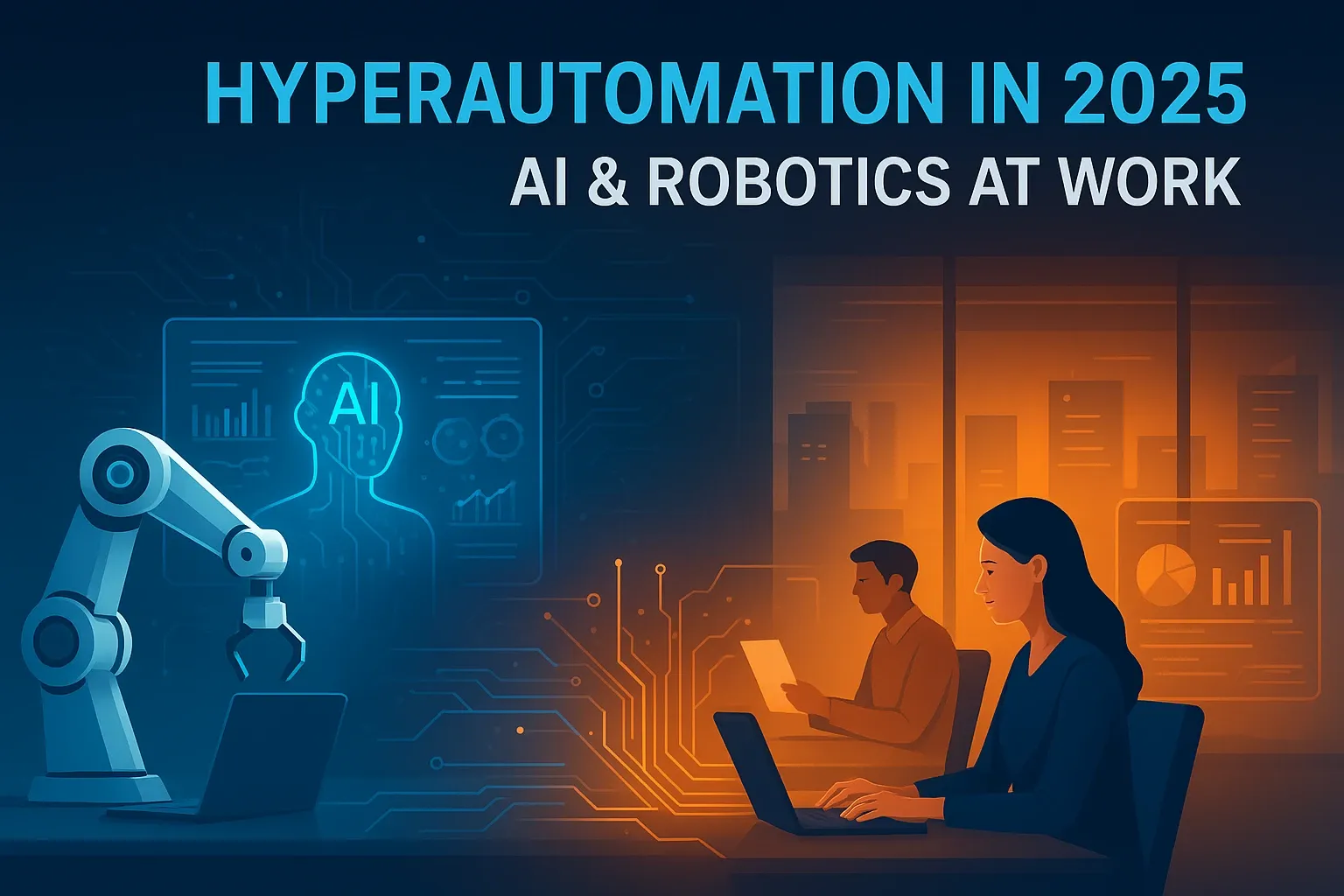
Workplaces are transforming faster than ever before. In 2025, hyperautomation—a blend of AI, robotic process automation (RPA), and intelligent analytics—is no longer a buzzword; it’s a reality reshaping industries worldwide. Businesses are moving beyond isolated automation projects to adopt end-to-end intelligent workflows that combine machine learning, robotics, and data-driven decision-making. The result? A redefinition of how humans and machines collaborate.
But what exactly does hyperautomation mean in 2025, and how is it changing the way we work? Let’s explore.
What Is Hyperautomation?
Hyperautomation goes beyond traditional automation. Instead of automating one process, it links multiple systems, tools, and technologies—creating a seamless digital workforce.
Core components include:
- Artificial Intelligence (AI): For decision-making and predictive insights.
- Robotic Process Automation (RPA): For handling repetitive tasks at scale.
- Machine Learning (ML): For continuous improvement of processes.
- Process Mining & Analytics: For identifying inefficiencies and optimization opportunities.
In 2025, this combination enables organizations to achieve faster, smarter, and more adaptive workflows.
Key Trends Driving Hyperautomation in 2025
- AI Agents Taking Over Decision-MakingBusinesses are deploying agentic AI systems capable of handling complex workflows without human intervention—cutting costs and speeding up operations.
- Robotics in the WorkforceFrom manufacturing to healthcare, physical robots powered by AI are moving from assembly lines into everyday tasks such as surgery assistance, warehouse management, and even customer-facing roles.
- Low-Code and No-Code PlatformsEmployees without deep tech expertise can now design and implement automation workflows using drag-and-drop automation tools.
- Integration of IoT and Edge ComputingDevices at the edge—like sensors and smart machines—feed real-time data into hyperautomation platforms, enabling instant decision-making.
- Workforce Reskilling and AugmentationInstead of replacing humans entirely, hyperautomation is augmenting human capabilities, pushing organizations to reskill employees for roles in supervision, creativity, and innovation.
How Hyperautomation Is Changing Jobs
- Repetitive Jobs Are DisappearingData entry, invoice processing, and call routing are now automated, freeing humans from mundane tasks.
- New Roles Are EmergingPositions like automation architect, AI ethicist, and robot supervisor are becoming mainstream.
- Human Skills Still MatterCreativity, emotional intelligence, and problem-solving remain critical skills that AI and robots cannot replicate.
Benefits of Hyperautomation
- Efficiency & Cost Savings – Automated workflows reduce human errors and operational costs.
- Faster Decision-Making – AI-driven insights speed up business decisions.
- Scalability – Workflows can scale rapidly as organizations grow.
- Customer Experience – AI-powered chatbots and virtual assistants improve service quality.
Challenges and Concerns
While promising, hyperautomation also raises questions:
- Job Displacement Fears – Automation could replace millions of roles if reskilling isn’t prioritized.
- Security Risks – Automated systems handling sensitive data must be safeguarded against cyberattacks.
- Ethical Concerns – Who is accountable when AI-driven systems make mistakes?
The Future of Hyperautomation Beyond 2025
Looking ahead, hyperautomation will expand into nearly every industry—healthcare, finance, logistics, education, and even creative fields. By 2030, experts predict that over 70% of enterprise processes will be hyperautomated, creating a world where human creativity and AI-powered execution coexist seamlessly.
The organizations that thrive will be those that embrace AI and robotics while investing in human skills development.
Conclusion
Hyperautomation in 2025 is not about replacing humans—it’s about reshaping the future of work. By combining AI, robotics, and advanced analytics, companies can unlock productivity, efficiency, and innovation at scale. The challenge lies in adopting this transformation responsibly—balancing automation with human ingenuity.
The question isn’t whether hyperautomation will define the future of work—it already is.