For over two decades, search engine optimization was a game of matching strings of text. If you stuffed a page with the exact phrase "best laptop repair shop," engines rewarded you with visibility. But a silent, architectural revolution has completely broken the old playbook. Modern algorithms no longer scan your web pages looking for isolated words; they read your content to uncover deep, interconnected meaning.
At the center of this structural evolution is a concept borrowed from the semantic web: semantic triples (or triplets). This fundamental shift changes how machines index reality, interpret search intent, and rank content.
If your digital marketing strategy still relies on repeating keywords to satisfy search bots, your visibility is likely decaying. Let's break down exactly how semantic triplets are changing search rankings and how you can adapt your content structure to survive the AI search landscape.
What is a Semantic Triplet? Decoding the Secret Language of Bots
To understand how semantic triplets are changing search rankings, we must first look at how an artificial intelligence brain processes information. Human beings organically understand context, but web scrapers and machine models require explicit structural logic to transform unstructured text into clear data.
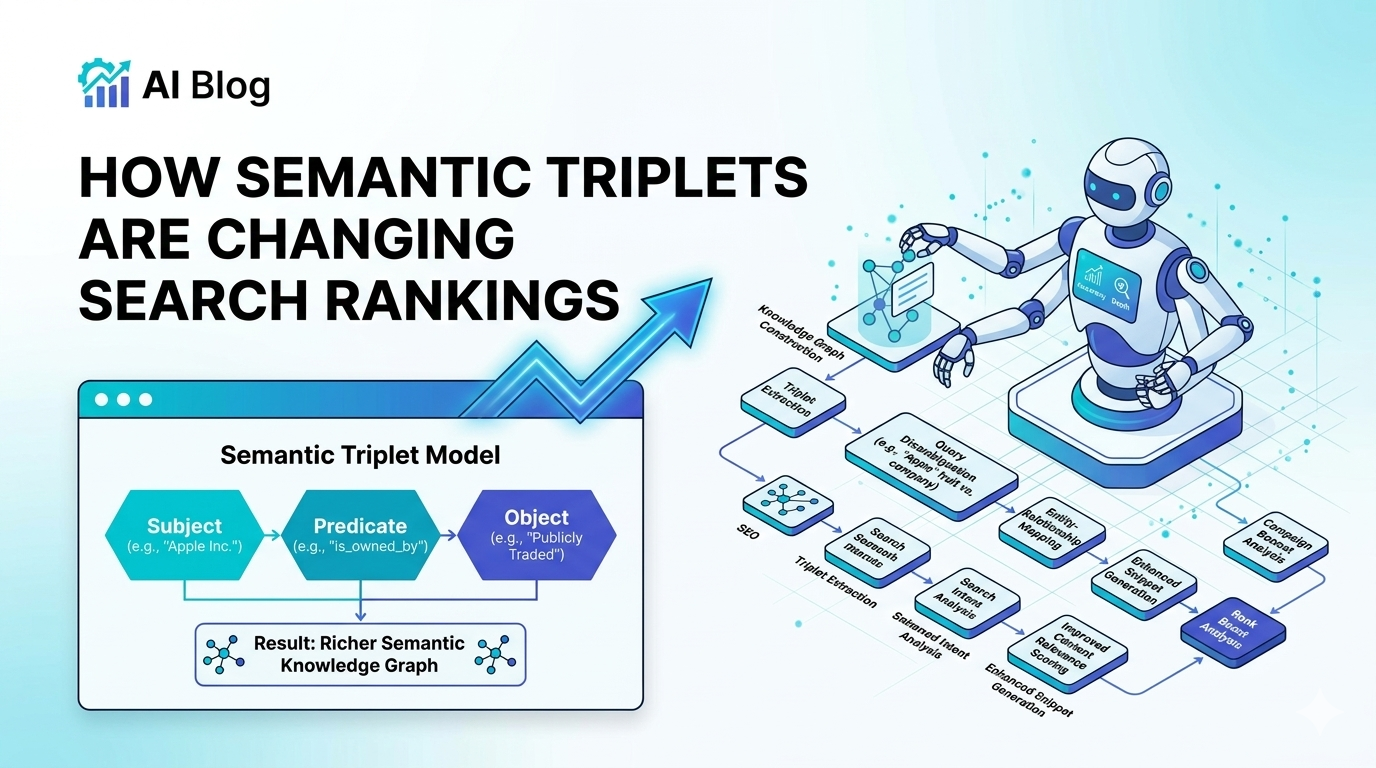
A semantic triplet breaks down any factual statement into three absolute components: a Subject, a Predicate, and an Object.
[Subject: Entity] ---> (Predicate: Relationship) ---> [Object: Value/Entity]
To see this in action, consider how a standard sentence translates into a machine-readable data model:
- Standard Content: "Milaaj Digital Academy delivers top-tier vocational training in digital marketing."
- The Semantic Triplet: [Milaaj Digital Academy] (Subject)$\rightarrow$ [delivers] (Predicate)$\rightarrow$ [vocational training] (Object).
By standardizing sentences into these foundational semantic blocks, search engine crawlers do not merely index individual keywords. They dynamically map your brand, your services, and your core concepts as distinct entities interconnected by precise relationships.
1. Shifting From Strings to Things: The Power of Entity-Based Search
The primary reason why semantic triplets are changing search rankings is the aggressive expansion of the Google Knowledge Graph. The Knowledge Graph functions as a massive, hyper-connected digital encyclopedia containing billions of facts and real-world entities.
Escaping Ambiguity
Traditional keyword optimization frequently stumbles on words with multiple meanings. For example, the term "Apple" could refer to a tech corporation, a fruit, or an historic record label.
When search engines read content parsed via semantic triples, the ambiguity disappears instantly. If your webpage explicitly links [Apple] $\$rightarrow [manufactures] $\$rightarrow [smartphones], natural language processing (NLP) models immediately categorize your page context perfectly.
Establishing these clear entity signals shields your content from algorithmic misunderstandings, ensuring your site ranks safely for highly targeted user queries.
2. Dominating Rich Snippets and AI-Powered Search Summaries
When you build your content strategy around clear subject-predicate-object structures, you make it incredibly easy for search engine crawlers to extract answers. This structural clarity directly translates into visual wins on search engine result pages (SERPs).
The Zero-Click Search Advantage
AI search assistants rely heavily on structured factual data to generate conversational summaries without hallucinating. Web assets structured via semantic triplets experience rapid growth in key metrics:
- Featured Snippet Wins: Algorithms can pull an exact subject-predicate relationship to paste directly into the coveted "Position Zero" informational box.
- Inclusion in Knowledge Panels: Consistently stating clear, queryable facts about your organization helps anchor your brand identity securely within the universal graph network.To truly understand how modern search systems crawl your pages, exploration of advanced training paths is key. Discover our core modules on technical architecture via the Milaaj Digital Academy, where we break down complex digital asset development.
3. Unlocking Hidden Long-Tail Traffic Through Concept Mapping
A fascinating side effect of optimizing with semantic triplets is that websites begin to organically rank for highly specific, long-tail search intents they never explicitly targeted on the page.
Knowledge Graph Completion
Modern ranking systems utilize predictive machine learning algorithms to complete missing logical data points, a process known as knowledge graph completion. If your site establishes that [Course A] $\$rightarrow [teaches] $\$rightarrow [Python data models], and separate industry nodes establish that [Python data models] $\$rightarrow [are vital for] $\$rightarrow [AI workflows], the search engine infers your course's absolute relevance.
[Your Course] ---> (Teaches) ---> [Python Data Models] ---> (Vital For) ---> [AI Workflows] ^ (Engine Infers This Connect)
By connecting these semantic concepts cleanly, your topical authority expands across an entire ecosystem of related keywords rather than stagnating on an isolated, fragile text page.
Practical Action Plan: Implementing Semantic Triplets on Your Website
Transitioning to a semantic SEO model does not mean rewriting your entire domain into cold, robotic equations. Instead, it means merging natural human readable storytelling with crisp, unambiguous structural definitions.
Step 1: Write with a Direct Structural Focus
Avoid dense, overly passive corporate prose filled with ambiguous fluff language. Make your core factual declarations direct, utilizing an active, subject-first layout.
- Instead of: "Our innovative educational programs are designed with the ultimate goal of providing students with excellent growth opportunities." (Vague, lacks defined machine targets).
- Use: "Milaaj Digital Academy provides advanced marketing courses to students worldwide." (Clear Subject-Predicate-Object layout).
Step 2: Establish Definitive Topic Clusters
Organize your digital architecture so that every supporting piece of content references your central entity nodes. Build high-value pillar pages that establish core conceptual definitions, and use specialized support articles to explore micro-relationships. Ensure your internal linking patterns explicitly mirror these semantic connections.
Step 3: Speak the Technical Language of Schema
While rewriting your on-page copy covers the conversational content layer, technical schema markup delivers absolute validation within your HTML source code. Utilize deeply nested Schema.org types such as Organization, Course, and FAQ properties to definitively announce entity traits to search scrapers.Ready to scale your organic search strategy past traditional, outdated practices? Enroll in our comprehensive Advanced Digital Marketing Training at Milaaj Digital Academy to master entity optimization, automated schema development, and semantic marketing strategies firsthand.
Conclusion: Adapting to the Semantic Future
The era of tricking search algorithms with precise keyword density metrics is completely over. As search platforms morph into highly cognitive, context-driven answers engines, your ultimate competitive advantage is clarity.
By understanding how semantic triplets are changing search rankings, you can intentionally craft authoritative, entity-aligned spaces that machines trust and human users love reading. Focus on building unambiguous relationships, mapping logical data networks, and validating your authority through structured technical practices.
Frequently Asked Questions (FAQ)
What component does a semantic triplet consist of?
A semantic triplet consists of three core structural elements: a Subject (the central entity or concept being discussed), a Predicate (the verb or relationship defining the action), and an Object (the value or secondary entity bound to the subject).
How do semantic triples help search engines understand context?
Instead of reading words as independent text characters, semantic triples explicitly define how different physical things, concepts, and ideas connect in the real world. This provides a machine-readable data blueprint that removes textual ambiguity for artificial intelligence models.
Do I need to compromise my writing style to use semantic triplets?
Not at all. Optimizing for triplets simply means avoiding vague, bloated corporate jargon and choosing active, clear sentences that naturally declare facts. Clean, concise, and informative writing automatically creates high-quality semantic structures.
What is the relationship between schema markup and semantic triplets?
The on-page content acts as the visible, human-readable semantic layer, while schema markup operates as the technical layer inside your HTML code. Schema explicitly tags text fragments with unique web IDs, allowing engine crawlers to parse subject-predicate actions with zero margin of error.
Will traditional keyword research become obsolete?
Traditional keyword research isn't obsolete, but its core purpose has evolved. Instead of compiling isolated text strings to repeat across a page, modern digital teams use search volume trends to locate core entity groups and map out comprehensive topic ecosystems.