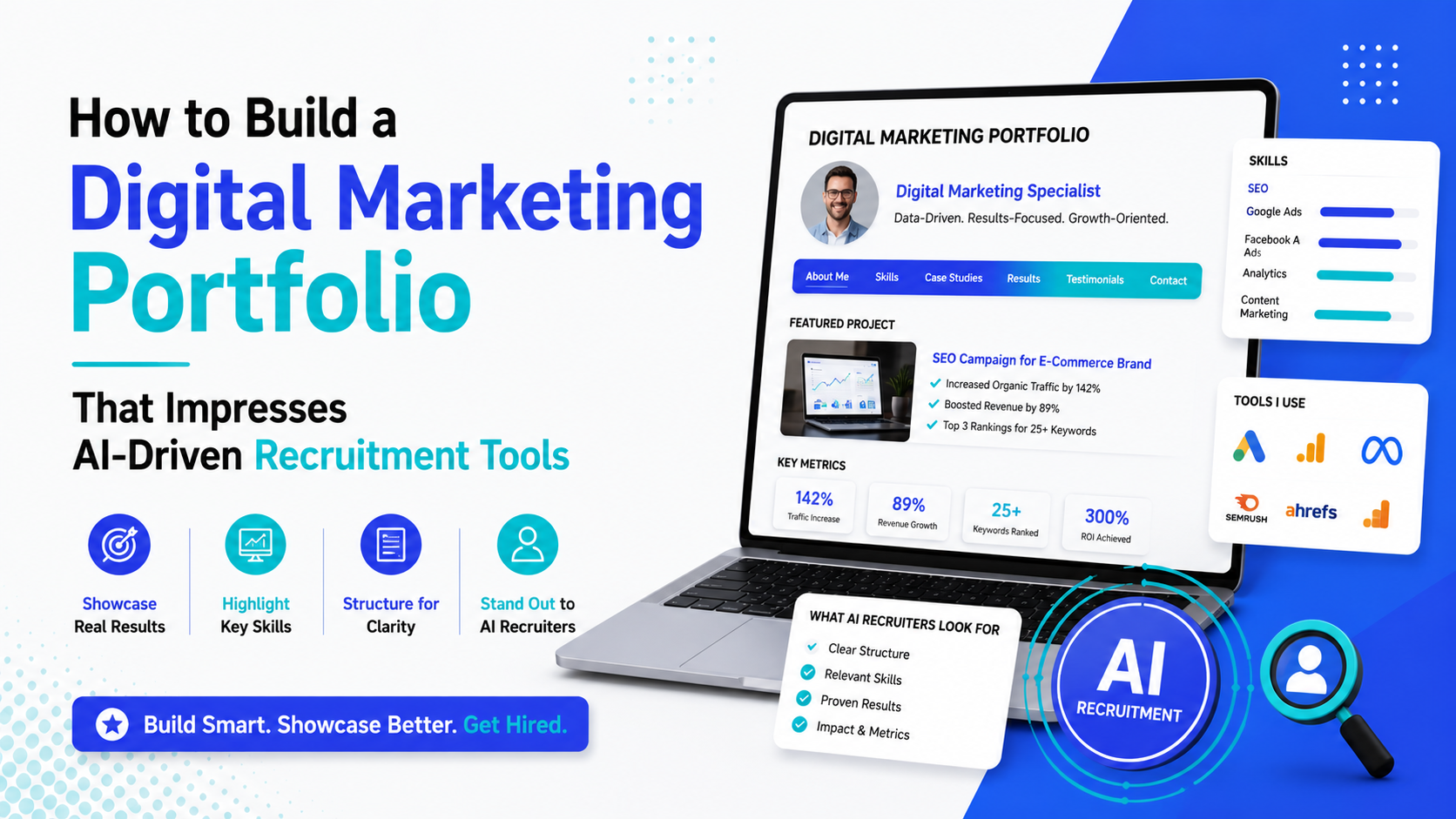
Let’s lift the curtain on the modern corporate hiring process: a human manager might never see your digital marketing portfolio unless a machine approves it first.
As we navigate 2026, the entry point to traditional corporate hiring has transformed completely. Companies no longer employ massive teams of human HR interns to manually read through thousands of cover letters, creative layouts, and PDF files. Instead, enterprises lean heavily on advanced AI-driven recruitment tools, large language model (LLM) parsing benches, and context-aware resume processors to filter out up to 85% of applicants before a real person reviews the shortlists.
If you format your marketing portfolio purely for human eyes relying on creative image collages, abstract web layouts, or unlabelled data charts automatic screening programs will likely flag your files as unreadable, blank, or irrelevant.
To break through this digital barrier, you must learn to format your professional work to satisfy both the machine logic of automated bots and the commercial demands of human hiring directors. Here is an actionable guide on how to build a digital marketing portfolio that impresses AI-driven recruitment tools and unlocks premium job interviews.
The Technology Under the Hood: How Automated Screeners Read Your Work
To make your portfolio completely machine-readable, you need to understand exactly how semantic keyword matching systems look at your digital profile.
Modern recruitment tools do not simply match exact text fragments like old-school Applicant Tracking Systems (ATS). Instead, they process your files through advanced vector embeddings to evaluate your deep contextual authority.
Traditional ATS: Matches Exact Strings ──> ["SEO Manager"] or RejectModern AI Screener: Evaluates Core Context ──> [Skill Tokens + Verified Data Metrics] ──> Rank Profile
The algorithm breaks your text into tiny pieces called tokenized data blocks, analyzing how closely your case studies match the specific real-world tasks listed in the company's job description. If the AI tool cannot easily find clear tech labels, standardized project workflows, and explicit data results within your formatting, it assumes you lack the hands-on expertise and drops your ranking score.
1. Crafting a Machine-Readable Structural Hierarchy
The foundation of a highly visible portfolio is a clean, predictable text hierarchy. While human viewers appreciate unique design choices, an AI web scraper relies entirely on standardized coding signals and clear structural formatting to navigate your information.
Eliminating Technical Processing Blocks
Avoid building your portfolio entirely inside complex canvas builders or flat image files that trap your text inside graphic elements. If a robot encounters text embedded inside an unlabelled JPEG or a heavy script wrapper, it reads the section as an empty canvas.
- The Blueprint: Use standard HTML headings (<h1>, <h2>, <h3>) to map out your digital chapters cleanly.
- The Execution: Make sure your primary page title clearly highlights your main specialization, using straightforward phrases like: <h1>Senior Performance Marketing Specialist & Growth Architect</h1>.
This clean structure provides automated indexers with clear context clues, ensuring the algorithm can parse your professional history smoothly without crashing or skipping pages.
2. Using Tokenized Project Frameworks (The STAR-AI Layout)
When describing your past campaigns or marketing wins, do not write casual, unstructured stories. Instead, organize your case studies around a machine-readable variation of the classic behavioral template: the STAR framework (Situation, Task, Action, Result).
[H2: Enterprise E-Commerce Scaling Project] │ ┌──────────────────────────────┼──────────────────────────────┐ ▼ ▼ ▼ [H3: Situation & Task] [H3: Strategic Action] [H3: Quantifiable Result] │ │ │ ▼ ▼ ▼(Context & Project Goals) (Tool Names & Core Skills) (Explicit Metric Growth %)
Writing with Explicit Skill Labels
AI text processors are built to hunt for hard skill tokens within your text. Ensure you explicitly name the specific digital platforms, programming tools, and tracking frameworks you used to hit your targets.
Instead of writing a vague summary like: "I managed the company's social media ads and helped increase our digital product sales over the quarter."
Rewrite your narrative using active-voice data strings: "I structured and optimized our core Meta Ads retargeting channels, using custom Lookalike Audiences and Google Analytics 4 tracking tags to drive a 42% increase in digital product transactions over 90 days."
This detailed, active approach injects high-value skill tokens naturally into your paragraphs, checking off the exact parameters the screening software is programmed to find.
Learning to format your marketing data to match these advanced analytical requirements is an essential skill for modern digital leaders. Explore our real-world training ecosystems on our Milaaj Digital Academy Home Page, where we help ambitious professionals build highly competitive online profiles.
3. Leading with Standardized, Quantifiable Performance Data
AI parsing tools love numerical data. They look for specific mathematical relationships to verify that you actually achieved real, measurable growth in your past marketing campaigns.
Structuring Your Core Marketing Accomplishments
Isolate your most impressive marketing successes into scannable data summaries right below your campaign headers. Use universally understood industry shorthand to make it easy for algorithmic parsers to extract your achievements:
Core Operational Focus | Tool Ecosystem Used | Quantifiable Campaign Metric Won |
Search Engine Optimization | Semrush, Google Search Console | +150% Growth in Non-Branded Organic Impressions |
Paid Acquisition Channels | Google Ads, LinkedIn Campaign Manager | Reduced Average Cost-Per-Acquisition (CPA) by 28% |
Conversion Rate Tuning | Hotjar, Optimizely, VWO | Boosted Landing Page Conversion Rate from 2.1% to 4.3% |
By presenting your campaign milestones in clear, well-structured layouts, you help automated systems cross-reference your performance metrics directly against the operational performance targets listed in the job description.
4. Securing Clean Code and Automated Schema Layouts
If you publish your marketing portfolio on your own domain, you can gain a major edge over other applicants by using advanced technical SEO elements to guide search engine spiders through your career timeline.
Integrating Structured Professional Schema
Add explicit JSON-LD professional markup directly into the header files of your portfolio site. This backend code translates your professional experience directly into machine-readable tags:
JSON
{ "@context": "https://schema.org", "@type": "ProfilePage", "mainEntity": { "@type": "Person", "name": "Alex Mitchell", "jobTitle": "Digital Marketing Strategist", "knowsAbout": ["Search Engine Optimization", "Data Analytics", "Paid Search Marketing", "Conversion Rate Optimization"], "publishingPrinciples": "https://www.milaajdigitalacademy.com/" }}
By providing clean, structured descriptions of your core skills directly inside your site's source code, you ensure automated crawlers can instantly verify your professional authority without making any parsing errors.
Ready to master advanced optimization strategies and build digital profiles that command premium attention from top employers? Join our practical Advanced Digital Marketing Course at Milaaj Digital Academy to gain hands-on experience with modern technical optimization, structured data tools, and growth frameworks.
Conclusion: Designing for the Digital Gatekeepers
Adapting your professional portfolio for automated screeners doesn't mean making it boring for human readers. It simply means organizing your professional milestones with absolute clarity.
By prioritizing crisp, machine-readable typography layouts, using clear technical platform labels, presenting concrete data accomplishments, and adding structured schema code, you turn your digital portfolio into a powerful professional asset. You check all the boxes for automated recruitment systems while providing a highly professional experience for human creative directors.
Frequently Asked Questions (FAQ)
How do AI-driven recruitment tools read my digital portfolio?
AI recruitment tools use advanced large language model frameworks to scan, tokenize, and analyze the plain-text layers of your portfolio files. They evaluate your heading structure, analyze your text for specific software tool tags, and calculate how closely your data-backed case studies align with the responsibilities of the open position.
Will using a highly creative visual layout hurt my AI screening rank?
It can if your text is trapped inside images or hidden behind heavy JavaScript scripts. To keep your pages visible and accessible to search bots, ensure all your visual graphics are accompanied by clean HTML heading tags, descriptive alt-text descriptions, and clear, plain-text descriptions.
What are the most important data metrics to include in a marketing portfolio?
Focus on hard commercial performance metrics like Return on Ad Spend (ROAS), Cost-Per-Acquisition (CPA), organic impressions growth, click-through rates (CTR), and direct conversion rate percentages. AI screening tools search for these specific formulas to measure your overall business impact.
Can AI bots scan portfolio links hosted on external cloud drives?
Yes, but security walls, password prompts, or broken link architectures can frequently block automated bots. To avoid these processing errors, it is always safest to host your case studies on a clean, public domain or provide a universally accessible, text-searchable PDF copy.
How often should I update the keyword tokens inside my web case studies?
You should adjust the focus keywords in your portfolio whenever you target a new industry or a specific job level. Aligning your platform descriptions and technical terms with the exact phrasing used in your target job descriptions ensures your profile scores highly across modern recruitment platforms.