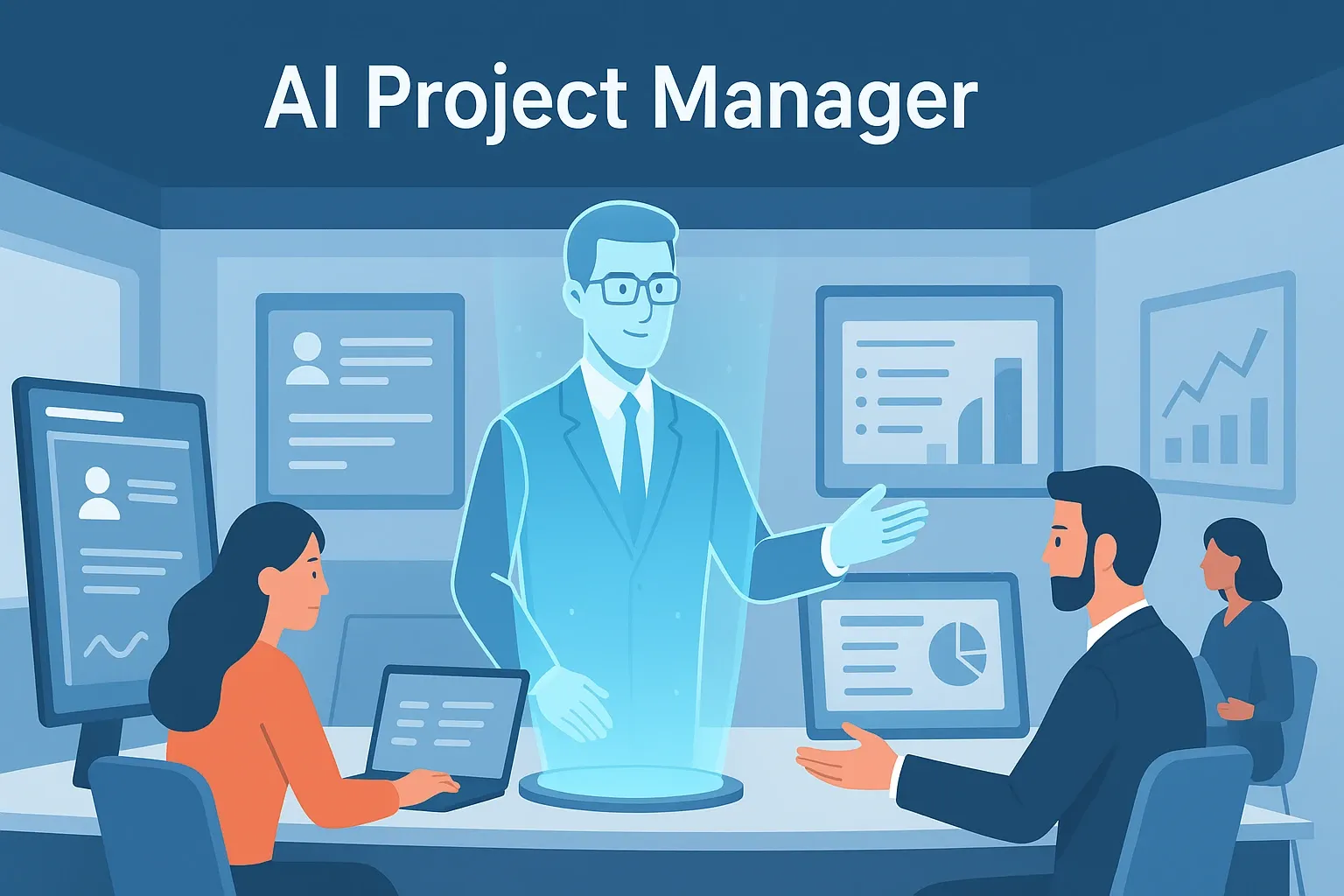
For decades, project management has relied on human intuition, spreadsheets, and experience. But as workplaces evolve and technology advances, a new kind of leader is emerging — the AI project manager.
These intelligent systems are not replacing human managers but enhancing them. From scheduling and resource allocation to risk prediction and real-time reporting, AI is changing how teams plan, execute, and deliver projects.
The Shift Toward AI-Powered Management
Project management has always been about balancing time, cost, and quality. The challenge lies in coordinating people, managing dependencies, and adapting to change.
Traditional tools like Gantt charts and task trackers are useful, but they often lack adaptability. Enter AI-driven project management systems — intelligent platforms that learn from data, anticipate risks, and automate repetitive tasks.
They help human managers move from reactive problem-solving to proactive strategy.
What Is an AI Project Manager?
An AI project manager is not a single tool or robot but a combination of machine learning algorithms, natural language processing (NLP), and predictive analytics integrated into project management software.
Instead of just tracking tasks, it:
- Analyzes project data in real time
- Predicts delays or bottlenecks
- Suggests optimized timelines
- Automates updates and reminders
- Adapts to team performance patterns
In other words, AI project managers act as intelligent assistants that support human judgment with data-backed insights.
How AI Is Changing Daily Project Work
AI is now deeply embedded in popular platforms like Asana, Jira, Monday.com, and ClickUp, offering capabilities that used to require manual oversight. Here’s how:
1. Smarter Scheduling
AI analyzes team workloads and automatically allocates resources. If someone is overloaded, it can reschedule tasks or reassign them to balance productivity.
2. Predictive Risk Management
Machine learning algorithms detect patterns in past projects to forecast potential risks. AI can warn you before a deadline slips or a budget exceeds limits.
3. Automated Reporting
Instead of manually compiling progress updates, AI generates real-time dashboards and visual reports for stakeholders, freeing up valuable time.
4. Enhanced Communication
AI chatbots integrated into project tools can answer queries, remind teams of upcoming tasks, or summarize meetings using natural language.
5. Data-Driven Decision Making
AI doesn’t rely on guesswork. It uses analytics to help managers prioritize tasks, allocate budgets, and forecast outcomes based on evidence, not assumptions.
Why Businesses Are Adopting AI in Project Management
The modern workplace is fast-paced and data-heavy. Managers juggle remote teams, cross-department collaboration, and ever-changing priorities. AI simplifies this chaos by handling repetitive tasks and revealing insights that humans might overlook.
Key benefits include:
- Greater efficiency and productivity
- Reduced human error
- Faster decision-making
- Clearer visibility into team performance
- Real-time progress monitoring
Companies that embrace AI project management gain a measurable competitive advantage — they deliver projects faster, with fewer delays and more satisfied teams.
The Human + AI Partnership
Despite the hype, AI project managers aren’t replacing humans. Instead, they enhance what people do best — creativity, empathy, and strategic thinking.
AI handles the repetitive side of project management: data entry, scheduling, and reporting. Humans focus on leadership, communication, and motivation.
The most successful teams are the ones that combine both.
A project manager who understands how to interpret AI insights and act on them will be far more effective than one who relies on manual data alone.
How AI Improves Collaboration
AI also reshapes how teams work together. Intelligent collaboration tools analyze communication trends, detect bottlenecks, and even suggest ways to improve team dynamics.
For example:
- If a team member misses updates often, AI may suggest a follow-up meeting.
- If communication slows between departments, AI can recommend better coordination methods.
- It can summarize discussions and automatically assign action items after meetings.
This kind of “smart collaboration” reduces confusion, saves time, and builds accountability.
Challenges in the Rise of AI Project Managers
While the advantages are clear, adopting AI in project management comes with challenges.
1. Data Quality:AI is only as good as the data it learns from. Inaccurate or incomplete data can lead to poor predictions.
2. Overreliance on Automation:Human oversight is still essential. AI can suggest options, but humans must make final decisions.
3. Change Management:Teams may resist new technology due to fear of replacement or lack of understanding. Proper training is critical.
4. Ethical and Privacy Concerns:AI systems handle sensitive data, so businesses must ensure compliance and transparency.
By acknowledging these limitations, organizations can implement AI responsibly and effectively.
The Future of the AI Project Manager
In the coming years, we’ll see AI project managers evolve from assistants to active collaborators. They’ll not only analyze data but also learn from organizational behavior to make real-time recommendations.
Expect:
- Conversational AI interfaces that allow voice-based project updates.
- Context-aware assistants that adjust plans based on changes in business goals.
- Autonomous project management systems that can execute low-risk projects with minimal human input.
The role of the human manager will shift toward leadership, creativity, and ethics — guiding AI rather than competing with it.
AI and the Democratization of Management
AI project management tools are also lowering the barrier for small teams and startups to operate like large enterprises.
Even a two-person startup can now use AI to manage workflows, forecast delivery timelines, and generate reports that once required a full management team.
This democratization of management technology is redefining how organizations grow, scale, and lead.
What to Expect Next
The AI project manager is here to stay — not as a replacement for humans, but as a digital partner that amplifies human potential.
The next evolution will combine predictive analytics, emotional intelligence, and autonomous decision-making, allowing AI to truly understand team needs and business goals.
In the near future, every project team will have a blend of human managers and AI systems working side by side — where humans focus on creativity and empathy, and AI ensures precision and efficiency.
Conclusion: Managing Smarter, Not Harder
The rise of the AI project manager marks a major shift in how we define leadership and productivity.
Projects that used to take weeks to organize can now be launched in days. Risks that once went unnoticed are caught early. Reports that once drained hours are generated instantly.
The future of project management is not about replacing humans — it’s about freeing them to do what they do best.
In the age of AI, success will belong to teams that embrace the partnership between human intelligence and artificial intelligence.